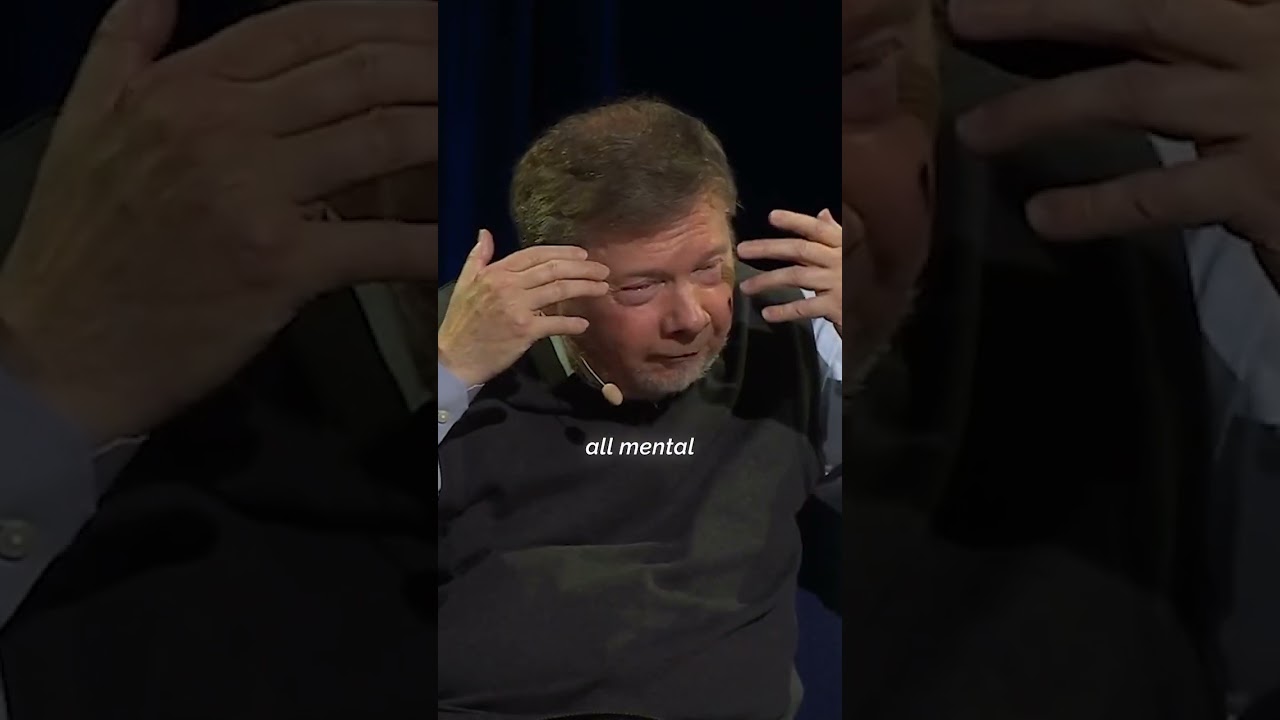
When small disruptions ruin your day, the problem isn't the disruption itself—it's your mental resistance to what's happening. Eckhart Tolle illustrates this through a humorous story of his first chaotic night in an Indian ashram, where he discovered that true peace doesn't come from ideal external conditions, but from becoming fully present with reality exactly as it unfolds, moment by moment.
Why Do Small Things Upset Us So Much?
Most people operate on an implicit bargain: "If my external circumstances are pleasant, then I can be at peace." But this creates a fundamental problem. Life is inherently unpredictable. Noise, delays, interruptions, discomfort—these are inevitable parts of existence. When we make our inner peace conditional on controlling or perfecting external conditions, we hand our well-being over to forces we cannot fully control.
The ego-mind—what Eckhart Tolle calls the thought-generated self—thrives on resistance. When something unexpected happens, the mind immediately contracts into judgment: "This shouldn't be happening. This is wrong. This is ruining my day." This contraction of consciousness is where suffering originates. The event itself may be minor, but the mental reaction to it creates the actual pain. A lost phone charger becomes a catastrophe not because of the charger, but because your mind treats it as an affront to your peace.
What Is Surrender and How Does It Create Peace?
Surrender, in the spiritual sense, doesn't mean passive resignation or defeat. It means ceasing to argue with reality. It means saying "yes" to what is, rather than fighting against it with the mind. This is not about liking what's happening—it's about accepting that it is happening, and choosing not to layer additional suffering on top of the bare event through resistance.
When you surrender to the present moment, you step out of the mental narrative that generates suffering. The mind wants to say, "This is unfair," "I don't deserve this," "Why did this happen to me?" Surrender means recognizing those thoughts as thoughts—patterns of the conditioned mind—rather than absolute truths about your situation. In that recognition, a space opens up. That space is peace.
The Ashram Story: Finding Peace in Chaos
Tolle's teaching is grounded in his own direct experience. On his first night in an Indian ashram, conditions were far from ideal. There was noise, disruption, chaos—the opposite of what one might expect in a place dedicated to spiritual practice. Most people would have spent the night mentally resisting: "This is terrible," "I can't sleep," "This ruins everything." Instead, Tolle discovered that he could accept the situation completely. Rather than fighting the noise, he became one with it. He surrendered to the present moment—not to the idea of a peaceful ashram, but to the actual reality unfolding: noise, discomfort, and all.
This surrender didn't eliminate the noise. But it eliminated the inner resistance to the noise. And in that cessation of resistance, peace emerged. This is a crucial distinction: peace doesn't require ideal conditions. It requires acceptance of actual conditions.
How Resistance Multiplies Suffering
Consider a common scenario: you're delayed in traffic. The delay is a fact—a neutral event. But the suffering is optional. When you resist the delay—when you mentally insist that this situation shouldn't be happening—you create a second layer of suffering on top of the first. You're not just stuck in traffic; you're also generating frustration, impatience, resentment. These mental states poison your experience and often carry over into the rest of your day, affecting your interactions with others and your ability to enjoy subsequent moments.
By contrast, when you accept the delay—when you release the demand that reality be different—the traffic is just traffic. Your body may still be in a car, but your consciousness is free. You might use the time to breathe, observe your surroundings, or simply be. The external situation is unchanged, but your inner state transforms completely.
The Relationship Between Presence and Resilience
True resilience isn't about being hard or thick-skinned. It's about being present. When you're fully present with what is—rather than lost in thoughts about what should be—you're no longer fragmented. Your energy isn't divided between the event and your resistance to it. This unified presence creates a kind of natural buoyancy. Small annoyances can't gain traction because you're not feeding them with mental energy.
This is why spiritual teachers emphasize presence as fundamental to peace. Presence means consciousness aligned with the now, not divided between what was and what might be. In presence, the mind's tendency to amplify and dramatize small events quiets. You see situations clearly, respond appropriately if needed, and remain inwardly undisturbed.
Practical Application: Moving From Resistance to Acceptance
The practice is simple in principle, though it requires repeated application. When you notice yourself reacting strongly to something small—a traffic jam, a rude comment, a forgotten item—pause. Recognize the resistance happening in your mind. Notice the thought-patterns: "This is wrong," "This ruins everything," "I can't stand this." Don't try to fight or suppress these thoughts. Simply notice them as thoughts, as mental patterns, not as truths.
Then, consciously relax the inner contraction. Take a breath. Return attention to your body and your immediate surroundings. Feel the aliveness of the present moment. This isn't positive thinking or affirmations—it's a shift in consciousness from mental resistance to embodied presence. You're not pretending the situation is different. You're simply ceasing to argue with it.
Each time you do this, you're weakening the habit of resistance and strengthening the capacity for acceptance. Over time, fewer and fewer things "ruin your day" because you're no longer feeding the fires of resistance.
Why Ideal Conditions Aren't the Path to Peace
There's a seductive trap in seeking perfect conditions. You might think, "Once I get the right job, the right relationship, the right living space, then I'll be at peace." But this is a race without a finish line. Even when external conditions align temporarily, they shift. Illness comes. Loss comes. Unexpected disruption comes. A peace that depends on controlling external circumstances is no peace at all—it's a perpetual state of negotiation with reality.
Tolle's insight is liberating: the path to peace is not through perfecting your circumstances, but through transforming your relationship to circumstances. When you accept what is, you become unshakeable. No set of conditions can disturb you because you've stopped requiring conditions to be other than they are.
Where to Go From Here
To deepen this practice, begin noticing moments throughout your day when small things trigger resistance. Traffic, a delayed text reply, an unexpected expense, a critical comment—these are your teachers. Each one offers an opportunity to practice acceptance and presence. Rather than viewing them as interruptions to your peace, treat them as invitations to embody peace in the midst of real conditions.
Alongside this awareness, develop a simple grounding practice: when you feel the mental contraction of resistance, bring attention into your body and breath. Feel your feet on the ground. Notice sounds, textures, temperature. This anchors consciousness in the present and pulls it out of the mind's narrative. Over weeks and months of this practice, you'll notice that your baseline state naturally becomes more peaceful, not because your circumstances have improved, but because you've stopped fragmenting yourself through resistance. Small things simply cease to have the power to ruin your day.