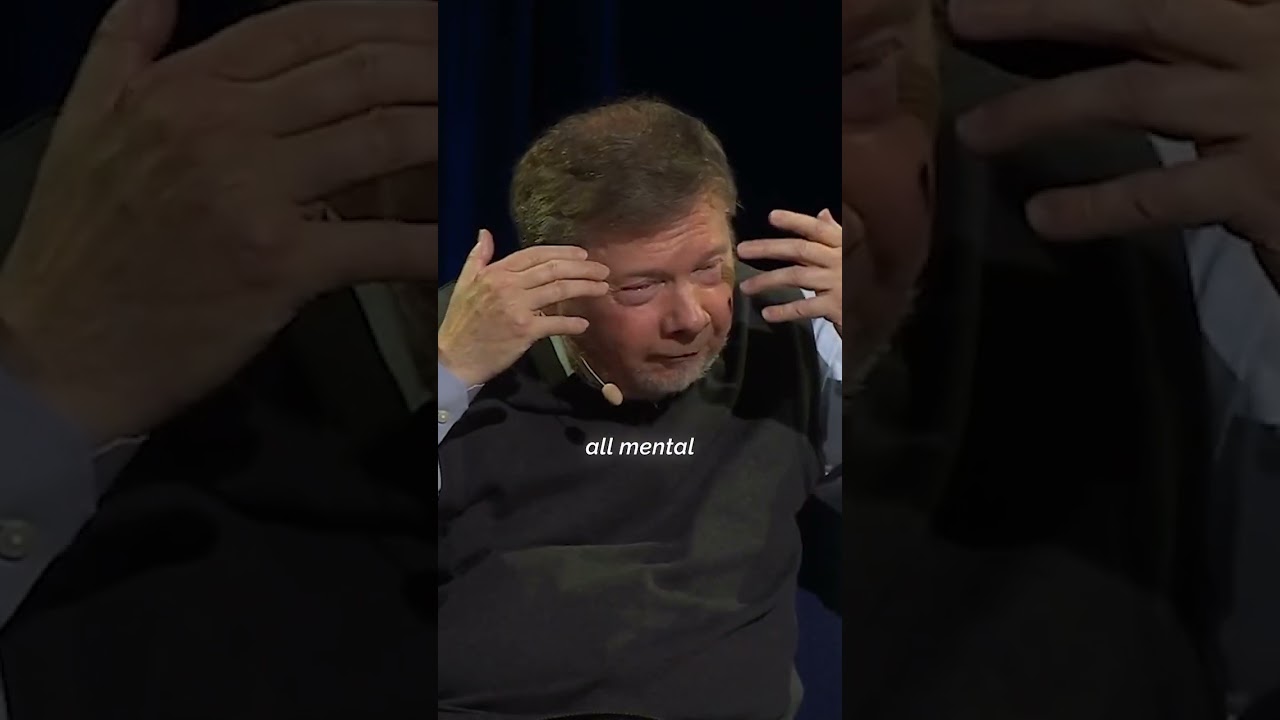
Awakening is not an escape from the mind but a fundamental shift in how consciousness relates to thought. Rather than being identified with and dominated by compulsive mental processes, awakened awareness observes thought from a space of presence—a capacity that can be experienced directly in the present moment. This teaching explores the practical difference between living as an unconscious thinker (where thoughts control you) and living as conscious awareness (where you observe thought without fusion), and invites readers to recognize this shift as available now, not some future attainment.
How Does Awakening Change the Function of the Mind?
The mind is not the enemy in spiritual teaching, but identification with it is the problem. When consciousness awakens, the mind does not disappear—rather, the relationship between awareness and thought fundamentally transforms. Before awakening, the mind operates as a kind of unconscious machine: thoughts arise automatically, often repetitively, and most people experience themselves as being those thoughts. The sense of self is constructed from thought, memory, and narrative.
Awakening disrupts this fusion. Instead of being the thinker, awareness becomes the observer of thought. The mind still functions—it solves problems, processes language, stores memories—but it no longer colonizes consciousness. There is a space between you and your thoughts, and from that space, genuine choice becomes possible. Thought loses its compulsive, identity-defining power.
This is not a belief system; it is a functional change in how the nervous system and consciousness operate together. A thought still arises (perhaps worry, planning, judgment), but you are no longer fused with it. You notice it. This distinction—between automatic identification and conscious awareness of thought—is the core of what awakening accomplishes in the mind.
What Is the Difference Between Unconscious and Conscious Thought?
Unconscious thought is thought that controls you without your knowing it. It runs like background software—repetitive patterns, often negative (rumination, anxiety, self-judgment). The person identified with unconscious thought believes they are their thoughts. If an anxious thought arises, the person becomes the anxiety. The thought dictates mood, behavior, and even sense of identity. There is no space between the thinker and the thought.
Conscious thought, by contrast, arises in awareness. The same thoughts may still occur, but there is a witnessing capacity. You think without being consumed by the thought. The difference is presence—a quality of alert, non-judgmental attention that observes what is happening. In conscious thought, the mind is a tool you use; in unconscious thought, the mind uses you.
Most people live in unconscious thought most of the time. They are on autopilot, reactive, driven by mental patterns laid down long ago. Awakening means the proportion shifts: instead of occasional moments of presence in a sea of unconscious thought, the default becomes presence, with thought arising within it.
How Can You Experience the Shift from Identification to Awareness?
This is not a conceptual shift alone. Eckhart emphasizes that the full teaching "moves from idea into something you can actually feel." The shift can be experienced directly and immediately—not as a distant goal, but as a present-moment capacity.
One approach is to notice the next thought that arises and ask: Who is aware of this thought? There is a difference between the content of the thought and the awareness in which it appears. You can be angry at a thought, anxious about a thought, or you can simply be aware of it. That aware presence—the "I am" before any label or story—is what remains constant. It is the observer, not the observed.
Another entry point is to pause and feel the aliveness of the present moment—the physical sensations, the ambient sounds, the simple fact that you are alive right now. This shifts attention from the mind's narrative (past, future, identity story) into the immediacy of experience. In that shift, thought loses its grip. The mind becomes quieter, not forced quiet but natural—like a busy person finally sitting down.
The teaching invites a direct experiment: Can you be aware of your next thought without being that thought? Can you observe the pattern without identifying with it? If yes, even for a moment, you have tasted awakening. It is not an altered state but a clearer, more direct way of being already available to you.
What Role Does the Present Moment Play in Awakening?
The present moment is central to Eckhart's teaching because thought, by nature, lives in time—in memory (past) and imagination (future). Thought constructs a sense of self that extends through time. But awareness itself, consciousness itself, is always now. It is timeless.
When you shift from thinking into sensing, listening, feeling what is present, you exit the timeline. The mind quiets because it has lost its reference point. There is no past to defend, no future to worry about—only what is. This is not avoidance; it is a return to the actual situation, stripped of the mental commentary that obscures it.
Awakening is not about never thinking again. It is about not being trapped in thought-time. The mind can still access the past for learning or the future for planning, but from a grounded, conscious place—not from compulsion or fear. Present-moment awareness is the platform from which the mind functions freely and intelligently.
How Does This Relate to Presence as a Practice?
Presence is both the goal and the practice. You are not trying to attain presence later; you are recognizing it as available now. The practice is a return, not a journey toward something foreign.
Eckhart teaches that presence can be cultivated through consistent attention to the present moment—through sensing the body, observing breath, listening without judgment, or simply noticing the space around thought. These are not techniques to manufacture a special state; they are reminders of what is already true. Presence is the natural state of consciousness when it is not colonized by the mind's activity.
The teaching framework offered through Eckhart Tolle Now—including guided practices, Q&A sessions with Eckhart and his partner Kim Eng, and recorded retreats—is designed to move from intellectual understanding into embodied experience. The aim is not to believe in presence but to feel it, to know it through direct experience, again and again, until the shift becomes stable.
Where to Go From Here
If this teaching resonates, the entry point is simple: notice the next thought or emotion that arises, and practice observing it without identifying with it. Feel the difference between the thought-content and the awareness in which it appears. This is not years away; it is available in the next moment you choose to be present.
The deeper engagement—moving from idea into direct experience—is available through regular practice, either through guided teachings or through your own sustained attention to the present moment in daily life. Eckhart's broader teachings across multiple platforms (his books, video courses, and community spaces) provide a comprehensive map and support system for stabilizing this shift from unconscious identification to conscious awareness.
The invitation is not to become someone different but to awaken to what you already are: the awareness in which all thought, all experience, moves. That recognition itself is awakening.