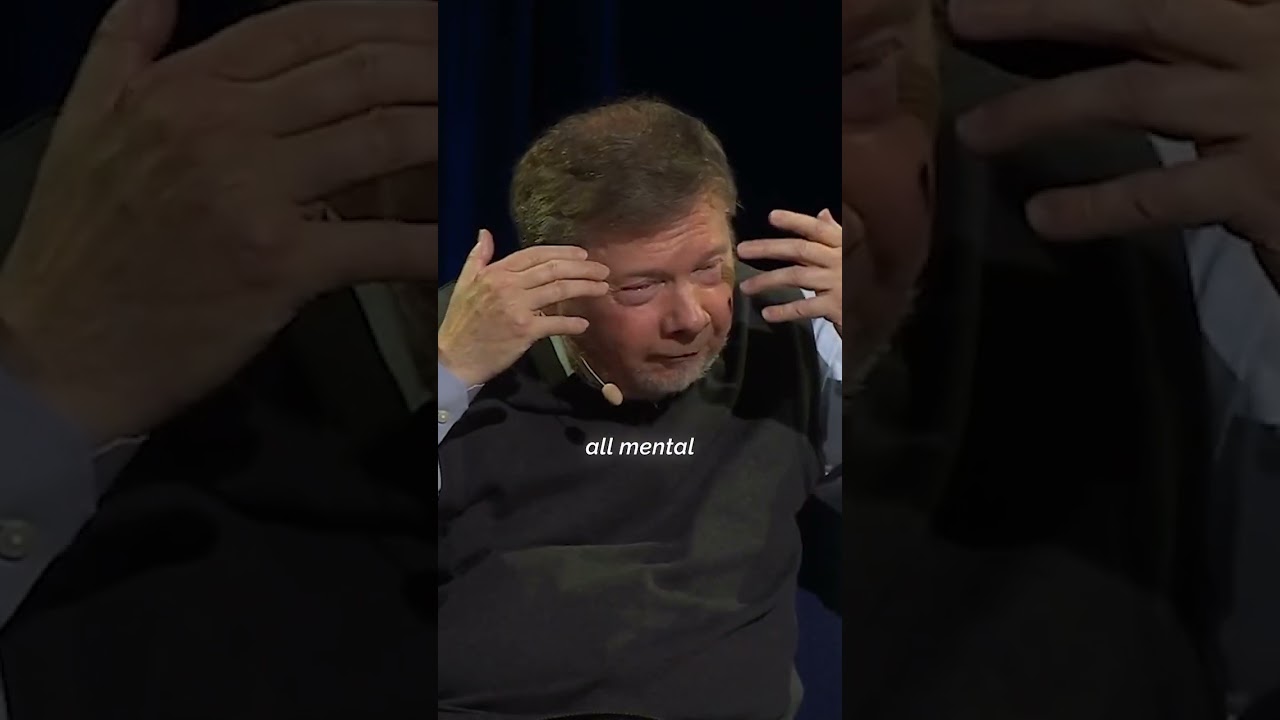
Real change does not originate in comfort or ease. According to Eckhart Tolle, transformation occurs when life circumstances challenge you and push you beyond the boundaries of what feels safe. This principle reframes how we understand personal development—not as something we achieve through gradual refinement, but as something that emerges when we are forced to meet circumstances beyond our habitual responses. The mechanism of real change is adversity, discomfort, and the dissolution of our familiar psychological structures.
Why Comfort Prevents Genuine Transformation
Most approaches to self-help assume that growth comes through incremental effort—reading books, attending workshops, practicing techniques. Yet Tolle's observation suggests a fundamental misunderstanding. When life is comfortable, our conditioned patterns of thought and behavior remain undisturbed. We have no pressing reason to question our assumptions, our emotional reactions, or our habitual ways of organizing reality. The ego—that structure of identification with thoughts, memories, and roles—remains firmly entrenched.
Comfort, in this sense, is a kind of stasis. The psyche has no friction against which to sharpen itself. We can intellectually understand concepts of presence, non-resistance, or ego dissolution, but without the pressure of circumstance, these remain abstract knowledge rather than lived transformation. The comfortable person can acknowledge that presence is valuable while simultaneously remaining lost in thought. They can agree that acceptance is wise while continuing to resist their experience. The gap between intellectual understanding and actual change remains unbridged.
How Does Adversity Catalyze Real Change?
When life challenges you—through loss, illness, relationship breakdown, professional failure, or existential crisis—your habitual responses suddenly become inadequate. The coping mechanisms that worked in comfort no longer function. You cannot think your way out of certain situations. You cannot maintain your usual identity because circumstances have stripped away its props. This is where genuine transformation becomes possible.
Adversity creates what might be called a "psychological emergency." In this state, the normal defenses that keep you locked in conditioned patterns weaken. You become more permeable to reality as it actually is, rather than as you've constructed it. Old strategies collapse. The ego's usual tools—blame, denial, distraction, righteousness—no longer fully work. In this opening, genuine change can occur.
This is not to romanticize suffering. Rather, it is to recognize that the dissolution of comfort is often the condition under which the ego's grip loosens enough for a shift in consciousness to take place. The person who loses their job and faces financial uncertainty may, for the first time, question what they actually want rather than what they thought they should want. The person who experiences illness may, for the first time, fully accept their body and mortality. The person whose relationship ends may, for the first time, meet themselves directly without the distraction of partnership.
The Distinction Between Change and Resistance
Tolle's insight depends on distinguishing between two kinds of response to adversity. One response is to resist the challenge—to fight against what is happening, to try to return to the state of comfort, to blame external circumstances or other people. This resistance can take years or decades and may never result in actual change. The person simply cycles through variations of the same consciousness, the same reactive patterns.
The other response is to surrender to what is happening—not in passivity, but in acceptance. This acceptance creates space for actual transformation. When you stop resisting a difficult circumstance and instead meet it directly, your nervous system can begin to regulate. Your mind can rest from the exhausting work of denying reality. In that rest, genuine insight becomes possible. You may see how your own patterns contributed to the situation. You may recognize what you've been taking for granted. You may encounter a deeper dimension of yourself that the comfortable ego never allows.
Why We Avoid the Threshold of Change
Understanding that real change requires moving beyond comfort explains why so many people remain trapped in dysfunctional patterns despite years of self-awareness work. They understand the concept; they have read the books. What they have not done is allowed themselves to be pushed beyond the familiar boundaries of safety. They remain, in some measure, in comfort—the comfort of staying the same, with all its pain.
This resistance to genuine transformation is not weakness. It is a fundamental human tendency. The ego prioritizes safety over growth. Familiar suffering often feels safer than the unknown territory of actual change. A person may remain in a dead relationship, a meaningless job, or a limiting belief system not out of stupidity but out of a deep attachment to the known, however painful.
The Role of Life Circumstances in Awakening
Tolle's perspective suggests that what we call "life challenges" or "difficult circumstances" may actually be precisely what we need for growth. This is not a moral statement—the universe is not punishing you or rewarding you. Rather, it is a functional observation: the structure of consciousness itself requires friction to shift. Just as muscles require resistance to grow stronger, consciousness requires the pressure of unmanageable circumstance to transform.
This reframes how we might relate to adversity. Instead of asking "Why is this happening to me?" (a question that assumes victimization), we might ask "What is this situation asking of me? What part of my conditioned consciousness is being challenged? What would it mean to not resist this?" These questions do not minimize the difficulty but they do open the possibility that the difficulty serves a function beyond mere suffering.
Where to Go From Here
If you recognize that you are currently in comfort and wondering whether change is actually possible, consider what resistance you might be maintaining. Are there areas of your life where you know something needs to shift but you have not allowed yourself to be truly unsettled by the status quo? What would it cost you to stop resisting, at least for a moment?
If you are currently in adversity, the invitation is to experiment with acceptance rather than resistance. Notice the impulse to fight against what is happening, to blame, to deny. Then, deliberately, pause that resistance. Meet the situation as it actually is. What becomes available in that space of acceptance?
For deeper exploration of how consciousness transforms through acceptance and the dissolution of the ego's protective structures, Eckhart Tolle's full body of work—particularly The Power of Now and his teachings on presence—provides both conceptual frameworks and practical pathways for understanding how change actually occurs.