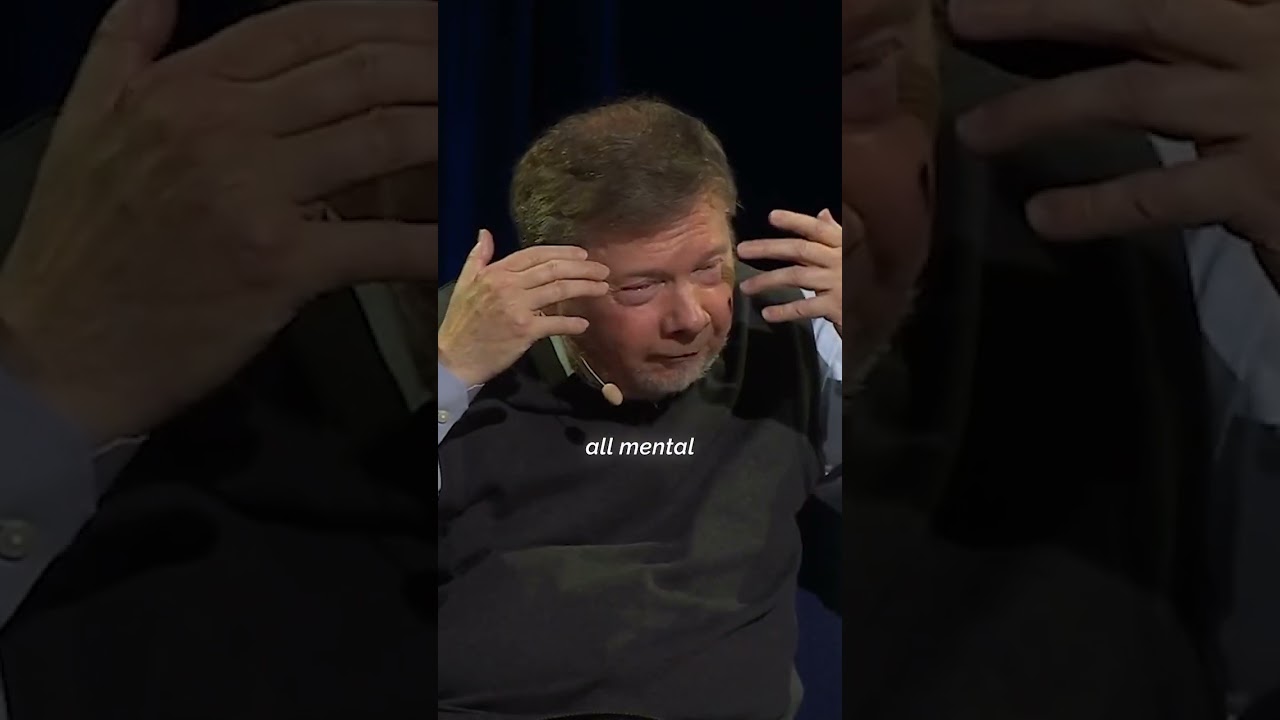
Eckhart Tolle argues that grounding your sense of self in what you achieve or how others perceive you creates a fragile foundation for self-worth. True value does not rest on accomplishments, recognition, or external validation. When you stop seeking yourself in your actions or in the judgment of others, a more stable and genuine sense of self-worth becomes available—one that cannot be threatened by failure, loss, or changing circumstances.
What Does It Mean to Build Self-Worth on Achievement?
Many people unconsciously structure their identity around what they accomplish. A promotion becomes proof of value. A published work, a degree, a financial milestone—each becomes a brick in the wall of self-esteem. This approach feels logical: if I achieve more, I am more. Yet Tolle points to a fundamental flaw in this logic. When your sense of self is entirely dependent on your resume, you are constructing a house on sand.
The problem is not ambition itself, but the underlying belief that achievement makes you worthy. Under this system, every accomplishment is both a victory and a debt. You must keep achieving, keep earning validation, keep proving yourself—because the moment the wins stop, so does your sense of worth. This creates a perpetual treadmill where enough is never enough. The self becomes a project that never finishes, a hunger that external success cannot truly feed.
Why Is Achievement-Based Worth Fragile?
Fragility arises because achievement is unstable. You cannot control whether others recognize your work. You cannot prevent failure, loss, or circumstance from stripping away what you built. A company downsizes. A relationship ends. Health fails. Tastes change and what once impressed no longer matters. When your identity is tied to these moving targets, you are constantly vulnerable.
Beyond circumstance, there is also the ceiling problem. At some point, there is no higher achievement to reach. Success can feel hollow because the promise—that accomplishment would finally make you feel worthy—goes unfulfilled. Many high achievers report this: reaching the goal and feeling empty. The achievement never delivered what was promised because the real issue was not the absence of accomplishment; it was a fundamental misunderstanding about where worth comes from.
Additionally, achievement-based worth breeds comparison. If your value comes from what you do, then you are always measuring yourself against others who do more, do it better, do it faster. This creates a competitive mind that cannot genuinely relax or celebrate others' success without sensing a threat to your own standing.
How Does Seeking Yourself in Others' Perception Create Limitation?
Tolle points to a second dimension of the same problem: the search for self in how others see you. This is the external mirror approach to identity. You look to approval, admiration, respect, or even envy from others and use these reflections to confirm who you are. Without the applause, without the recognition, you feel invisible or diminished.
This creates an exhausting dependence on external validation. You cannot control what others think. People are distracted, biased, projecting their own concerns. You may do excellent work and receive indifference. You may make a mistake and be forgiven, or you may be condemned for something trivial. The verdict is unpredictable and often disconnected from reality. To build yourself on this foundation is to build on opinion rather than truth.
Moreover, seeking yourself in others' eyes fragments your sense of self. You become a different person depending on who is watching. You perform for your boss differently than for your friends, for your family differently than for strangers. Each audience sees a version of you, and if you derive your identity from these external mirrors, you are a collection of reflections with no coherent center.
What Is the Alternative to Achievement-Based Worth?
Tolle's suggestion is to stop seeking yourself in what you do or how you are perceived. This does not mean ceasing to act or to care about the quality of your work. Rather, it means decoupling your fundamental value from the outcome. You are not less worthy if a project fails. You are not more worthy if it succeeds. The attempt, the presence, the intention—these matter. The result does not determine you.
This shift is subtle but profound. When achievement is not about proving yourself, you are free to work with integrity, creativity, and full attention. You can take risks without the existential fear that failure will erase you. You can learn from mistakes without shame. You can celebrate others' success without resentment. The work remains meaningful, but it is no longer a referendum on your existence.
Equally, when you stop seeking yourself in others' approval, you gain access to an internal reference point. You know what matters to you. You can act with authenticity because you are not constantly adjusting your shape to fit the expectations of an imagined observer. This does not mean becoming indifferent to others; it means your relationships are based on genuine presence rather than on negotiation for validation.
Where Does True Worth Actually Come From?
True worth, in Tolle's view, is not earned. It is not a possession or a status. It is simply what you are, independent of what you do or what others think. This is not metaphorical or spiritual bypassing—it is a practical observation. Before any achievement, before any judgment, before any thought about yourself, you exist. You are conscious. You are present. That fact alone is the basis of worth.
This unconditional worth does not require proof because it is not in question. It cannot be taken away because it is not given by circumstance. It is not diminished by failure or increased by success because it is not measured by outcomes. It simply is, and when you recognize this, the desperate search for validation through achievement quiets. You can still accomplish, still engage with the world fully, but from a place of wholeness rather than scarcity.
How Can You Begin to Separate Identity From Achievement?
The first step is awareness. Notice when you are seeking yourself in your accomplishments. Observe the thought: "If I do this, then I will be someone." Watch the relief when you succeed and the self-doubt when you fail. Do not judge these patterns; simply see them clearly. The recognition itself begins to loosen their grip.
Next, create space between the work and the self. When you act, act with full presence and care, but hold lightly to the outcome. Do your best because excellence is intrinsically worth doing, not because it will make you worthy. This is easier to articulate than to practice, but each moment you choose the work itself over the identity promise, you strengthen a new habit of mind.
Finally, practice presence independent of performance. Spend time simply being—without accomplishment, without an audience, without anything to show for it. Notice that your existence does not require justification. Your presence is enough. As this recognition grows, your relationship with achievement naturally shifts. You do not abandon it; you simply stop asking it to carry the weight of your worth.
Where to go from here
Explore what happens when you consciously act without needing the action to define you. Notice the difference between working from wholeness versus working from scarcity. Consider what would change in your life if achievement mattered but could not threaten your fundamental sense of self. Read Tolle's other work on the ego and identity, or experiment with practices that anchor you in present-moment awareness rather than in the identity you are building. The shift from achievement-dependent worth to unconditional self-recognition is not overnight, but each moment of recognition is a step toward freedom.