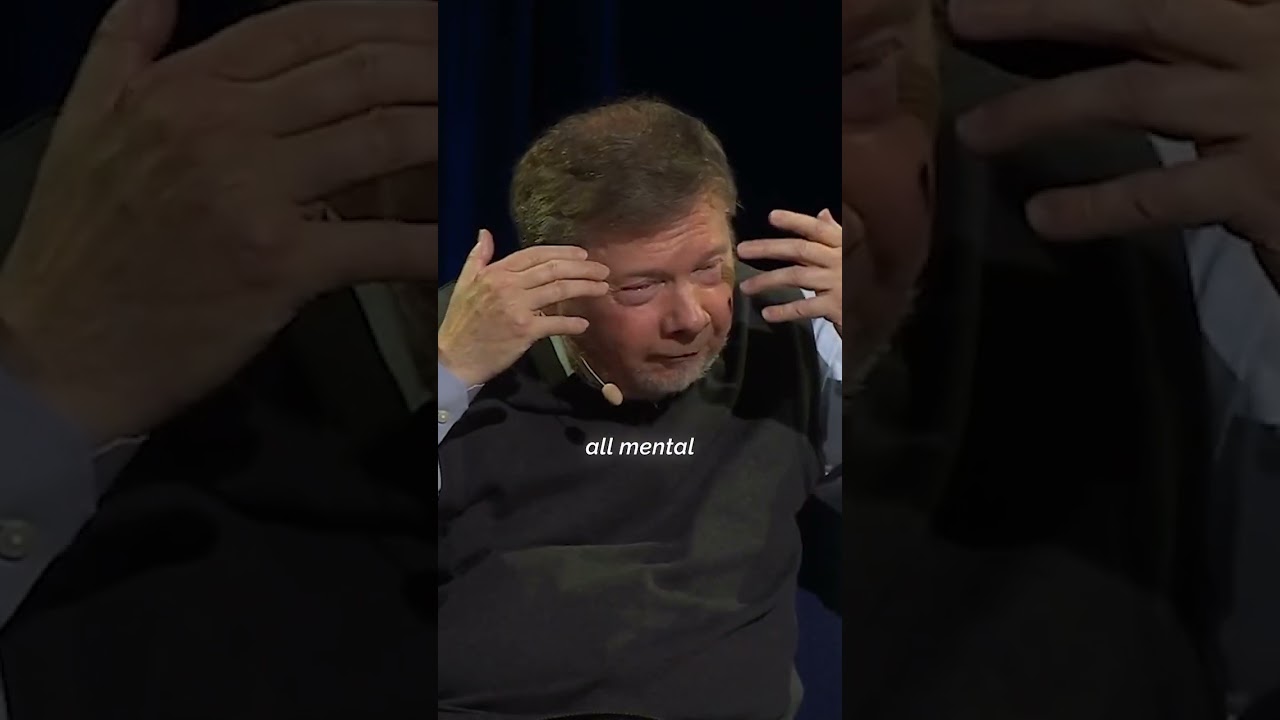
In this 8-minute teaching, Eckhart Tolle addresses the widespread sense that the world is becoming increasingly chaotic and explains why such turbulence is not a sign of decline but rather an essential mechanism driving the evolution of human consciousness. Rather than viewing setbacks, challenges, and periods of regression as detours from progress, Tolle reframes them as integral to spiritual awakening—the very friction that strengthens our capacity to remain present and aware.
Why Does the World Feel More Chaotic Than Ever?
A common complaint in modern life is that things seem to be falling apart. News cycles amplify crisis. Political polarization deepens. Personal difficulties accumulate. The question naturally arises: Is the world actually getting worse, or are we simply more aware of its dysfunction through technology and media?
Tolle suggests the answer is neither straightforward nor pessimistic. The apparent chaos reflects a deeper transition happening in human consciousness itself. What looks like breakdown from the ego's perspective—loss of control, uncertainty, the crumbling of old structures—is actually a necessary breakdown that precedes transformation. The world's turbulence mirrors the inner turbulence many individuals experience when they begin to wake up to their patterns and conditioning.
How Are Setbacks and Challenges Actually Strengthening Awakening?
One of Tolle's core insights is that obstacles are not interruptions to the spiritual path—they are the path itself. When life becomes difficult, the ego typically responds with resistance, blame, and attempts to regain control. But from a consciousness perspective, these very difficulties create the conditions necessary for awakening to occur.
Setbacks force us to question our assumptions. They crack open the automatic patterns of thought that usually run our lives. When things fall apart, we can no longer rely solely on our mental habits and survival strategies. We are pushed toward presence—toward simple awareness of what is actually happening right now, rather than our story about it. This is where true spiritual development begins.
A person experiencing financial loss, relationship breakdown, or health crisis often finds that the very pain that seemed unbearable becomes a gateway to deeper peace. Not because the pain is pleasant, but because crisis dissolves the illusions that kept consciousness bound to a limited sense of self. The obstacles that seem to block us are actually removing the obstacles to our authentic awareness.
What Role Does Regression Play in Evolution?
It's important to note that evolution is not linear. The teaching explicitly mentions that periods of regression—backsliding, returning to old patterns, losing ground—are also essential parts of the process. This counters the common spiritual fantasy that progress should only move upward.
In real life, a person may experience clarity and peace for weeks, only to find themselves reactive and stuck in old thinking again. From the ego's viewpoint, this feels like failure. But from a larger perspective, regression reveals where consciousness still needs to loosen its grip. Each return to old patterns, if met with awareness rather than judgment, teaches something about the deeper layers of conditioning. The regression itself becomes the teacher.
This is why Tolle's teaching on "the dark night"—presented more fully in his longer course on finding meaning after personal crisis—is so relevant now. Periods of darkness, confusion, and apparent backward movement are not aberrations. They are the forge in which authentic consciousness is strengthened.
How Does Global Chaos Mirror Personal Spiritual Crisis?
There is a parallel between what individuals experience in their own dark nights and what humanity appears to be experiencing collectively. As more people begin to awaken—to question materialism, to seek meaning beyond consumption, to feel the inadequacy of purely mental solutions—the old structures that sustained collective unconsciousness begin to crack.
The chaos we perceive at the global level is partly the sound of those old structures breaking down. Political systems based on division and control generate increasing dysfunction. Economic models built on infinite growth show their limits. Social media amplifies reactivity and disconnection rather than genuine connection. The systems themselves are being exposed as inadequate to the deeper needs of human consciousness.
From this view, the world's apparent crisis is a sign that collective awakening is already underway. The chaos is not evidence that humanity is failing—it is evidence that humanity is being forced, by the limitations of old consciousness, to evolve.
What Does It Mean to Remain Present During Chaos?
The practical implication of this teaching is not passivity or spiritual bypassing. It is not acceptance that makes no effort to reduce suffering. Rather, it is the recognition that the quality of presence we bring to difficulty determines whether that difficulty becomes merely destructive or becomes transformative.
When we resist what is happening—mentally arguing against reality, blaming others, trying to escape the moment—we remain locked in the reactive patterns that perpetuate suffering. But when we can bring awareness to the difficulty itself, without the overlay of resistance, something shifts. The difficulty remains, but we are no longer identified solely with the ego's story about it. We can think and act from a deeper wisdom.
This doesn't require a complete transcendence of emotion or thought. It means noting the emotion or thought without letting it entirely colonize consciousness. It means the capacity to hold two things at once: awareness of the difficulty, and awareness that awareness itself is untouched by the difficulty.
Are We Heading Toward a Conscious Breakthrough?
Tolle's essential message is one of cautious hope grounded in understanding how consciousness actually evolves. The world's chaos is not a sign of final collapse, but a contraction before expansion. The obstacles multiplying before us are not evidence of our species' failure but invitations to a deeper awakening.
This doesn't mean that all outcomes are guaranteed positive or that suffering will disappear. But it suggests that the very turbulence we experience—individually and collectively—contains within it the seeds of genuine transformation. The challenge is learning to meet that turbulence with presence rather than panic, with awareness rather than automatic reactivity.
Where to Go From Here
If this teaching resonates, Tolle's longer course "Awakening Through the Dark Night" offers six hours of in-depth teachings and practices designed specifically for those navigating intense difficulty and uncertainty. It explores how to find meaning and purpose not despite personal crisis, but through it—recognizing the unique spiritual potential that each dark night carries.
For ongoing practice, joining Eckhart Tolle Now provides access to over 300 hours of teachings across topics like relationships, stress relief, and presence in daily life, along with a community of practitioners and regular Q&A sessions with Eckhart and his partner Kim Eng. The immediate practice, though, requires nothing but this moment: Can you notice, right now, the difference between the difficulty you face and the awareness that witnesses it?