What Does It Mean When Consciousness "Stirs"?
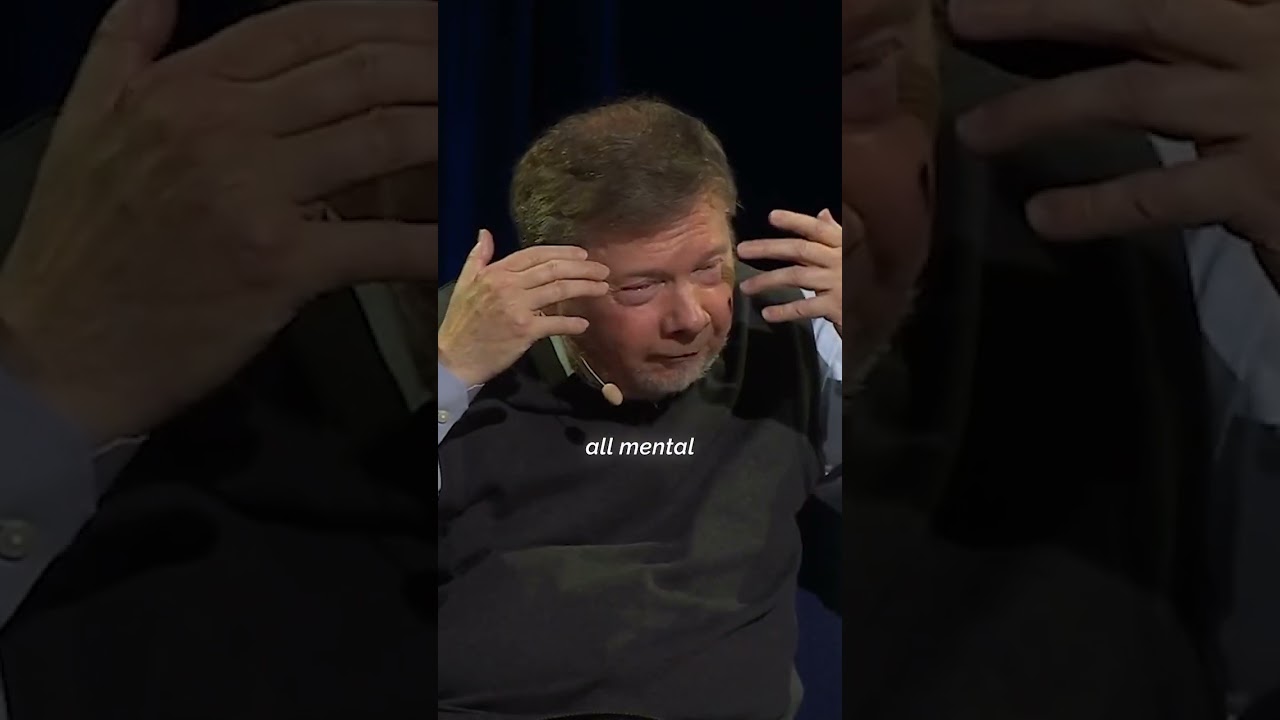
Tolle begins from a fundamental premise: consciousness is not static. When it stirs—when it awakens or becomes more active—it doesn't ask for permission or wait for the "right" venue. It moves. This stirring is not metaphorical but describes a real shift in human awareness, a transition from identification with thought and ego toward presence and being.
The implication is that consciousness, once activated, seeks outlets. It doesn't remain contained in meditation cushions or ashrams. Instead, it flows into everyday life, relationships, art, and culture. For Tolle, this is not surprising or anomalous—it's the natural behavior of awakened awareness. When someone touches something real about existence, that truth tends to express itself.
Why Does Spirituality Appear in Unexpected Places Like Hip-Hop?
Tolle's observation that consciousness ended up in a Kendrick Lamar album—a major hip-hop artist's work—points to a broader truth about cultural expression and spiritual awareness. Hip-hop, as a genre rooted in raw truth-telling, social commentary, and introspection, is not inherently separate from spiritual inquiry. Both are concerned with reality: one examines social and personal reality; the other examines the nature of being itself.
Contemporary artists, including those working in hip-hop and rap, are often grappling with existential questions: What is real? What is authentic? How do we live with integrity in a fragmented world? These are fundamentally spiritual questions, even when not framed in traditional spiritual language. When an artist's consciousness becomes more awakened, that awareness naturally infuses their work.
Kendrick Lamar, in particular, is known for layered, introspective lyricism that often touches on themes of suffering, consciousness, mortality, and transcendence. The appearance of Tolle's ideas or influence in such work—whether directly sampled, referenced, or simply resonating with similar insights—demonstrates that consciousness doesn't discriminate by genre or audience size. It finds its channel.
How Does Spiritual Awareness Bypass Traditional Boundaries?
One of Tolle's core teachings is that presence and consciousness are available to anyone, regardless of their background, belief system, or cultural context. This principle extends to expression: spiritual truth, once recognized, doesn't stay neatly within spiritual communities. It leaks into mainstream culture, commercial spaces, and art forms that might seem unrelated to traditional spirituality.
This is significant because it challenges the assumption that spirituality belongs only in designated spaces—temples, retreats, self-help sections of bookstores. Instead, Tolle suggests that awakened consciousness is boundary-less. It appears in conversations, in literature, in film, and yes, in music that reaches millions of listeners who might never visit a meditation retreat.
For Tolle, this is not dilution of spiritual truth but its natural dissemination. When consciousness stirs in one person—an artist, a musician, a public figure—it influences the collective consciousness through whatever medium that person works with. The message becomes embedded in culture itself.
What Is the Relationship Between Art and Consciousness?
Art, in Tolle's view, is one of humanity's most direct channels for expressing consciousness. When an artist creates from a place of presence and awareness, that state transfers into the work. A listener or viewer then has the opportunity to encounter that consciousness directly through the art form.
This doesn't require explicit spiritual content. A song about struggle, love, mortality, or authenticity that comes from genuine presence carries the vibration of consciousness. The listener may not consciously recognize it as "spiritual," but they feel it. They resonate with it. This is consciousness recognizing itself across different contexts and forms.
Hip-hop, with its emphasis on authentic voice and unfiltered truth-telling, is particularly suited to this transmission. When a major hip-hop artist incorporates or resonates with ideas about consciousness, presence, and the transcendence of ego, those ideas reach audiences that might be completely untouched by traditional spiritual teaching.
Why Does Tolle Frame This as Natural and Inevitable?
Tolle's tone in describing consciousness finding its way into hip-hop albums is notably unsurprised. He frames it as simple fact: "When consciousness stirs, it finds its way into unexpected places, even into the music." This suggests he views it not as a remarkable coincidence but as an inevitable outcome of how consciousness operates.
The underlying principle is that consciousness is the fundamental ground of being. When it becomes more active in individuals or culture, it naturally expresses itself. The "unexpected places" are only unexpected from an ego perspective that assumes spirituality belongs in certain boxes. From the perspective of consciousness itself, there is no unexpected—there is only expression finding its form.
This also implies something about cultural evolution. As collective consciousness shifts, that shift appears across all domains of culture simultaneously. Art, music, film, even commercial spaces begin to reflect more awakened awareness. It's not that spiritual teachers or traditions are "infiltrating" mainstream culture; it's that mainstream culture is beginning to reflect the consciousness that's present within it.
What Can We Learn From Consciousness Appearing in Mainstream Music?
For practitioners and seekers, the appearance of consciousness-rooted ideas in mainstream hip-hop albums offers several insights:
- Spiritual awakening is not confined to spiritual contexts. It moves through whatever channels are available and wherever there is openness to receive it.
- Art and culture are legitimate spiritual transmission vehicles. A listener encountering consciousness through music may experience the same recognition as someone in a meditation retreat.
- Collective consciousness is evolving visibly. When major cultural figures begin expressing ideas about presence, authenticity, and transcendence, it indicates a genuine shift in collective awareness.
- The message matters less than the presence behind it. Whether consciousness is transmitted through a formal teaching, a song lyric, or a conversation, what transfers is the state of the transmitter.
For artists themselves, this suggests that creating from a place of genuine presence—rather than from ego's need to impress or control—naturally channels something real. The work becomes a vehicle for consciousness rather than merely a vehicle for personal ambition.
Where to Go From Here
If you're interested in exploring how consciousness expresses itself through culture and art, begin by noticing what resonates. When you encounter music, film, literature, or other art that touches something real in you, investigate what you're responding to. Is it the surface content, or is there a presence behind it—a quality of authenticity or aliveness that the artist brought to the work?
You might also explore how consciousness shows up in your own creative or expressive channels, whatever they are. Tolle's observation suggests that as your own awareness develops, it will naturally find expression. The question is not whether it will flow through you, but whether you're present enough to recognize it when it does, and whether you're willing to let it move without the ego's interference.
Finally, remain open to encountering spiritual truth in unexpected places. If consciousness can appear in a Kendrick Lamar album, it can appear anywhere—in a conversation with a stranger, in a moment of attention while washing dishes, in the lyrics of a song you've heard a hundred times but suddenly hear differently. The stirring is constant; the question is whether we're awake enough to notice it.
]]>