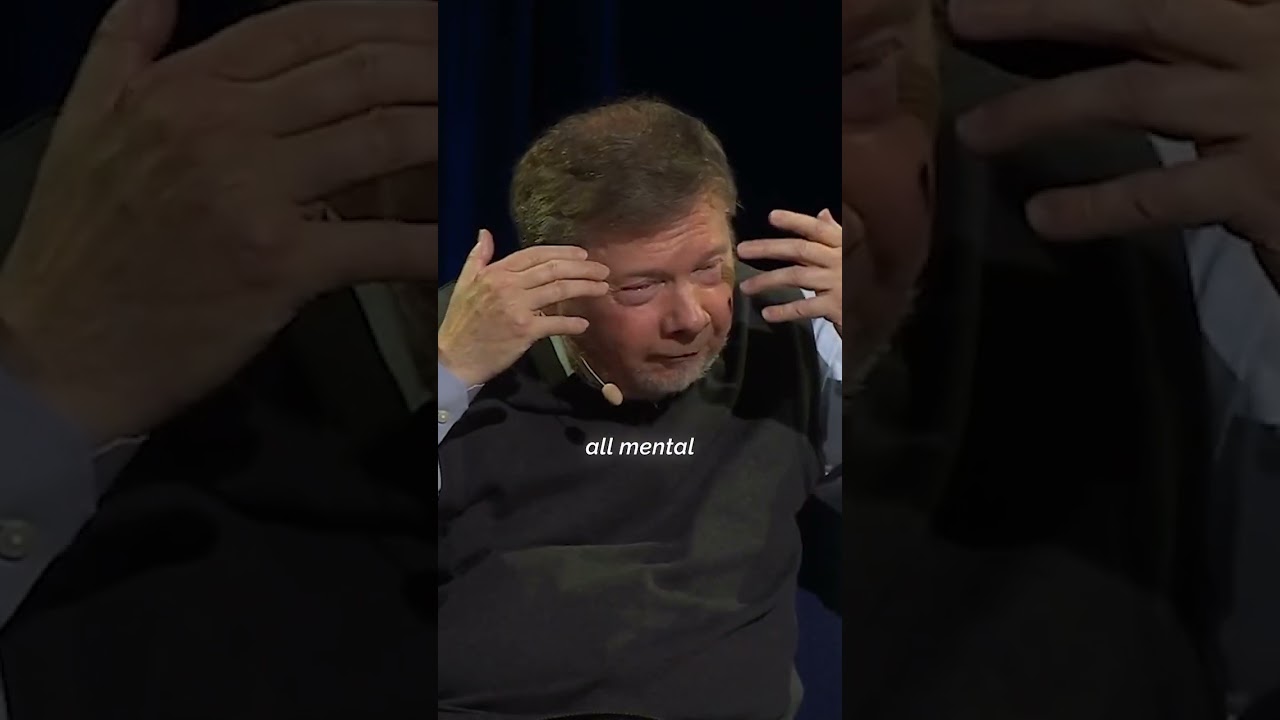
When you fuse your identity with your opinions, disagreement becomes existential threat. A person who challenges your view isn't challenging an idea—they're attacking your sense of self. This unconscious mechanism turns ordinary intellectual debate into tribal warfare, making genuine dialogue impossible. The underlying driver is not the pursuit of truth, but the ego's need to defend and protect itself.
Why Disagreement Feels Like a Personal Attack
Most people assume that conflict arises from genuine disagreement about facts or ideas. In reality, the intensity of human conflict often has little to do with the substance of the disagreement and everything to do with ego attachment. When you identify yourself with an opinion—when you internalize it as part of who you are—any challenge to that opinion becomes a threat to your very existence.
This is the mechanism Eckhart Tolle describes in this teaching: the moment you say "I believe X" and internalize that belief as core to your identity, you have created a fragile psychological structure that must be defended at all costs. It is no longer a thought you hold. It becomes *you*. When someone disagrees, they are not simply offering a counterargument. They are rejecting you.
This explains why reasonable people become unreasonable in argument. It explains why family members stop speaking to each other over politics. It explains why social media discourse is so bitter and absolute. The conflict is not about the opinion itself—it is about the protection of the self.
How Does Identity Fusion with Opinion Actually Work?
The process is usually unconscious. You adopt a belief—perhaps about religion, politics, parenting, health, or morality. You repeat it. You defend it. You build a narrative around it. Over time, the belief becomes so integrated into your self-image that you forget it was ever a separate thing. You are no longer "someone who believes X." You *are* X.
Once this fusion occurs, the ego enters a state of hypervigilance. Any information or person that contradicts the belief is perceived as dangerous. The rational mind, which could easily consider counterarguments, becomes inaccessible. Instead, you enter a defensive posture. You argue not to discover truth, but to win. You dismiss the other person not because their evidence is weak, but because acknowledging any validity to their position would threaten your sense of self.
This is why two intelligent people can look at the same evidence and reach opposite conclusions. Intelligence alone does not protect you from this mechanism. In fact, a more intelligent mind may be more effective at defending the fused belief—generating elaborate justifications, finding flaws in opposing arguments, constructing elaborate narratives to maintain the illusion.
The Real Conflict: Ego Protection, Not Truth-Seeking
When Tolle points out that "the conflict is not about truth, but about protecting the self," he is identifying the actual operating system beneath most human disagreement. This is not cynical. It is simply accurate observation.
Consider a heated argument you have recently had. Did you enter it genuinely open to being proven wrong? Or did you enter it already knowing what was true, hoping to convince the other person? Most arguments are not truth-seeking exchanges. They are ego performances. Each person is performing their identity, their rightness, their superiority—for themselves and for any audience present.
The moment someone disagrees with you, they are not disagreeing with an opinion. They are disagreeing with your performance of identity. From the ego's perspective, this is an act of aggression. It must be countered, neutralized, defeated. Genuine listening becomes impossible because listening would mean acknowledging the other person's perspective as valid, which would mean cracks in the protective structure of your fused identity.
This is why people in conflict often describe the experience as feeling personally attacked, even when the other person is addressing only ideas. Your nervous system reads the disagreement as danger because, at the level of ego identification, it *is* a form of attack—not on your ideas, but on your self.
Why Disagreement Becomes Enmity
The title of Tolle's teaching—"Why Opinions Turn People into Enemies"—points to this precise phenomenon. An enemy is someone who threatens your survival. When your opinion is your identity, a person who disagrees with that opinion threatens your psychological survival. You perceive them as an enemy because, to your ego structure, they are one.
This perception is real in its psychological consequences, even if it is not accurate at the level of reality. The other person may be offering the disagreement in good faith, seeking genuine dialogue. But once the mechanism of identity fusion activates, their words are filtered through a lens of threat. You hear hostility in their tone even if none is present. You interpret their questions as rhetorical attacks. You assume bad faith because good faith would require you to be genuinely vulnerable to their perspective.
And so a friend becomes an ideological opponent. A colleague becomes a rival. A family member becomes an "other." The relationship shifts from horizontal (two equals exploring ideas together) to vertical (two combatants, one victor, one defeated). The human being in front of you becomes less important than the identity position you are defending.
The Unconscious Nature of Opinion-Identity Fusion
Most people are entirely unaware that they have fused their identity with their opinions. They would say, "I have beliefs, yes, but I can change my mind if new evidence appears." Yet their actual behavior contradicts this. They dismiss evidence. They avoid perspectives that might challenge them. They seek out only information that confirms what they already believe. They are not consciously choosing to be closed-minded. The mind is simply protecting itself.
This is one of the most subtle traps of human consciousness. Your opinions feel like objective truth to you. When you believe something, it does not feel like you are choosing a perspective. It feels like you are perceiving reality. So when someone disagrees, it does not feel like they hold a different opinion. It feels like they are denying reality, being irrational, being hostile.
The gap between how we experience our own beliefs and how we actually come to hold them is enormous. We inherit many beliefs from culture, family, and media without examining them. We adopt beliefs because they offer us identity and belonging. We keep beliefs because changing them would be psychologically destabilizing. Yet we experience all of this as the pursuit of truth.
What Happens When Identity is Not Fused with Belief?
It is possible to hold opinions without fusing them with your identity. In this state, you can disagree with someone without experiencing it as a personal threat. You can listen to a counterargument without defensiveness. You can even change your mind and integrate new information without feeling like you are losing yourself.
This is what genuine learning looks like. This is what genuine dialogue looks like. When your identity is not on the line, you are free to follow the truth wherever it leads. You are free to be wrong. You are free to learn from people you disagree with.
This does not mean having no convictions. It means holding convictions without fusion. It means saying, "This is what I believe based on my current understanding, and I remain open to evidence that might change my mind." The belief is held lightly, as a working hypothesis rather than a core truth about who you are.
Where to Go From Here
The recognition that your opinions are not your identity is the beginning of genuine freedom and authentic communication. Notice where you feel defensive in conversation. Notice which topics trigger a sense of personal threat. These are the areas where fusion has likely occurred. You do not need to change your opinions. You need only to recognize that they are opinions—not you.
This awareness allows you to engage in real dialogue rather than ego performance. It allows you to see other people as people, not as threats or enemies. It allows conflict to be about ideas rather than about the protection of the self. From this place, genuine truth-seeking becomes possible, and genuine connection with those who think differently from you becomes possible.