EveryEvent Honolulu

Browse All Events

Find every event in Honolulu

events

Concerts & Live Music
Festivals
Sports & Recreation
Food & Drink
Arts & Culture
Community
Family & Kids
Nightlife
Comedy
Theater
Popular Destinations
BaliSedonaLos AngelesCosta RicaNew YorkSan FranciscoAustinMiamiJoshua TreeTulum
View All CategoriesView All Destinations

Explore All Features

Powerful tools to grow your events

Platform Features

Smart Dynamic Pricing
Ticket Categories
Assigned Seating
Abandoned Cart Recovery
Visitor Recovery
Donations & Sliding Scale
Affiliate Engine
Ticket Scanner
Coupon Codes
Custom Questions
Ticket Sharing
Upsells & Add-ons
Analytics & Reporting
Email Sequences
Waitlist / Notify / Remind
Explore
Discovery HubArtists & PerformersVenuesKnowledge Base
View All FeaturesAbout Us
PricingBlog
Browse All Events

events

Concerts & Live MusicFestivalsSports & RecreationFood & DrinkArts & CultureCommunityFamily & KidsNightlife

Popular Destinations

BaliSedonaLos AngelesCosta RicaNew YorkSan Francisco

Explore

Discovery HubArtists & PerformersVenuesKnowledge Base

Platform Features

Smart Dynamic PricingTicket CategoriesAssigned SeatingAbandoned Cart RecoveryVisitor RecoveryDonations & Sliding ScaleAffiliate EngineTicket ScannerCoupon CodesCustom QuestionsTicket SharingUpsells & Add-onsAnalytics & ReportingEmail SequencesWaitlist / Notify / Remind
View All FeaturesAbout Us
PricingBlog
Log inSign UpEvent Organizers
  • Browse All Events
  • Concerts & Live Music
  • Festivals
  • Sports & Recreation
  • Food & Drink
  • Arts & Culture
  • Community
  • Family & Kids
  • Nightlife
  • All Categories →
  • All Destinations →
  • For Promoters
  • For Artists
  • For Venues
  • For Festivals
  • For Event Spaces
  • For Nonprofits
  • For Bloggers
  • For Speakers
  • Brand Ambassador
  • Case Studies
  • 350K+ Buyer Network
  • Abandoned Cart Recovery
  • Smart Dynamic Pricing
  • Ticket Categories
  • Recurring Events
  • Assigned Seating
  • Affiliate Engine
  • Waitlist / Notify
  • Ticket Scanner
  • Embed Widget
  • Event Syndication
  • Message Center
  • Integrations
  • Reports
  • All Features →
  • About
  • The Ecosystem
  • Blog
  • Glossary
  • Inspiration
  • Help Center
  • Contact
  • API Docs
  • Brand Assets
  • Careers
  • Press
  • Terms of Service
  • Privacy Policy

Events

  • Browse All Events
  • Concerts & Live Music
  • Festivals
  • Sports & Recreation
  • Food & Drink
  • Arts & Culture
  • Community
  • Family & Kids
  • Nightlife
  • All Categories →

Getaways

  • All Destinations →

For Organizers

  • For Promoters
  • For Artists
  • For Venues
  • For Festivals
  • For Event Spaces
  • For Nonprofits
  • For Bloggers
  • For Speakers
  • Brand Ambassador
  • Case Studies

Features

  • 350K+ Buyer Network
  • Abandoned Cart Recovery
  • Smart Dynamic Pricing
  • Ticket Categories
  • Recurring Events
  • Assigned Seating
  • Affiliate Engine
  • Waitlist / Notify
  • Ticket Scanner
  • Embed Widget
  • Event Syndication
  • Message Center
  • Integrations
  • Reports
  • All Features →

Company

  • About
  • The Ecosystem
  • Blog
  • Glossary
  • Inspiration
  • Help Center
  • Contact
  • API Docs
  • Brand Assets
  • Careers
  • Press
  • Terms of Service
  • Privacy Policy
EveryEvent
© 2026 EveryEvent Honolulu. All rights reserved.
Inspiration

Meditation Without Effort: AllowRather Than Force

Eckhart Tolle
Eckhart Tolle
May 4, 2026
7 min read

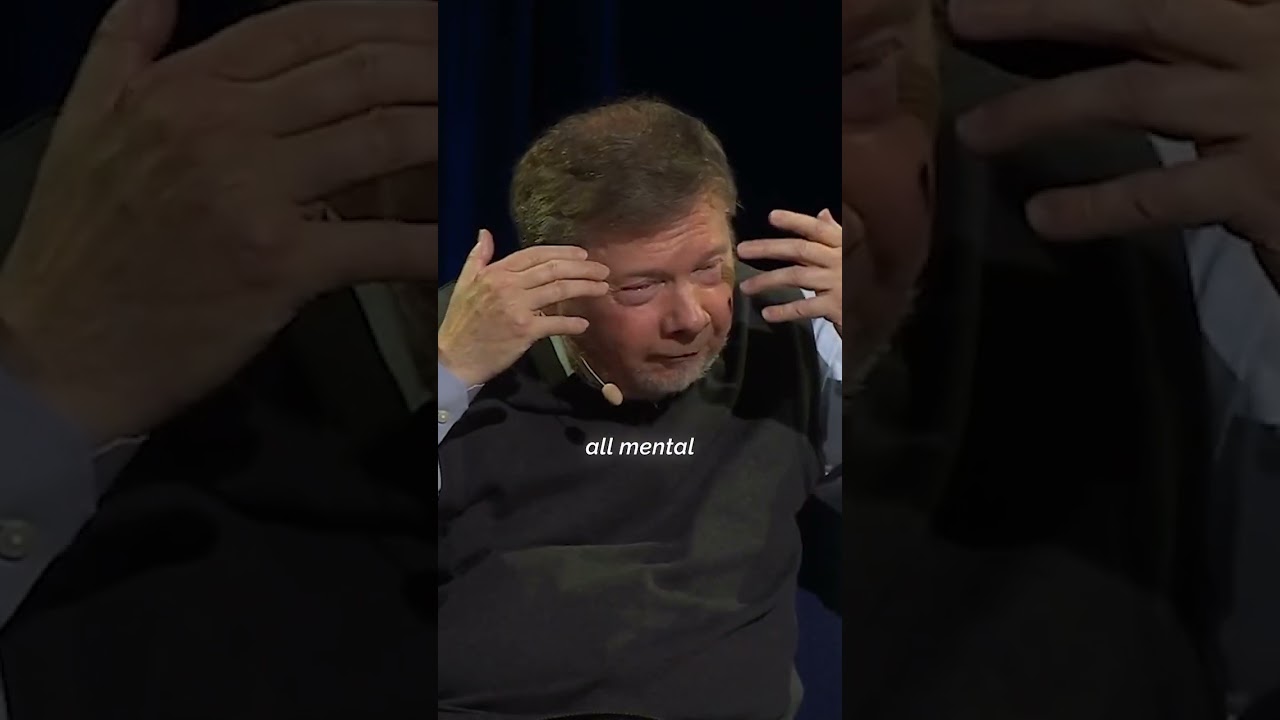
TLDR: In this conversation, Eckhart Tolle and consciousness teacher Peter Russell discuss a refreshingly simple approach to meditation centered on allowing—releasing effort, relaxing the mind, and gently returning to the present moment. Rather than forcing concentration or achieving specific states, this method emphasizes surrender and ease, making meditation accessible to those who struggle with traditional techniques and transforming practice into something naturally enjoyable.

Read · 7 sections

Why Effort and Striving Undermine Meditation

A fundamental barrier many practitioners face is the assumption that meditation requires intense effort. The conventional narrative suggests that to meditate effectively, you must wrestle your mind into submission, maintain iron-clad focus, and achieve particular mental states. This approach creates an internal conflict: the very act of trying hard to quiet the mind often generates tension, restlessness, and self-judgment when the mind inevitably wanders.

Peter Russell's core insight addresses this paradox directly. By introducing the principle of allowing—rather than forcing—practitioners encounter meditation as a fundamentally different experience. Allowing acknowledges a basic truth about consciousness: the mind naturally gravitates toward the present moment when not impeded by our own resistance. The problem isn't that the mind is inherently chaotic; the problem is that we fight against its natural movement through excessive effort.

When someone sits to meditate with the intention to force concentration, they create an internal struggle. Part of consciousness focuses on the breath or a mantra, while another part judges whether the effort is "working." This division of attention actually produces the very restlessness practitioners are trying to escape. Tolle and Russell suggest that recognizing this dynamic—and releasing the effort entirely—is where real practice begins.

What Does Allowing Actually Mean in Practice?

Allowing is not passivity or laziness. It is an active, intelligent relaxation—a conscious decision to stop opposing your own experience. When you allow, you still sit in meditation. You still gently return attention to the present moment when you notice distraction. The difference lies in the quality of that return: it comes without force, without judgment, without the sense that something needs to be fixed.

Consider how allowing operates in everyday life. When you try to remember someone's name and can't, effort typically produces more forgetfulness. But when you relax and stop trying, the name often surfaces spontaneously. Meditation works similarly. The relaxed state of allowing creates the conditions for awareness to settle naturally into the present, rather than being dragged there by willpower.

In practice, allowing might look like this: you notice your attention has drifted to thoughts. Rather than criticizing yourself or forcing attention back to the breath, you simply notice the distraction with gentle curiosity and return. There's no judgment in the noticing, no tension in the return. This soft, accepting quality transforms meditation from a performance—where you're constantly evaluating whether you're "doing it right"—into a simple homecoming to what is already here.

Relaxing the Mind as a Gateway to Present-Moment Awareness

Russell emphasizes that one of the most practical entry points into meditation is relaxation itself. The mind becomes more settled not through forced concentration but through genuine ease. When the body is relaxed and the mind is permitted to soften, natural awareness of the present moment emerges without strain.

This distinction matters profoundly for practitioners who have struggled with meditation. Many people abandon practice because they interpret their wandering mind as failure. But if the goal is not concentration per se but present-moment awareness, then every instance of noticing that the mind has wandered is already a success—it's a moment of presence, a moment of seeing. The practice becomes about appreciating these moments of awareness rather than berating yourself for distractions.

Tolle, whose own teaching emphasizes the power of presence, underscores how allowing quiets the compulsive thinking that dominates ordinary consciousness. When you stop fighting against thoughts and simply observe them without engagement, they naturally settle. The mind begins to rest in awareness itself rather than in the content of thoughts. This shift is quiet, gentle, and available to anyone willing to release the effort to achieve it.

Gently Returning to the Present Moment

The phrase "gently returning" is crucial. In traditional meditation instruction, practitioners are sometimes encouraged to snap attention back sharply whenever the mind wanders, as if disciplining an unruly student. This approach, while potentially effective for some, can reinforce tension and effort.

The gentler approach invites a different quality of attention. When you notice distraction, the return to the breath or the present moment happens with the same ease you might use to turn your head toward a friend's voice. There is interest rather than correction, curiosity rather than correction. Over time, this gentleness actually strengthens awareness more effectively than force does, because it doesn't create resistance to the practice itself.

Practitioners who adopt this approach often report that meditation becomes something they actually enjoy rather than a discipline they feel obligated to endure. This enjoyment matters: it leads to consistency, and consistency compounds the benefits. A gentle ten-minute daily practice sustained over months will yield more insight than sporadic intense sessions undertaken with grim determination.

How Allowing Fits Into Eckhart Tolle's Teaching on Presence

For Tolle, who has long emphasized the power of being rather than doing, allowing in meditation represents a direct expression of his core teaching. Most human suffering arises from identification with the thinking mind and resistance to what is. Meditation, in this framework, isn't a technique to achieve something better; it's a recognition of the peace and awareness that already underlie all experience.

Allowing aligns with this perspective because it involves releasing the fictional story that something is wrong with your present experience. When you stop trying to force your mind into an imagined "perfect meditation state," you're freed to actually experience this moment as it is. And this moment, when met without resistance, naturally contains the clarity and peace that meditation practitioners seek.

Russell's approach, presented in his book How to Meditate Without Even Trying, translates this philosophical insight into straightforward practice. The genius lies in its simplicity: anyone, regardless of prior meditation experience or innate temperament, can access allowing. It requires no special equipment, no mystical belief, no years of training—only a willingness to stop struggling against your own mind.

Making Meditation Accessible and Sustainable

One of the most significant benefits of the allowing approach is that it removes a major barrier to meditation: the sense that you're "bad at it." People often quit meditation because they convince themselves they lack the ability to quiet their minds. But this belief misunderstands the purpose of practice. The mind doesn't need to be quiet for meditation to be effective; it needs to be allowed.

By reframing meditation not as achieving a special mental state but as allowing present-moment awareness to emerge naturally, Russell and Tolle make the practice accessible to restless minds, anxious practitioners, busy people, and anyone else who has felt that traditional meditation was somehow out of reach.

Additionally, this approach integrates more seamlessly into daily life. If meditation is about allowing rather than concentrating, then moments of presence can emerge during everyday activities—washing dishes, walking, listening to someone speak. The practice becomes less about carving out sacred time and more about cultivating a quality of awareness that gradually permeates all experience.

Where to Go From Here

To begin experimenting with allowing in your own practice, set aside five to ten minutes and sit comfortably. Close your eyes or soften your gaze. Rather than trying to meditate "correctly," simply allow yourself to be present with whatever arises—sensations in the body, the quality of the breath, sounds in the environment, thoughts. When you notice the mind has wandered, gently return without judgment.

The key is to release the internal standard you've been measuring yourself against. There is no "good" or "bad" meditation, only the simple practice of allowing and returning, over and over. As consistency builds, you'll likely notice that the mind settles more readily, that present-moment awareness becomes more accessible, and that the struggle with meditation itself softens and dissolves. Peter Russell's book How to Meditate Without Even Trying, selected by Eckhart Tolle for publication through New World Library's Eckhart Tolle Editions, offers detailed guidance for deepening this practice. The conversation between Tolle and Russell provides a foundation for understanding why allowing works and how to embody it in your own meditation.

Transcript

[0:09] And so you you teach meditation and uh

[0:14] but the meditation you teach is

[0:17] not formal meditation. It's a What can

[0:20] you

[0:22] Yes, I mean I've done more formal

[0:24] meditations, but over the years I've

[0:27] just realized that for me it's just

[0:29] about uh letting the attention

[0:31] completely relax.

[0:34] Because all the time we're engaged in

[0:36] thought, the mind becomes slightly

[0:38] tense, slightly constricted. You can

[0:41] always feel the consciousness just

[0:42] focusing.

[0:44] And to me meditation is just like is

[0:46] letting that go. And in that, just

[0:49] stepping out of the thinking. It's not

[0:51] trying to stop thought.

[0:53] I know when I first got involved in

[0:54] meditation years ago, it was like I had

[0:56] all these I read all these books and

[0:58] thought it's going to take a lot of

[0:59] effort, a lot of concentration, and

[1:00] maybe after, you know, many lifetimes

[1:02] you will finally reach nirvana or cosmic

[1:05] consciousness or whatever it was the

[1:07] book was talking about.

[1:09] And I think we all did. We all had these

[1:10] very, you know, complex ideas of what it

[1:13] was about, what awakening was about.

[1:16] And over the years, it's for me it's

[1:18] just got simpler and simpler and simpler

[1:21] and simpler. And it's about not doing

[1:23] anything.

[1:25] But the mind wants to do something,

[1:26] wants to get involved, it wants to

[1:27] follow this, wants to get there.

[1:30] And so I'm just interested in helping

[1:32] people spot

[1:35] just to sit. I call it sometimes just

[1:37] noticing. Just noticing what is.

[1:40] And just to notice when that slightest

[1:43] bit of trying comes in, that slightest

[1:46] bit of wanting. It's like, "Oh, this

[1:47] isn't quite as good as yesterday. Maybe

[1:49] if I just sort of actually did this or

[1:51] maybe if I just relaxed a bit more." And

[1:53] then if I just relaxed a bit

[1:55] But even that is like that very slight

[1:57] bit coming in.

[1:59] And so I just get to say, "Well, just

[2:01] include that. That's also part of the

[2:03] present."

[2:04] The most insidious thoughts in

[2:06] meditation are the ones that are about

[2:07] the meditation.

[2:09] >> [laughter]

[2:10] >> We can recognize the thoughts that say,

[2:12] "I must remember to buy this. And if

[2:14] so-and-so calls tomorrow, what should I

[2:17] say?" And that What I did yesterday,

[2:19] that was really nice. That was nice. I

[2:20] like that. Those thoughts we recognize.

[2:22] But then the thoughts that say, "Okay,

[2:24] how much This is okay. I wonder how much

[2:26] longer I've got to do here?" And um

[2:28] those little thoughts and just say,

[2:29] "That's also part of what is."

[2:32] And

[2:35] even when there's that What What I find

[2:36] happens is there can be a very slight

[2:39] holding or resistance that comes in,

[2:42] which is just resisting the present in

[2:44] some way. Yes. The very idea that I am

[2:48] doing a meditation Yeah. I am becoming

[2:51] an obstacle. Yeah. Uh

[2:54] because that comes in between you that

[2:56] and simply being. Recognize that

[2:59] beingness.

[3:01] So often the technique

[3:03] right can be

[3:05] becomes the obstacle rather than the

[3:07] opening.

[3:08] >> Yeah.

[3:09] So in a way there's no technique

[3:11] technique in your meditation. Right. You

[3:14] can't do meditation, but it's a it's a

[3:16] it's an exercise of awareness, bringing

[3:19] awareness to what is.

[3:21] And it's the resistance that keeps us

[3:23] locked in. And so even

[3:26] bringing awareness to the resistance.

[3:28] And so when you notice there's some

[3:31] slight holding or resistance, to notice

[3:33] what that feels like. Yes.

[3:35] >> How does it feel to be resisting what

[3:37] is? To be resisting the present.

[3:40] >> You can be the space even for the

[3:41] resistance. Yes. Because then you step

[3:44] You step You step back from there.

[3:46] There's the resistance. You're space for

[3:49] that. Yeah. Whatever arises, you can be

[3:51] the space for that. Yeah.

[3:54] So I often say to people, you know, just

[3:56] don't resist the resistance. But

[3:58] paradoxically, you can relax into the

[4:01] resistance. Yes.

[4:03] Yes.

[4:03] It's there. You don't try to get rid of

[4:05] it. You know, there's a faint sense of

[4:06] tension here. I'm just resisting. Okay,

[4:08] just notice it. What's it like? Okay.

[4:11] Now relax into that. And of course, as

[4:12] soon as you do, it dissolves and you

[4:15] just drop back Yes. to being. Yeah. Yes.

[4:19] Yes, that's lovely. So

[4:22] that's uh

[4:23] sounds quite easy.

[4:25] >> [laughter]

[4:26] >> It is totally easy.

[4:30] It is ease itself.

[4:32] >> It's the ease itself. However, these

[4:34] minds have been trained to do things and

[4:37] to try to do things well. And we could

[4:39] always do things a little better. And

[4:40] maybe if I just tried a little bit

[4:43] harder, it'd be even better.

[4:45] Yes. Yes.

[4:47] >> Yeah, we're so We're so trained in this

[4:49] mindset that Yes. to do, to try, to make

[4:52] things better. Yes. And in some ways

[4:55] meditation for me is an untraining of

[4:57] the mind or stepping back from all that

[4:59] conditioning that we have through our

[5:00] lives.

[5:01] It's a stepping back from that.

[5:05] Wonderful.

Eckhart Tolle
AuthorEckhart Tolle

German-born spiritual teacher whose 1997 book The Power of Now became one of the most widely read spiritual works of the 21st century. After a profound transformation at 29 — movin…

View profileWebsite
Explore Topics
Meditation-allowingPresent-moment-awarenessMeditation-without-effortConsciousnessMindfulness-practice

Got Questions?

Frequently Asked Questions

Forcing concentration creates internal conflict and tension, dividing your attention between the meditation object and your judgment about whether you're doing it right. This self-divided state actually generates the restlessness you're trying to overcome. Releasing the effort and allowing the mind to settle naturally removes this conflict.
Allowing is a conscious, intelligent relaxation where you still gently return attention when distracted, but without force or judgment. It's an active choice to stop resisting your own experience, not indifference. This quality of attention itself creates the conditions for present-moment awareness.
Yes—in fact, allowing is particularly effective for restless minds because it doesn't demand you quiet your thoughts through willpower. Instead, you simply notice when attention has drifted and gently return, appreciating each moment of awareness. Over time, this gentle practice settles the mind more effectively than forced concentration.
Even five to ten minutes of daily practice, sustained consistently, will compound benefits over time. The consistency matters more than duration. Regular gentle practice is more beneficial than sporadic intense sessions, because it doesn't create resistance to the practice itself.
Allowing shares elements with mindfulness—both involve gentle observation without judgment—but emphasizes releasing effort even more explicitly. Rather than trying to develop concentration, allowing prioritizes relaxation and acceptance as the gateway to present-moment awareness, making it more accessible to beginners and restless practitioners.
Yes. Once you understand allowing as a quality of awareness rather than a seated technique, presence can emerge during everyday activities like washing dishes or listening to someone speak. The practice becomes about cultivating allowing as a way of moving through daily life, not just during formal meditation sessions.
Russell means that effective meditation doesn't require intense effort or the achievement of special states. By allowing present-moment awareness to emerge naturally rather than forcing it, meditation becomes effortless—it's simply a homecoming to what is already here. This removes the struggle that often prevents people from developing a sustainable practice.

Continue Reading

More from Eckhart

View All
God Beyond the Sky: Rethinking Divine Nature
Inspire

God Beyond the Sky: Rethinking Divine Nature

God is not an external judge deciding human suffering. Suffering itself becomes the mechanism through which consciousness awakens to itself.…

1 min read
God, Suffering, and the One Life Across Traditions
Inspire

God, Suffering, and the One Life Across Traditions

Eckhart Tolle explores how Islam, Buddhism, and Greek philosophy all point to the same ultimate reality—and why the problem of suffering dis…

1 min read
Why Humanity Cannot Sit in Silence: Disconnection from Being
Inspire

Why Humanity Cannot Sit in Silence: Disconnection from Being

The root of human conflict lies in disconnection from the being dimension—the inability to find peace when alone. When disconnected from bei…

1 min read
Who You Really Are Beyond Surface Identity
Inspire

Who You Really Are Beyond Surface Identity

You are not your body, name, or conditioned mind. Eckhart Tolle reveals the distinction between surface identity and deeper being.…

1 min read

Keep exploring

Continue your journey

More wisdom and gatherings from across the BrightStar directory.

More Articles

Browse the full library of teachings, interviews, and guides.

Back to all articles →

Teachers & Artists

Explore the lineages, musicians, and guides of the conscious world.

Explore artists →

Find an Event

Kirtan, retreats, sound baths, breathwork, festivals — happening soon.

Browse events →
Read more from BrightStarCreate Free Account
Host your own gatherings?Try the Demo