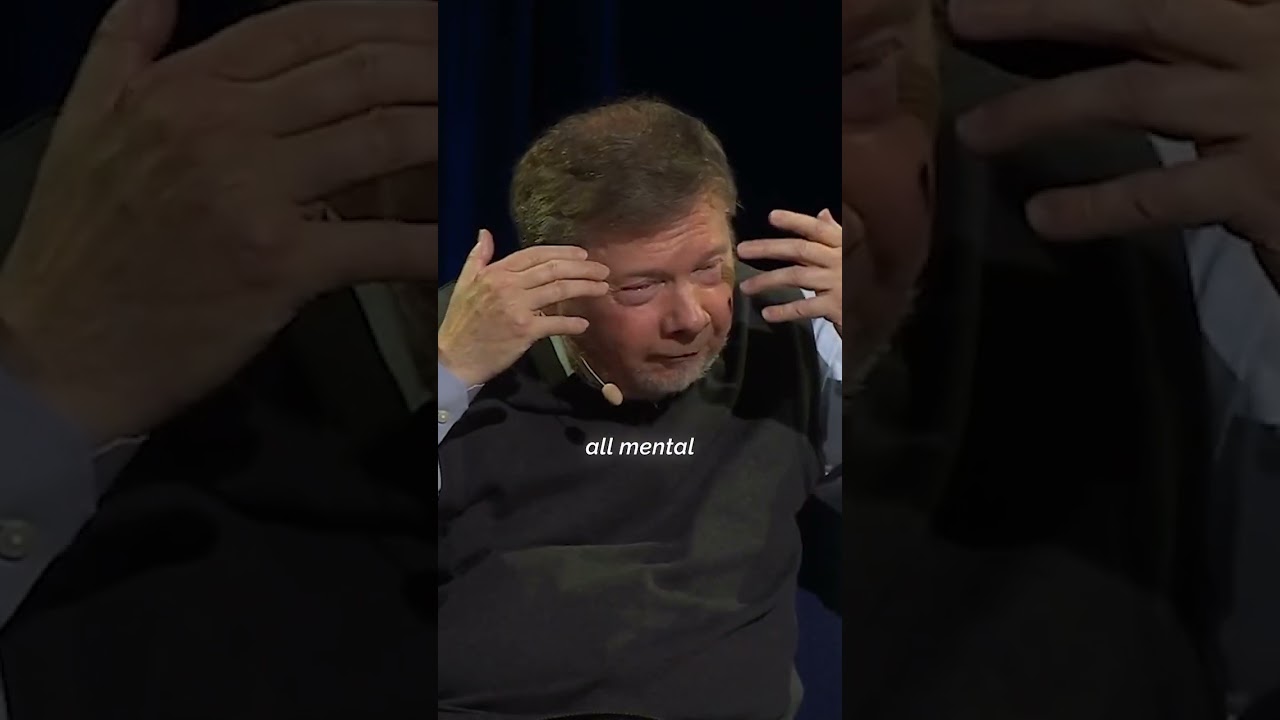
Eckhart Tolle teaches that most people operate under a fundamental misunderstanding about the nature of reality and identity. The future is not real—it exists only as thought in the present moment. Our sense of self is typically constructed from accumulated mental narratives and emotional patterns, a story we believe to be "my life." However, beneath this thought-based identity lies a deeper consciousness that is the living ground from which all thought and emotion arise. The present moment is not a stepping stone to some future achievement, but the only place where life actually unfolds. Recognizing this shift transforms how we relate to time, identity, and existence itself.
What Does It Mean That the Future Isn't Real?
When Eckhart Tolle suggests that the future is not real, he is pointing to a fundamental truth that gets obscured by how we use language and thought. The future exists only as a mental construct—a thought, an image, a projection happening right now in consciousness. There is no actual "tomorrow" that you can touch, feel, or act upon. Tomorrow exists only as concept and imagination arising in the present moment.
This has profound implications for how we live. Most people unconsciously treat the future as more real than the present. They sacrifice the aliveness of this moment for a promise that tomorrow will be better, more complete, or more fulfilling. "When I get the promotion," "when I find the relationship," "when I achieve this goal"—the refrain echoes endlessly. But these future moments, when they arrive, are always experienced as the present moment. No one ever actually lives in the future.
The irony is that by constantly postponing presence for the sake of an imagined future, people miss the only place where life actually occurs. The present moment is not a brief instant that passes—it is the reality of existence itself. Thought may create a timeline in which you exist, but consciousness inhabits only now.
How Do We Confuse Mental Narrative With Identity?
Tolle emphasizes that the ego—the conditioned sense of self—is essentially a story told by thought. This story accumulates over time as a collection of memories, beliefs, interpretations, and emotional reactions. You collect experiences, label them as "good" or "bad," weave them into a coherent narrative, and call it "my life." This narrative becomes your identity.
The problem is that this identity is entirely constructed from the past. It is made of thought about what happened, emotion attached to those memories, and the self-image you have built around them. The "I" that thinks about your identity is actually an abstraction—a useful one for navigation, but not the deepest truth of who you are.
Most people never question this. The mental narrative feels solid, real, and continuous. It provides the illusion of a stable, continuous self moving through time. But Tolle points out that this is precisely what keeps people trapped in unconsciousness. They remain identified with the movement of thought rather than resting in the awareness that observes thought.
When you are caught in the mental narrative of identity, you are unconsciously living in memory and imagination—past and future—while missing the aliveness of what is happening now. The story feels important because it feels like you, but it is a pale reflection of the living awareness from which it arises.
What Is Consciousness as the Ground of Being?
Beneath the level of thought and emotion lies consciousness itself—the aware presence in which all experience occurs. Tolle draws attention to the mystery of thought: where does a thought come from? If you try to trace it, you find that thought arises spontaneously from a field of awareness. You do not generate your thoughts; they emerge from something deeper.
This deeper something is consciousness. It is not your personal consciousness—it is not "yours" in the way the ego thinks it owns things. It is the living awareness that is the ground of being, the field from which all manifestation arises. Thought and emotion are movements within this field. They arise and dissolve, but the awareness remains unchanged.
Tolle suggests that the present moment is actually a gateway to this awareness. When you are fully present—not lost in thought about past and future—you have direct access to consciousness itself. This is not an idea or belief; it is an immediate recognition available to anyone willing to stop and notice.
The significance of this teaching is that your true identity is not the story, not the personality, not the accumulation of mental content. Your true nature is the awareness itself—the aliveness that is aware of all experience. This awareness does not change, accumulate, or suffer the way the thought-self does.
Why Do Most People Never Realize This?
The average human operates in a state of what Tolle might call mechanical unconsciousness. Thought has colonized awareness so thoroughly that people mistake the thinking process for consciousness itself. The constant stream of mental narrative feels like the whole of reality, leaving no space for the recognition of the awareness that contains it.
Additionally, our culture and upbringing emphasize the development of the mental self. We are trained to accumulate knowledge, build a successful identity, achieve goals, and constantly improve ourselves. All of this is activity within the thought realm. There is little cultural or familial permission to rest in awareness itself, to be still and simply present.
The future orientation is also deeply wired into modern life. Progress, ambition, planning, and goal-setting are social values. To question whether the future is real—to suggest that the present moment might be what actually matters—can feel irresponsible or strange. Yet this questioning is exactly what spiritual awakening invites.
What Changes When You Stop Treating the Present as a Stepping Stone?
Tolle invites a radical shift in how you relate to the present moment. Instead of viewing it as a means to a future end, you recognize it as the actual substance of life. The present moment is not empty or insignificant; it is where your aliveness is, where your breath is, where sensation and direct experience occur.
When you stop sacrificing presence for future promise, something shifts. The quality of your attention changes. Rather than being lost in mental narrative about what might happen or what should happen, you become available to what is actually here. This availability brings a quality of peace and aliveness that no future promise can deliver.
This does not mean you stop planning or setting intentions. But the energy with which you engage planning changes. It becomes an activity that arises in presence rather than something that pulls you out of presence. You can think about and prepare for the future while remaining aware that it exists only as thought—that the real action, the real aliveness, is here now.
How Does Identity Shift When You Rest in Consciousness?
As the identification with the mental narrative loosens, a different sense of self becomes available. You begin to notice yourself as the aware presence in which thoughts and emotions move. You are not the thoughts; you are what is aware of the thoughts. You are not the emotions; you are the space in which they arise and dissolve.
This shift is liberation from the tyranny of the personal story. The story does not disappear, but it loses its grip. You can use it as needed—to remember your name, to navigate relationships, to function in the world—but you are no longer hypnotized by it. You know yourself as something deeper, something that does not accumulate and does not age.
Tolle's teaching points to the fact that this deeper identity has always been here. It is not something you achieve in the future. It is the awareness that is present right now, that has been present throughout your entire life. Most people never notice it because they are too absorbed in the movement of thought to recognize the stillness that contains it.
Where to Go From Here
The invitation of this teaching is immediate and simple: stop reading or thinking about it and check your direct experience. Right now, can you notice the awareness that is aware of your thoughts? Can you feel your presence here? What happens if you release the story about who you are and simply rest as the awareness that is having the experience of this moment?
This recognition cannot be forced or achieved. It is not a future goal. It is a present possibility that opens when the grip of mental identification loosens. The practices that support this loosening—presence, stillness, conscious breathing, and simple observation of thought—are available to anyone willing to turn attention inward. The future may never arrive as imagined, but the present moment is always here, waiting to be recognized.