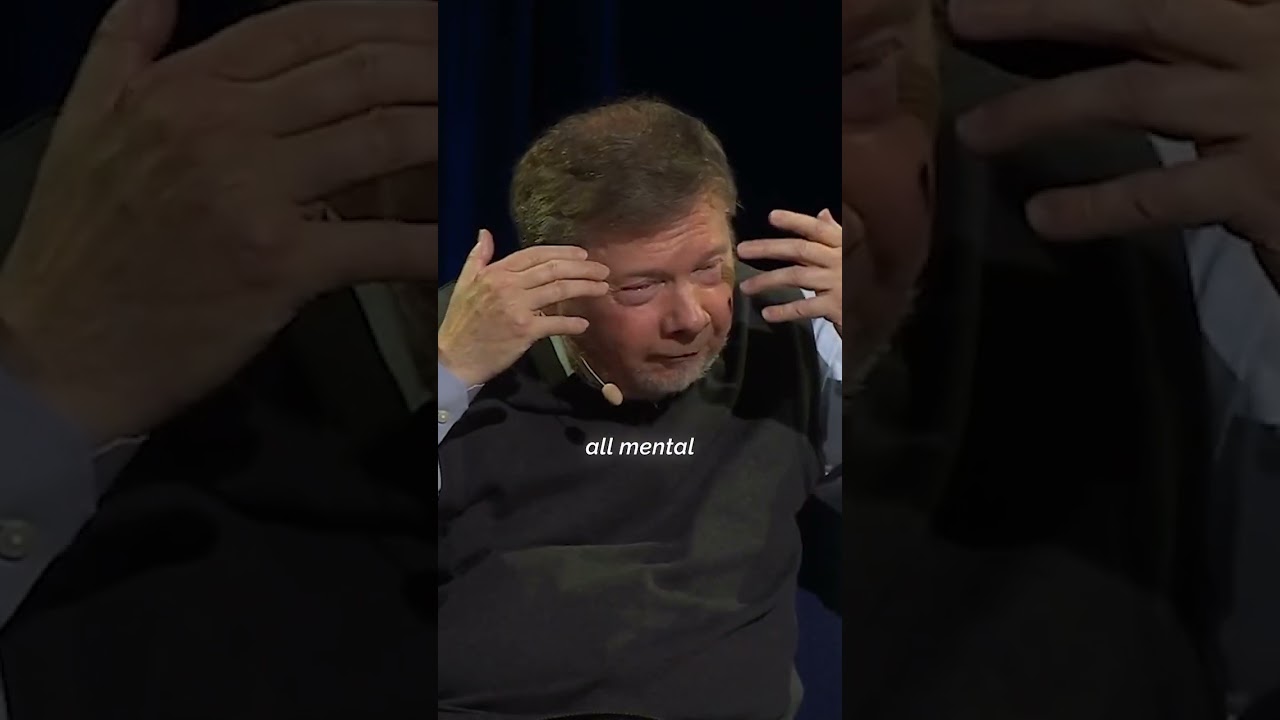
The persistent sense that you are not enough does not arise from genuine deficiency—it arises from the mental habit of constantly seeking a better version of yourself. This seeking creates a psychological split between your actual self and an imagined, improved self. The solution is not more self-improvement but recognition that you already are; the search for an alternate self is the mechanism that generates the felt sense of inadequacy. True sufficiency emerges when you stop looking for yourself elsewhere and recognize the presence you already embody.
What Creates the "Never Enough" Loop?
One of the most pervasive experiences in modern life is the subtle but relentless feeling that something is missing—that you need to become someone different, better, or more complete to be acceptable. This feeling does not necessarily emerge from actual failure or objective lack. A person can accomplish significant goals, achieve social recognition, acquire wealth, and still carry the underlying current of inadequacy. Eckhart Tolle identifies the root cause not as external circumstance but as a fundamental misdirection of consciousness: the habitual seeking of a better version of yourself.
This seeking is not optional or temporary. It becomes the default operating mode of the thinking mind. The ego (in Tolle's usage, the constructed identity rather than narcissism) maintains itself through constant dissatisfaction. As long as you believe you need to become someone else to be acceptable, the thinking mind has a purpose—to measure, evaluate, and construct an improved self. The gap between where you are and where you imagine you should be becomes the source of its authority and relevance.
What makes this dynamic particularly subtle is that it disguises itself as self-help, ambition, and growth. The seeking appears noble and necessary. Yet beneath this appearance lies a core message: your current presence is insufficient. You are not acceptable as you are. This message, repeated thousands of times daily through thought, generates the felt sense of never being enough.
The Difference Between Looking for a Better Self vs. Looking for Yourself
Tolle's distinction in the video's description is precise: "You are not looking for a better version of yourself. You are looking for yourself." This points to a fundamental confusion in how consciousness typically relates to identity.
Looking for a better version of yourself assumes there is a fixed, current self that needs improvement. It presupposes a deficiency in the existing structure. The mind then mobilizes to construct an alternate version—more accomplished, more attractive, more spiritual, more enlightened. This is a project of becoming. It is always future-oriented. The present moment is merely the launching pad for the self you will eventually construct.
Looking for yourself, by contrast, is not a project of improvement but of recognition. It is the discovery that there is already a fundamental presence, awareness, or being that does not require construction. This presence cannot be improved because it is not a thing that exists on a spectrum of quality. It simply is. The seeking in this case is the unraveling of the layers of false identity—the constructed persona, the ego, the mental image of self—to reveal what was never actually absent.
Most people spend their entire lives in the first mode, never recognizing the possibility of the second. The work of self-improvement can actually deepen the sense of inadequacy because it reinforces the premise that improvement is necessary. Each achievement, rather than closing the gap, simply extends the horizon of what could still be better. The treadmill becomes the condition itself.
How the Ego Perpetuates the Seeking
In Tolle's framework, the ego (the identified, thinking self) depends on the sense of lack for its survival. The ego is not a malevolent force but a mental structure that arose as a useful adaptation and has become habitual. When the mind identified exclusively with thought and personal history, the sense of separation from the present moment was born. This separate self then became the reference point from which all experience is filtered.
For the ego to maintain this authority, it must continually justify its existence. If you were completely satisfied with what you are, the ego's voice would become irrelevant. Why would you need its analysis, judgment, and planning? The ego therefore must maintain a background narrative of insufficiency. It whispers that you are not quite right as you are, that adjustment is always necessary. This narrative keeps the seeking alive and the ego in charge of consciousness.
This is why simply hearing "you are enough" does not typically resolve the feeling. That statement operates at the level of belief or concept, while the seeking operates at the level of habitual consciousness. The thought "I am not enough" may be replaced temporarily by "I am enough," but the underlying pattern—the assumption that evaluation of the self is necessary—remains intact. The mind has merely switched positions within the same framework.
The Role of the Present Moment in Breaking the Pattern
Tolle's central teaching points toward presence as the gateway out of this loop. When attention is genuinely rooted in the present moment—in direct sensory perception, breath, bodily sensation, or the immediate environment—the seeking stops. There is no time for it. The seeking requires a mental time horizon where the "improved self" exists in the future and the current self is measured against it. When consciousness collapses into now, that entire structure loses power.
Presence does not offer a better self. It offers something qualitatively different: being without comparison. When you are truly aware of your breath, you are not simultaneously judging your breathing technique. When you are present to sensation, you are not measuring your sensory apparatus against an ideal version. The comparison apparatus—the entire seeking mechanism—dissolves because it requires a split consciousness: one part judging, one part judged.
This is not passivity or resignation. Activities, choices, and changes can arise from presence, but they emerge from a different ground. They are not driven by the fuel of self-rejection. A person might change their behavior not because they are inadequate but because they recognize in the moment what is aligned with their being. This is not the frantic seeking of the inadequate; it is the natural adjustment of the whole.
The Sufficiency That Underlies All Experience
Embedded in Tolle's teaching is a recognition that presence—your actual awareness—is already complete. It is not incomplete or in need of development. What needs development is the recognition of what is already here. This is a subtle but crucial inversion. The work is not to build yourself into something better but to strip away the layers of false identity and the mental constructs that obscure the presence you already are.
This presence is not an achievement or a possession. It cannot be earned or lost. It is more fundamental than any character trait, accomplishment, or self-image. You do not need to become aware; you are aware. The only question is whether consciousness is identified with thought and story, or whether it recognizes itself as the space in which thought and story occur.
From this recognition, a different relationship with change becomes possible. You might still work on skills, address patterns, or pursue meaningful activities. But these would no longer be driven by the underlying conviction that your current being is deficient. They would arise from interest, from presence, or from recognition of what serves. The seeking stops because the fundamental seeking—for a self that is not yourself—is resolved.
Where to Go From Here
If this resonates, the invitation is to notice the seeking pattern directly in your own consciousness. Where and how does the mind construct a future, improved self? What is the emotional tone of this construction—is it hope or is it subtle desperation? What would change if that seeking paused for even a few minutes? Experimentation with presence—through meditation, through sensory awareness, through simple attention to breath or body—can reveal that the sufficiency you are seeking already exists. The deeper inquiry is whether you are willing to stop looking for yourself elsewhere and recognize what you already are.