The Grace of Natural Stillness
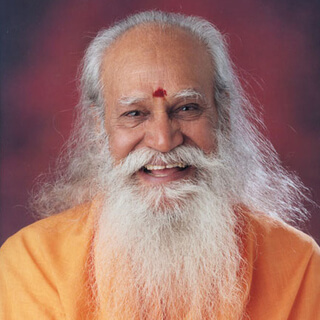
Swami Satchidananda's assertion that "Samadhi will come on its own" invites us to reconsider our relationship with spiritual attainment. This statement suggests that the profound state of samadhi, or deep meditative absorption, is not something we can force or manufacture through sheer willpower. Instead, it emerges organically, a gift of grace that arises when we align ourselves with the natural flow of existence. Understanding this can shift our approach to spiritual practice from one of striving to one of surrender, allowing us to cultivate a deeper sense of peace and acceptance.
In a world often characterized by relentless pursuit and achievement, Satchidananda's words serve as a gentle reminder of the importance of patience and trust in the unfolding of our spiritual journey. The notion that samadhi will come on its own underscores the significance of preparation and inner readiness, rather than mere effort. This perspective invites us to engage in practices that foster openness and receptivity, creating the conditions for grace to manifest in our lives. It challenges us to let go of our attachment to outcomes and to embrace the present moment as it is, trusting that the deeper states of consciousness will reveal themselves in their own time.
The image / the metaphor
The imagery embedded in Satchidananda's quote evokes a sense of naturalness and ease. The phrase "will come on its own" suggests a gentle unfolding, much like a flower blooming in its season. This metaphor speaks to the organic nature of spiritual awakening, contrasting sharply with the often forceful and aggressive approaches to personal growth that dominate contemporary culture. The verbs chosen—"come" and "own"—imply a sense of arrival that is not contingent upon our efforts but rather a natural consequence of being in alignment with our true selves.
Diving deeper into this metaphor, we can envision samadhi as a serene lake, reflecting the sky above. The stillness of the water is not achieved through struggle but through the absence of disturbance. In this way, samadhi represents a state of being where the mind is quiet, and the heart is open, allowing for a profound connection with the universe. Just as a lake requires the right conditions—stillness, clarity, and the absence of debris—so too does our inner landscape require the right conditions for samadhi to arise. This understanding invites us to cultivate those conditions rather than chase after the experience itself.
In the speaker's tradition
Swami Satchidananda's teachings are deeply rooted in the tradition of integral yoga, which emphasizes the holistic integration of body, mind, and spirit. Central to this tradition is the concept of dharma, or one's rightful path, which encourages individuals to align their actions with their true nature. The idea that samadhi will come on its own resonates with the principle of kenosis, or self-emptying, where one relinquishes the ego's demands and opens to a greater reality. This surrender is not a passive resignation but an active engagement with the present moment, allowing grace to flow through.
In the context of the Yoga Sutras of Patanjali, this teaching aligns with the notion of prajna, or wisdom, which arises when the mind is still and clear. Patanjali emphasizes the importance of practice (abhyasa) and non-attachment (vairagya) as essential components for achieving samadhi. The interplay between effort and surrender is beautifully captured in the sutras, where the practitioner is encouraged to cultivate a disciplined practice while simultaneously letting go of the desire for specific outcomes. This balance is crucial for creating the fertile ground from which samadhi can naturally emerge.
Living the teaching
Consider a modern scenario where an individual is striving to achieve a specific goal, perhaps in their career or personal life. They may find themselves caught in a cycle of anxiety and frustration, believing that relentless effort is the only path to success. However, by embracing Satchidananda's teaching, they might begin to recognize the value of stepping back and allowing things to unfold naturally. This shift in perspective can lead to a greater sense of ease and clarity, enabling them to respond to opportunities as they arise rather than forcing outcomes that may not align with their true path.
This teaching can also be applied in the context of relationships, particularly during challenging moments. When conflicts arise, individuals often feel compelled to assert their viewpoints or seek immediate resolution. However, by embodying the principle that samadhi will come on its own, one can practice patience and openness, allowing space for understanding and connection to develop organically. This approach fosters deeper intimacy and trust, as both parties learn to navigate their differences with grace and compassion, ultimately leading to a more harmonious relationship.
A reflection
As we contemplate Swami Satchidananda's profound insight, we are invited to reflect on our own spiritual journeys. Are there areas in our lives where we are striving too hard, perhaps missing the beauty of the present moment? In what ways can we cultivate a sense of surrender, allowing grace to guide us toward deeper states of awareness? This contemplation encourages us to embrace the unfolding of our lives with trust, recognizing that the journey itself is as significant as the destination.


Join the BrightStar Community
Stay connected with daily inspiration, event announcements, and community wisdom