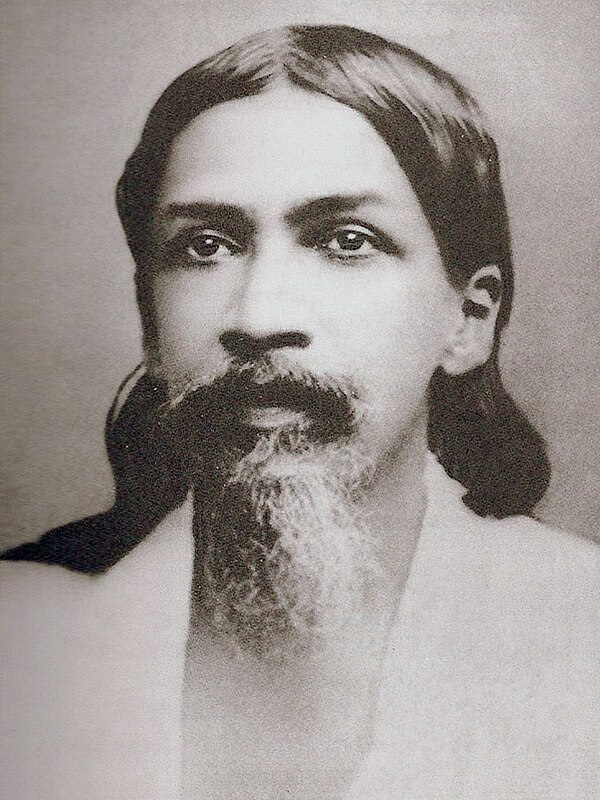
Embracing the Infinite in Every Moment
Sri Aurobindo's profound assertion, "The infinite is present in the finite of every moment," invites us to explore the relationship between the boundless and the bounded, the eternal and the ephemeral. This statement challenges our perception of reality, urging us to recognize that within the limitations of our daily experiences lies a deeper, unbroken connection to the infinite. Understanding this connection is essential, as it can transform our approach to life, infusing each moment with a sense of purpose and unity.
In a world often dominated by the pursuit of material success and fleeting pleasures, Aurobindo's words remind us of the sacredness inherent in every experience. The finite moments of our lives—whether mundane or extraordinary—are not merely isolated events; they are windows into a greater reality. By cultivating awareness of this infinite presence, we can transcend the superficiality of existence and engage with life on a more profound level, fostering a sense of peace and interconnectedness.
The image / the metaphor
The imagery in Aurobindo's quote evokes a sense of paradox, where the infinite—an abstract concept often associated with vastness and eternity—finds expression within the finite, the tangible moments of our lives. The verb "is" serves as a bridge, suggesting that the infinite does not merely exist outside of our experiences but is actively present within them. This presence invites us to feel the weight of each moment, to recognize the divine essence that permeates our reality.
Diving deeper into the metaphor, we can see that the finite moments represent our individual lives, with all their joys, sorrows, and complexities. Each moment, no matter how trivial it may seem, holds the potential for awakening to a greater truth. The infinite, in this context, can be understood as the underlying consciousness that connects all beings, a reminder that we are not separate entities but part of a vast, interconnected web of existence.
In the speaker's tradition
Situated within the Vedantic tradition, Aurobindo's perspective resonates with key concepts such as dharma, the inherent duty that guides our actions, and prajna, the wisdom that arises from understanding the unity of existence. In Vedanta, the finite and the infinite are often seen as two aspects of the same reality, where the individual self (Atman) is ultimately one with the universal consciousness (Brahman). This teaching encourages us to live our dharma with the awareness that our actions contribute to the greater whole.
Moreover, Aurobindo's insights echo the notion of kenosis, or self-emptying, found in various spiritual traditions. By letting go of our ego-driven desires and recognizing the infinite within the finite, we can experience a profound transformation. In his seminal work, "The Life Divine," Aurobindo elaborates on the evolution of consciousness, suggesting that our journey involves awakening to the divine presence that is always available to us, even in the simplest of moments.
Living the teaching
Consider a modern scenario where this teaching can be applied: a busy morning commute. As we navigate the hustle and bustle of daily life, it is easy to become consumed by the stress and distractions around us. However, by consciously embracing the idea that the infinite is present in this finite moment, we can transform our experience. Instead of viewing the commute as a mere obligation, we can practice mindfulness, allowing ourselves to connect with the rhythm of our breath and the sensations of our surroundings, recognizing the sacredness in the ordinary.
In relationships, this teaching can also find expression. Imagine a moment of conflict with a loved one, where emotions run high and misunderstandings abound. By remembering that the infinite resides within both ourselves and the other person, we can approach the situation with compassion and empathy. This awareness allows us to see beyond the immediate frustrations, fostering a deeper connection that transcends the surface-level disagreements, ultimately leading to healing and understanding.
A reflection
As we contemplate Aurobindo's profound statement, we are invited to reflect on our own lives: How can we cultivate a deeper awareness of the infinite presence within our daily experiences? This question encourages us to explore the ways in which we can infuse our moments with meaning, recognizing that each interaction, each breath, and each thought carries the potential for awakening. By embracing this perspective, we can transform our lives into a continuous journey of discovery, where the finite becomes a gateway to the infinite.


Join the BrightStar Community
Stay connected with daily inspiration, event announcements, and community wisdom