EveryEvent Honolulu

Ver Todos los Events

Find every event in Honolulu

events

Concerts & Live Music
Festivals
Sports & Recreation
Food & Drink
Arts & Culture
Community
Family & Kids
Nightlife
Comedy
Theater
Destinos Populares
BaliSedonaLos AngelesCosta RicaNew YorkSan FranciscoAustinMiamiJoshua TreeTulum
Ver Todas las CategoríasVer Todos los Destinos

Explorar Todas las Características

Herramientas poderosas para hacer crecer tus eventos

Características de la Plataforma

Precios Dinámicos Inteligentes
Categorías de Entradas
Asientos Asignados
Recuperación de Carritos
Recuperación de Visitantes
Donaciones y Escala Móvil
Motor de Afiliados
Escáner de Entradas
Códigos de Cupón
Preguntas Personalizadas
Compartir Entradas
Ventas Adicionales
Análisis e Informes
Secuencias de Email
Lista de Espera / Notificar / Recordar
Explorar
Discovery HubArtists & PerformersVenuesKnowledge Base
Ver Todas las CaracterísticasSobre Nosotros
PreciosBlog
Ver Todos los Eventos

events

Concerts & Live MusicFestivalsSports & RecreationFood & DrinkArts & CultureCommunityFamily & KidsNightlife

Destinos Populares

BaliSedonaLos AngelesCosta RicaNew YorkSan Francisco

Explorar

Discovery HubArtists & PerformersVenuesKnowledge Base

Características de la Plataforma

Precios Dinámicos InteligentesCategorías de EntradasAsientos AsignadosRecuperación de CarritosRecuperación de VisitantesDonaciones y Escala MóvilMotor de AfiliadosEscáner de EntradasCódigos de CupónPreguntas PersonalizadasCompartir EntradasVentas AdicionalesAnálisis e InformesSecuencias de EmailLista de Espera / Notificar / Recordar
Ver Todas las CaracterísticasSobre Nosotros
PreciosBlog
Iniciar sesiónRegistrarseOrganizadores de Eventos
  • Browse All Events
  • Concerts & Live Music
  • Festivals
  • Sports & Recreation
  • Food & Drink
  • Arts & Culture
  • Community
  • Family & Kids
  • Nightlife
  • Todas las Categorías →
  • All Destinations →
  • For Promoters
  • For Artists
  • For Venues
  • For Festivals
  • For Event Spaces
  • For Nonprofits
  • For Bloggers
  • For Speakers
  • Brand Ambassador
  • Case Studies
  • Red de +350K Compradores
  • Recuperación de Carritos
  • Precios Dinámicos Inteligentes
  • Categorías de Entradas
  • Eventos Recurrentes
  • Asientos Asignados
  • Motor de Afiliados
  • Lista de Espera / Notificar
  • Escáner de Entradas
  • Widget Embebido
  • Event Syndication
  • Message Center
  • Integrations
  • Reports
  • Todas las Características →
  • Acerca de
  • The Ecosystem
  • Blog
  • Glosario
  • Inspiration
  • Centro de Ayuda
  • Contacto
  • Documentación API
  • Recursos de Marca
  • Carreras
  • Prensa
  • Términos de Servicio
  • Política de Privacidad

Events

  • Browse All Events
  • Concerts & Live Music
  • Festivals
  • Sports & Recreation
  • Food & Drink
  • Arts & Culture
  • Community
  • Family & Kids
  • Nightlife
  • Todas las Categorías →

Getaways

  • All Destinations →

For Organizers

  • For Promoters
  • For Artists
  • For Venues
  • For Festivals
  • For Event Spaces
  • For Nonprofits
  • For Bloggers
  • For Speakers
  • Brand Ambassador
  • Case Studies

Características

  • Red de +350K Compradores
  • Recuperación de Carritos
  • Precios Dinámicos Inteligentes
  • Categorías de Entradas
  • Eventos Recurrentes
  • Asientos Asignados
  • Motor de Afiliados
  • Lista de Espera / Notificar
  • Escáner de Entradas
  • Widget Embebido
  • Event Syndication
  • Message Center
  • Integrations
  • Reports
  • Todas las Características →

Empresa

  • Acerca de
  • The Ecosystem
  • Blog
  • Glosario
  • Inspiration
  • Centro de Ayuda
  • Contacto
  • Documentación API
  • Recursos de Marca
  • Carreras
  • Prensa
  • Términos de Servicio
  • Política de Privacidad
EveryEvent
© 2026 EveryEvent Honolulu. Todos los derechos reservados.
Inspiration

How Ego Uses Differenceto Survive & Dissolve

Eckhart Tolle
Eckhart Tolle
Apr 30, 2026
7 min read

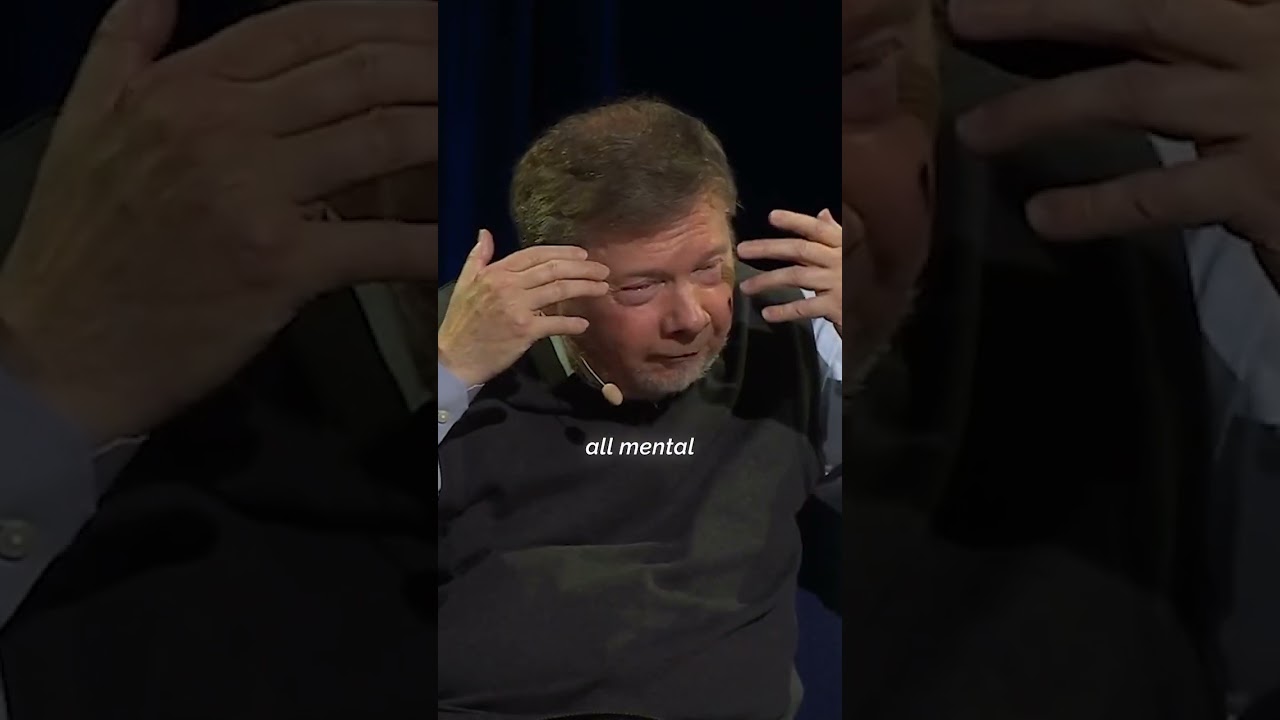
TLDR: Eckhart Tolle explores how the ego—the conceptual self—requires differentiation from others to maintain its sense of identity and survival. The ego cannot exist in isolation; it feeds on comparison, judgment, and the perceived separation between "me" and "not-me." When this contrasting framework collapses, the ego dissolves and what remains is pure presence, unburdened by the need to define itself against otherness.

Read · 7 sections

What is the ego and why does it need difference?

In Tolle's teaching, the ego is not a thing but a mental construct—a thought-generated identity that arises from the mind's habit of identifying with form, story, and comparison. Unlike your essential being or consciousness, which exists in the present moment independent of any external reference, the ego is entirely relational. It depends on a sense of "other" to know itself.

The ego's survival mechanism operates through contrast. It asks: "Who am I?" but it answers this question not through direct awareness but through opposition: "I am not you. I am different from them. I am smarter, poorer, more spiritual, more victimized than others." These comparisons create a provisional sense of identity—a self that feels real only when measured against something external. Without the "other," there is no baseline for the ego to assert its separateness.

How does comparison reinforce ego identity?

Comparison is the ego's primary operational tool. It works constantly to evaluate the self against the world: better than or worse than, superior or inferior, included or excluded. This comparative thinking serves a deeper function: it keeps the illusion of a separate self alive and active.

When you catch yourself thinking "I am more aware than they are," or "They don't understand what I understand," the ego is using knowledge and spiritual attainment as a vehicle for differentiation. When you think "I have suffered more" or "I am more authentic because I acknowledge my shadow," the ego is using even the language of non-duality to reinforce the feeling of being a distinct entity. The ego is clever in this way—it can appropriate any content, spiritual or otherwise, to maintain its sense of separation.

This comparative mind is exhausting because it never settles. There is always someone ahead, someone behind, someone to resent, someone to envy, someone to judge. The ego is a creature of perpetual lack because it depends on the existence of "the other who has what I lack" or "the other who is less than me." Without this dynamic tension, the ego has no function.

What happens when the other is removed?

Tolle's core insight is radical: take away the "other," take away the contrasting reference point, and the identity itself dissolves. This is not a metaphorical dissolution but a real collapse of the ego structure as you know it.

Imagine a moment in which you are not comparing yourself to anyone, not measuring yourself against anyone, not defining yourself through any external standard. In that moment, what remains? The ego cannot answer because the ego is the answer-making machine built on comparison. In the absence of otherness, there is no separate identity to defend, enhance, diminish, or prove. There is only presence—awareness aware of itself, prior to the thought that divided the world into observer and observed.

This is not about becoming egoless in the sense of becoming humble or selfless in a moral way. It is about recognizing that the sense of a separate, continuous self is dependent on a particular way of thinking—the way of comparison, judgment, and otherness. That way of thinking is not inherent to being; it is a mental habit that can be seen through.

Does ego need external enemies or internal enemies?

The ego is flexible in its choice of "other." It does not always require an external person or group to contrast itself against. Sometimes the ego uses internalized voices—the parent's criticism, the culture's standards, the inner critic—as the "other" it must prove itself against or victimize itself by.

In many spiritual seekers, the ego uses a highly refined "other": the false self, the shadow, the unhealed part, the ego itself. The ego watches the ego with disapproval and uses that internal split as fuel for spiritual seeking. This creates a perpetual inner conflict in which "I" am at war with "the other within myself." The spiritual path, framed this way, becomes another arena for the ego to assert itself through differentiation.

The real shift Tolle points to is not to refine the comparative mechanism but to see that the entire structure of comparison—internal or external—depends on a fundamental misidentification: the belief that you are the separate entity doing the comparing. When that misidentification is seen through, the whole apparatus quiets.

How does ego create the illusion of survival?

The ego believes it survives through its strategies: being right, being special, being victimized, being superior, being approved of. Each of these strategies is a way of saying "I am real, I exist, I matter" by contrast to something or someone else. Without that contrast, the ego's reason for being evaporates.

This is why collective identities—nationalism, religious identity, tribal identity, even spiritual identity—are so powerful: they provide a large-scale "other" for the ego to define itself against. "We are enlightened; they are asleep. We are the true believers; they are lost. We are the victims; they are the oppressors." These narratives are addictive because they make the ego feel coherent and justified.

The tragedy is that the ego's attempt to survive through differentiation is what keeps human beings from resting in the peace of simply being. The energy that could be present, clear, and responsive to life as it is gets locked into the maintenance of an identity that is always under threat, always needing external confirmation or enemies to stay alive.

Is there a practical implication for daily life?

Understanding this mechanism does not require you to practice positive thinking or to force yourself to love others. Instead, it invites you to notice the moment when you are comparing yourself, defining yourself against others, or using otherness to maintain a sense of self. Simply notice. In that noticing, without trying to change anything, the grip of the ego loosens.

When you sit in silence and there is no "other" present—no one to impress, no one to resent, no one to prove yourself against—what happens? The mind may still produce thoughts, stories, and judgments, but the energy behind the identity begins to drain. The gap between the thought and the self widens. What was solid becomes porous.

This is not a goal to achieve but a reality to recognize: the ego's power is not intrinsic. It is entirely dependent on the mental habit of separation and comparison. That habit can loosen, not through effort but through awareness.

Where to go from here

To deepen this inquiry, spend time observing your own comparative thinking without judgment. Notice how often you are defining yourself through difference—subtly or overtly. Notice which "other" you use most frequently: the successful person, the broken person, the person who wronged you, the person you need to impress, or even the false self you are at war with. Observe how the ego uses spirituality, authenticity, and self-awareness as vehicles for differentiation.

In meditation or quiet moments, experiment with releasing the sense of "other." Not by denying that others exist, but by releasing the mental narrative that you are defined by your relationship to them. What remains when that narrative quiets? That is the threshold Tolle is pointing to—not as an achievement but as an ever-present possibility beneath the noise of comparative mind.

Eckhart Tolle
AuthorEckhart Tolle

German-born spiritual teacher whose 1997 book The Power of Now became one of the most widely read spiritual works of the 21st century. After a profound transformation at 29 — movin…

View profileWebsite
Explore Topics
Ego-identityComparison-mindSeparation-consciousnessPresenceNon-duality

Got Questions?

Frequently Asked Questions

The ego defines itself only through contrast with others—evaluating itself as better, worse, different, or separate. Without this comparative reference point, the ego has no way to assert or prove its existence, so it continually measures itself against external and internal "others" to feel real.
The ego cannot exist in isolation; it is entirely dependent on the perception of an "other" to measure itself against. Remove that contrasting framework, and the separate identity collapses because the ego has no reference point by which to define itself.
Yes. The ego can appropriate spiritual language and practice to differentiate itself—claiming greater awareness, authenticity, or spiritual maturity than others. It can even use the concept of the "false self" or "ego" as an internal "other" to fight against, perpetuating the very separation it seeks to transcend.
When comparison ceases, the mental energy that was locked into maintaining a separate identity becomes available. The sense of a solid, defended self loosens, and what remains is presence—aware without needing to define itself through otherness.
No. Becoming egoless is not a moral achievement but a recognition that the sense of a separate, continuous self is a mental habit dependent on comparison. It involves seeing through the mechanism itself, not perfecting the ego or making it more humble.
Absolutely. Tribal, national, religious, and even spiritual group identities allow the ego to feel coherent by contrasting "us" against "them." These narratives are powerful because they provide large-scale external "others" that reinforce the sense of separate identity.
Notice moments when you are defining yourself against someone else—through comparison, judgment, or the need to be different. Observe which "others" you reference most (successful people, victims, false selves). Simply observing without trying to change anything creates space for the pattern to loosen.

Continue Reading

More from Eckhart

View All
God Beyond the Sky: Rethinking Divine Nature
Featured

God Beyond the Sky: Rethinking Divine Nature

God is not an external judge deciding human suffering. Suffering itself becomes the mechanism through which consciousness awakens to itself.…

1 min read
God, Suffering, and the One Life Across Traditions
Featured

God, Suffering, and the One Life Across Traditions

Eckhart Tolle explores how Islam, Buddhism, and Greek philosophy all point to the same ultimate reality—and why the problem of suffering dis…

1 min read
Why Humanity Cannot Sit in Silence: Disconnection from Being
Featured

Why Humanity Cannot Sit in Silence: Disconnection from Being

The root of human conflict lies in disconnection from the being dimension—the inability to find peace when alone. When disconnected from bei…

1 min read
Who You Really Are Beyond Surface Identity
Featured

Who You Really Are Beyond Surface Identity

You are not your body, name, or conditioned mind. Eckhart Tolle reveals the distinction between surface identity and deeper being.…

1 min read

Keep exploring

Continue your journey

More wisdom and gatherings from across the BrightStar directory.

More Articles

Browse the full library of teachings, interviews, and guides.

Back to all articles →

Teachers & Artists

Explore the lineages, musicians, and guides of the conscious world.

Explore artists →

Find an Event

Kirtan, retreats, sound baths, breathwork, festivals — happening soon.

Browse events →
Read more from BrightStarCreate Free Account
Host your own gatherings?Try the Demo