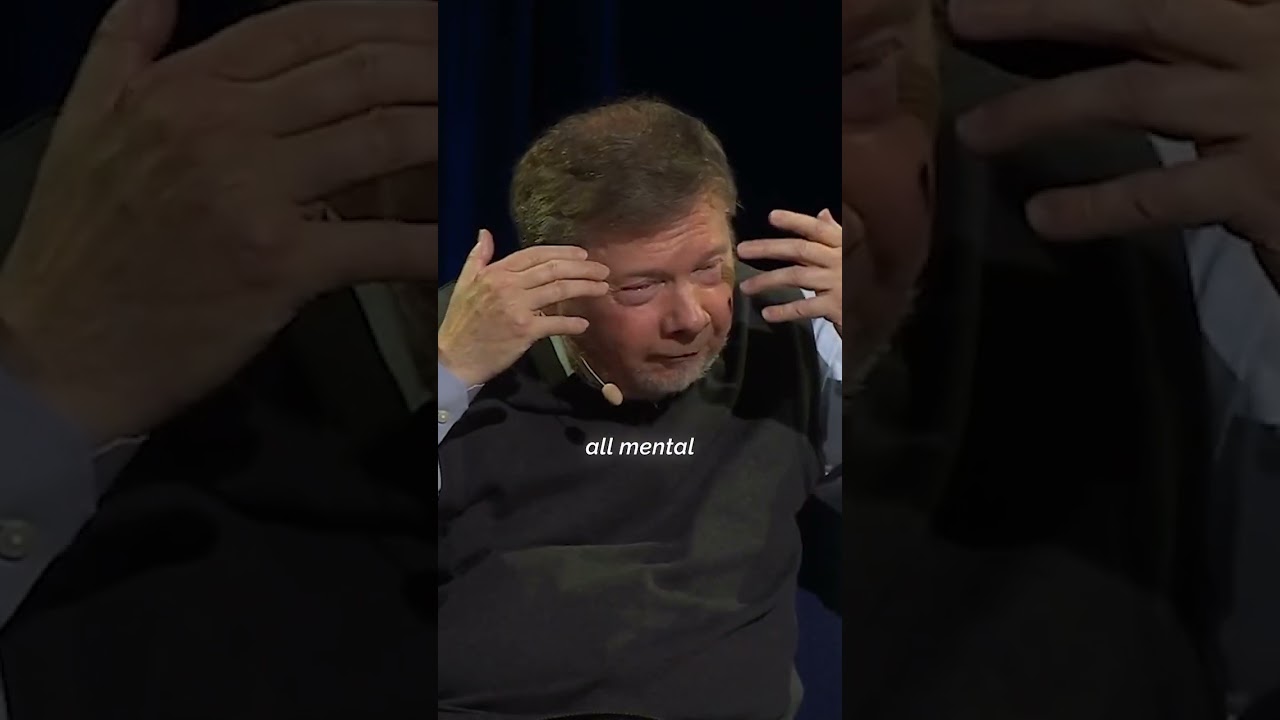
Eckhart Tolle identifies the fundamental source of human troubles not in external circumstances, but in the unconscious patterns of the mind—particularly the ego's identification with thought, the tendency to live in psychological time rather than the present moment, and the resulting sense of separation from life itself. Understanding this root cause shifts the possibility for genuine change from problem-solving at the symptom level to a shift in consciousness.
What Is the Real Source of Human Suffering?
According to Tolle, the troubles that plague humanity—conflict, anxiety, depression, and dysfunction at both personal and collective levels—do not originate from external conditions alone. Rather, they emerge from an internal dysfunction in how consciousness operates. Most people live identified with their thoughts, mistaking the incessant mental chatter for who they are. This fundamental misidentification creates a sense of separation: separation from the body, from other people, from nature, and from the present moment itself.
The core dysfunction Tolle points to is what he calls "psychological time"—the mind's obsessive dwelling in past and future at the expense of present-moment awareness. When consciousness becomes imprisoned in mental narratives about what was or what might be, the body experiences a constant state of tension. This tension manifests as anxiety, restlessness, and a chronic sense that something is wrong.
How Does Ego Create the Illusion of Separation?
The ego, in Tolle's framework, is not a pathology but a normal phase of human development—a mental structure that creates a sense of individual identity. However, when consciousness becomes completely identified with the ego's perspective, a fundamental delusion takes hold: the sense that you are a separate self struggling alone against a hostile or indifferent world. This perceived separation is the root of all conflict.
When you believe you are fundamentally separate from others, competition becomes inevitable. When you believe you are separate from nature, exploitation becomes acceptable. When you believe you are a separate mind struggling against your own body, you create internal warfare. All of these belief systems stem from the same unconscious identification with thought and its inherent sense of division.
Why Does Living in the Mind Create Dysfunction?
The human mind is a tool designed to help navigate the physical world—to solve problems, plan, remember, and communicate. Yet in modern consciousness, this tool has become a tyrant. Most people spend their waking hours lost in thinking, rarely present to direct experience. This creates a split between the thinking mind and the living body, between mental abstraction and sensory reality.
This split generates psychological suffering. When you are lost in thought about a past mistake or future worry, your body tenses. That tension is real. It becomes habitual. Over time, people forget that they are in control of where attention goes—they assume they are victims of their thoughts and emotions rather than their creators. This passivity before the machinery of the mind is itself a primary source of human trouble.
How Does Unconscious Behavior Perpetuate Collective Suffering?
The troubles of humanity—war, inequality, environmental destruction, systemic abuse—are not primarily the result of conscious evil. They are the result of collective unconsciousness. When masses of people operate from an unconscious state—identified with ego, lost in thought, reactive rather than responsive—their actions inevitably cause harm, even when motivated by what they believe are good intentions.
Parents unconsciously pass unresolved pain to children. Leaders unconsciously project their inner conflicts onto nations. Institutions unconsciously perpetuate the same dysfunction that created them. Each person acting from an unconscious state of identification with ego and separation contributes to the web of collective suffering. The troubles are systemic not because the system is fundamentally evil, but because most consciousness participating in the system is fundamentally asleep.
What Is the Alternative to Identifying with Thought?
Tolle's teaching points toward a shift in identification. Rather than being the thoughts and emotions that arise, you can become aware of them. This shift from identification to observation is not intellectual—it is a transformation in consciousness itself. When you become the witness of your thoughts rather than their prisoner, something fundamental changes.
This witnessing presence is what Tolle calls "presence" or "the Now"—your actual being beneath and prior to all mental activity. From this place of presence, you are not cut off from thought (which remains useful) but no longer imprisoned by it. Decisions made from presence carry a different quality than those made from reactive ego-identification. They are more aligned with the actual situation rather than with mental conditioning.
How Does Present-Moment Awareness Address Humanity's Troubles?
If the fundamental trouble is unconsciousness—identification with thought, living in psychological time, the illusion of separation—then the fundamental solution is consciousness itself: the development of present-moment awareness. This is not escapism or denial of problems. Rather, it is the capacity to meet actual circumstances with clarity, intelligence, and compassion rather than with defensive reactivity.
When enough individuals shift from identification with ego to identification with present-moment awareness, the quality of collective human behavior changes. Wars are not fought by people genuinely present to the humanity of their opponents. Exploitation is not sustained by people truly conscious of interconnection. Cruelty is not perpetuated by people awake to the unity underlying all existence.
This is why Tolle emphasizes that the real work is not primarily political or social engineering—though these have their place—but spiritual. It is the shift in consciousness itself that removes the source of trouble at its root.
Can Problems Be Solved While Remaining Unconscious?
Tolle acknowledges that humans attempt to solve their troubles through countless strategies: therapy, education, new laws, new governments, self-help techniques. Many of these approaches have value. Yet if the underlying consciousness remains identified with ego and lost in psychological time, the fundamental pattern repeats. New systems quickly become corrupted by the same unconsciousness that plagued the old ones.
This does not mean giving up on practical change. Rather, it means recognizing that lasting change occurs when consciousness itself shifts. An unconscious mind solving problems is like an unconscious driver trying to navigate a dark road—the vehicle may move forward, but the risk of crash is high. A conscious mind engaging with the same problems brings presence, clarity, and alignment to solutions.
Where to Go From Here
Understanding that the real source of humanity's troubles is unconsciousness—not external conditions—invites a radical shift in where you place your energy. Rather than waiting for the world to change so that you can be at peace, you can begin the work of becoming conscious now. This might look like developing a daily practice of present-moment awareness, learning to observe your thoughts without identification, noticing the body's aliveness, and recognizing moments when you slip into psychological time versus when you are genuinely here.
The collective transformation Tolle points to is not a distant utopia requiring everyone else to change first. It begins with each person taking responsibility for their own consciousness. As that happens, the quality of every relationship, every decision, and every action shifts. This is how the real source of humanity's troubles—unconsciousness—is addressed at its root.