EveryEvent Honolulu

Ver Todos los Events

Find every event in Honolulu

events

Concerts & Live Music
Festivals
Sports & Recreation
Food & Drink
Arts & Culture
Community
Family & Kids
Nightlife
Comedy
Theater
Destinos Populares
BaliSedonaLos AngelesCosta RicaNew YorkSan FranciscoAustinMiamiJoshua TreeTulum
Ver Todas las CategoríasVer Todos los Destinos

Explorar Todas las Características

Herramientas poderosas para hacer crecer tus eventos

Características de la Plataforma

Precios Dinámicos Inteligentes
Categorías de Entradas
Asientos Asignados
Recuperación de Carritos
Recuperación de Visitantes
Donaciones y Escala Móvil
Motor de Afiliados
Escáner de Entradas
Códigos de Cupón
Preguntas Personalizadas
Compartir Entradas
Ventas Adicionales
Análisis e Informes
Secuencias de Email
Lista de Espera / Notificar / Recordar
Explorar
Discovery HubArtists & PerformersVenuesKnowledge Base
Ver Todas las CaracterísticasSobre Nosotros
PreciosBlog
Ver Todos los Eventos

events

Concerts & Live MusicFestivalsSports & RecreationFood & DrinkArts & CultureCommunityFamily & KidsNightlife

Destinos Populares

BaliSedonaLos AngelesCosta RicaNew YorkSan Francisco

Explorar

Discovery HubArtists & PerformersVenuesKnowledge Base

Características de la Plataforma

Precios Dinámicos InteligentesCategorías de EntradasAsientos AsignadosRecuperación de CarritosRecuperación de VisitantesDonaciones y Escala MóvilMotor de AfiliadosEscáner de EntradasCódigos de CupónPreguntas PersonalizadasCompartir EntradasVentas AdicionalesAnálisis e InformesSecuencias de EmailLista de Espera / Notificar / Recordar
Ver Todas las CaracterísticasSobre Nosotros
PreciosBlog
Iniciar sesiónRegistrarseOrganizadores de Eventos
  • Browse All Events
  • Concerts & Live Music
  • Festivals
  • Sports & Recreation
  • Food & Drink
  • Arts & Culture
  • Community
  • Family & Kids
  • Nightlife
  • Todas las Categorías →
  • All Destinations →
  • For Promoters
  • For Artists
  • For Venues
  • For Festivals
  • For Event Spaces
  • For Nonprofits
  • For Bloggers
  • For Speakers
  • Brand Ambassador
  • Case Studies
  • Red de +350K Compradores
  • Recuperación de Carritos
  • Precios Dinámicos Inteligentes
  • Categorías de Entradas
  • Eventos Recurrentes
  • Asientos Asignados
  • Motor de Afiliados
  • Lista de Espera / Notificar
  • Escáner de Entradas
  • Widget Embebido
  • Event Syndication
  • Message Center
  • Integrations
  • Reports
  • Todas las Características →
  • Acerca de
  • The Ecosystem
  • Blog
  • Glosario
  • Inspiration
  • Centro de Ayuda
  • Contacto
  • Documentación API
  • Recursos de Marca
  • Carreras
  • Prensa
  • Términos de Servicio
  • Política de Privacidad

Events

  • Browse All Events
  • Concerts & Live Music
  • Festivals
  • Sports & Recreation
  • Food & Drink
  • Arts & Culture
  • Community
  • Family & Kids
  • Nightlife
  • Todas las Categorías →

Getaways

  • All Destinations →

For Organizers

  • For Promoters
  • For Artists
  • For Venues
  • For Festivals
  • For Event Spaces
  • For Nonprofits
  • For Bloggers
  • For Speakers
  • Brand Ambassador
  • Case Studies

Características

  • Red de +350K Compradores
  • Recuperación de Carritos
  • Precios Dinámicos Inteligentes
  • Categorías de Entradas
  • Eventos Recurrentes
  • Asientos Asignados
  • Motor de Afiliados
  • Lista de Espera / Notificar
  • Escáner de Entradas
  • Widget Embebido
  • Event Syndication
  • Message Center
  • Integrations
  • Reports
  • Todas las Características →

Empresa

  • Acerca de
  • The Ecosystem
  • Blog
  • Glosario
  • Inspiration
  • Centro de Ayuda
  • Contacto
  • Documentación API
  • Recursos de Marca
  • Carreras
  • Prensa
  • Términos de Servicio
  • Política de Privacidad
EveryEvent
© 2026 EveryEvent Honolulu. Todos los derechos reservados.
Inspiration

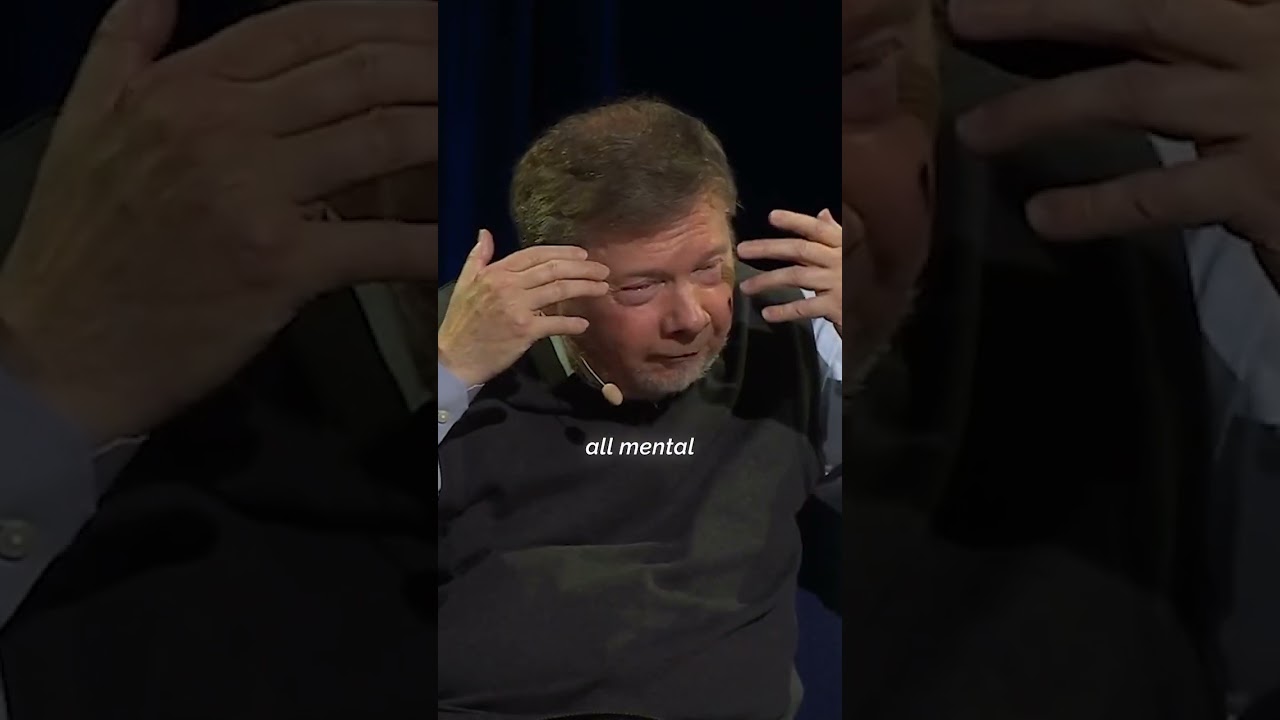
Where Do Your ThoughtsActually Come From

Eckhart Tolle
Eckhart Tolle
Mar 27, 2026
6 min read

TL;DR: Despite scientific advances, we lack a coherent explanation for what a thought actually is or where it originates. Eckhart Tolle challenges the materialist assumption that the brain generates consciousness, suggesting instead that consciousness may be a fundamental field that the mind receives rather than produces. This shift in perspective reframes the relationship between brain, mind, and awareness, opening inquiry into the actual nature of human thought.

Read · 7 sections

What Is a Thought, Really?

One of the most basic yet persistently mysterious aspects of human experience is thought itself. We think constantly—hundreds of thoughts per day—yet we have no agreed-upon scientific explanation for what a thought fundamentally is. Tolle points out that despite centuries of neuroscience and psychology, the origin and true nature of thought remains obscure. Brain imaging can show us which regions activate when we think, but activation does not explain the appearance of a thought in consciousness. A thought simply arises; we experience it. But where does it come from?

This question sits at the heart of what philosophers call the "hard problem of consciousness"—the gap between physical processes in the brain and the subjective experience of awareness. We can trace neural correlates; we can map connections and measure electrical activity. Yet none of this accounts for why we experience a thought at all, or how the physical becomes subjective experience.

Does the Brain Produce Consciousness or Receive It?

The dominant scientific model assumes the brain produces consciousness—that neural activity somehow generates awareness. Tolle questions this assumption and proposes an alternative: what if the mind is not a producer but a receiver of consciousness? This inversion reframes the entire relationship between physical matter and awareness.

If consciousness were a fundamental field or dimension of reality—something as basic as gravity or electromagnetism—then the brain's role would not be to create consciousness but to interface with it, to receive and transmit it. The brain would function more like a radio receiver tuning into a broadcast of consciousness rather than a factory manufacturing awareness from nothing.

This idea aligns with observations in quantum physics and contemplative traditions, both of which suggest that consciousness may be more fundamental to reality than materialist models allow. It also explains why consciousness cannot be reduced to its neural correlates: because consciousness is not generated by the brain but accessed through it.

The Problem with the Production Model

The standard neuroscientific narrative faces a persistent logical problem: even if we map every neuron, every synapse, every chemical reaction in the brain, we still cannot explain why any of it feels like anything. You can describe the mechanism in perfect detail and still not bridge the explanatory gap between mechanism and experience. This is sometimes called the "explanatory gap," and no amount of greater detail about brain function closes it.

Tolle's point is that if the brain truly produced consciousness from purely material processes, consciousness should be explicable in purely material terms. Yet it is not. Every neuroscientific description remains a third-person account of mechanisms; it does not address the first-person fact of what it is like to be conscious. This suggests the production model may be fundamentally incomplete.

Memory, Thought, and the Nature of Mind

Memory is similarly mysterious. We assume memories are stored in the brain like files on a hard drive. Yet the brain has never been shown to contain memories as discrete physical objects. Instead, memory appears to be accessed through the brain but not necessarily stored in it. The brain may be the interface, the antenna, rather than the vault.

If this is true, then thoughts and memories would not be produced by the brain but retrieved through it from some larger field of consciousness or information. A thought would arise not because the brain generated it, but because consciousness—flowing through the brain's receiving apparatus—brought it into awareness. This model explains why thoughts seem to "pop up" unbidden, why we cannot always control which thoughts appear, and why the same brain can access an apparently unlimited store of memories and possibilities.

Implications for Understanding the Self

If mind is a receiver rather than a producer, the self is not a localized generator of thought but a focal point where consciousness comes into individual expression. The "I" that claims authorship of thoughts is actually witnessing thoughts arising through the receiving apparatus of the brain. This distinction—between the thinker-as-author and the awareness-that-witnesses—is central to Tolle's broader teaching about presence and the separation of self from thought.

From this perspective, the goal is not to produce better thoughts but to quiet the receiving apparatus enough that we can distinguish between the ceaseless flow of thoughts (which arise whether we will them or not) and the aware presence that observes them. Thoughts are like weather patterns moving through consciousness; awareness is the sky in which they appear.

Why This Question Matters

The origin of thought is not merely an academic question. How we understand thought directly shapes how we relate to our own minds. If we believe we produce all our thoughts, we may struggle with shame or responsibility for every stray thought that passes through awareness. If we understand mind as a receiver, we can hold our thoughts more lightly—observing them without identifying completely with them.

Tolle emphasizes that despite all scientific progress, this fundamental mystery remains unsolved. The humility to acknowledge what we do not understand is itself the beginning of deeper inquiry. Rather than assuming the materialist model is complete, we might ask: What if consciousness is more basic than we thought? What if matter receives consciousness rather than producing it? These questions open a radically different way of engaging with the mind and our own inner experience.

Where to go from here

Begin by observing your own thoughts without trying to change them. Notice how thoughts arise spontaneously, often without your deliberate intention. Where do they come from? Can you trace the moment they appear, or do they simply emerge already formed in awareness? Sit with this observation for a few minutes each day. The question itself—genuinely held—may shift how you relate to your mind. You might also explore Tolle's teaching on the difference between the thinking mind and the witnessing awareness, which deepens naturally once you begin to question the source of thought itself.

Eckhart Tolle
AuthorEckhart Tolle

German-born spiritual teacher whose 1997 book The Power of Now became one of the most widely read spiritual works of the 21st century. After a profound transformation at 29 — movin…

View profileWebsite
Explore Topics
ConsciousnessThought-mindBrain-consciousnessPresence-awarenessNeuroscience

Got Questions?

Frequently Asked Questions

Tolle proposes that consciousness may be a fundamental field that the brain receives rather than produces. Thoughts would then arise from this larger field of consciousness flowing through the brain's receiving apparatus, rather than being generated by neural activity itself.
Despite detailed brain mapping and neural imaging, science cannot bridge the explanatory gap between physical processes and subjective experience. Brain scans show correlates of thought but cannot explain why neural activity produces conscious experience, revealing a fundamental limit in the production model.
Rather than being stored like computer files, memory may be accessed through the brain but not contained within it. The brain functions as an interface or antenna that retrieves information from a larger field of consciousness, explaining why the brain cannot be found to contain discrete memory objects.
The production model assumes the brain generates consciousness from physical processes; the receiving model proposes the brain tunes into consciousness as a fundamental dimension of reality. This distinction changes how we understand the relationship between mind and matter, with major implications for how we experience our own thoughts.
If you understand your thoughts as arising from a larger field of consciousness rather than being personally produced, you can hold them more lightly and observe them without complete identification. This creates space between awareness and thought, reducing shame and allowing greater witness consciousness.
While not mainstream scientific consensus, this view aligns with observations in quantum physics and contemplative traditions suggesting consciousness is more fundamental than materialist models allow. The explanatory gap in neuroscience—the inability to derive subjective experience from physical mechanisms—provides logical support for reconsidering the production model.
Tolle suggests consciousness may be independent of the brain, with the brain serving as an interface rather than a source. This parallels how a radio receiver doesn't produce broadcasts but receives them, proposing the brain similarly receives consciousness rather than generating it from purely physical matter.

Continue Reading

More from Eckhart

View All
God Beyond the Sky: Rethinking Divine Nature
Featured

God Beyond the Sky: Rethinking Divine Nature

God is not an external judge deciding human suffering. Suffering itself becomes the mechanism through which consciousness awakens to itself.…

1 min read
God, Suffering, and the One Life Across Traditions
Featured

God, Suffering, and the One Life Across Traditions

Eckhart Tolle explores how Islam, Buddhism, and Greek philosophy all point to the same ultimate reality—and why the problem of suffering dis…

1 min read
Why Humanity Cannot Sit in Silence: Disconnection from Being
Featured

Why Humanity Cannot Sit in Silence: Disconnection from Being

The root of human conflict lies in disconnection from the being dimension—the inability to find peace when alone. When disconnected from bei…

1 min read
Who You Really Are Beyond Surface Identity
Featured

Who You Really Are Beyond Surface Identity

You are not your body, name, or conditioned mind. Eckhart Tolle reveals the distinction between surface identity and deeper being.…

1 min read

Keep exploring

Continue your journey

More wisdom and gatherings from across the BrightStar directory.

More Articles

Browse the full library of teachings, interviews, and guides.

Back to all articles →

Teachers & Artists

Explore the lineages, musicians, and guides of the conscious world.

Explore artists →

Find an Event

Kirtan, retreats, sound baths, breathwork, festivals — happening soon.

Browse events →
Read more from BrightStarCreate Free Account
Host your own gatherings?Try the Demo