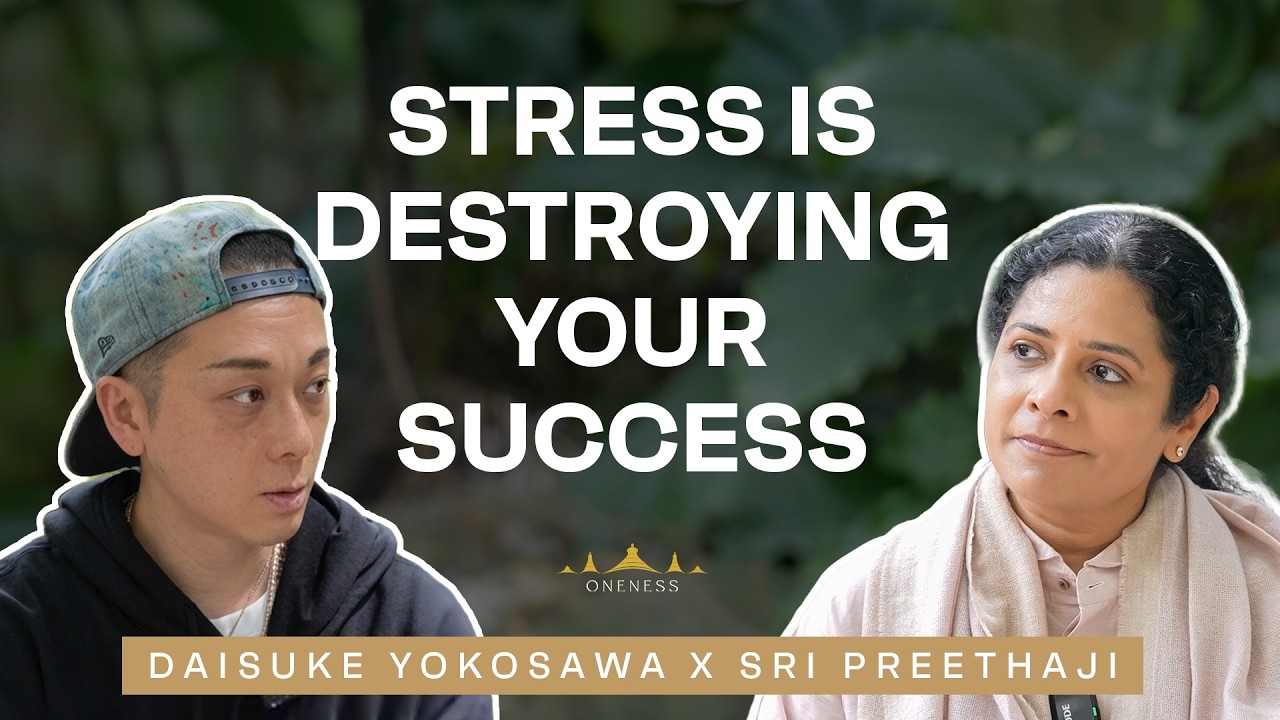
What does the forcing mindset actually cost you?
The belief that harder work always equals greater success is a fundamental misunderstanding that creates tension, blocks intuition, and prevents access to real achievement. According to the Oneness Movement, success rooted in strain and constant pushing depletes energy, clouds awareness, and closes off the natural flow of insight and abundance. A person who grew up under this pressure discovered through Oneness practice that shifting from force to awareness—maintaining consciousness rather than mechanical effort—opens doors to sustained achievement, calm, and genuine ease in work and life.
Nicholas's story captures a widespread cultural assumption: that greatness requires relentless pushing, that slowing down means falling behind, and that the harder you struggle, the more you deserve to succeed. This narrative is so deeply embedded in modern work culture that questioning it feels almost reckless. Yet the Oneness Movement teaches that this model is precisely the barrier that prevents people from accessing the kind of success that also brings peace, clarity, and sustainable performance.
When effort becomes the primary tool, several invisible costs accumulate. The mind tightens. Decision-making suffers because anxiety and urgency distort perception. The body holds chronic tension. Perhaps most importantly, the very mechanism that accesses genuine insight and problem-solving—relaxed awareness—becomes unavailable. You are operating in survival mode rather than from a place of capability and presence.
Why does pushing harder actually create resistance?
The forcing mindset operates from a basic misunderstanding: that external pressure translates to internal performance. In fact, the reverse often happens. When you approach work, relationships, or goals from a place of strain, you signal to your nervous system that there is a threat, a deficit, something missing that force alone can fix. This activates the stress response, which narrows focus, reduces creativity, and triggers the kind of tunnel vision that misses opportunities and connections.
Oneness teachings point to a paradox: the harder you grip, the more reality resists. Not because the universe is punishing you, but because consciousness itself becomes contracted. Contracted awareness is slower. It cannot access intuition. It cannot perceive the actual conditions on the ground—only the story of what you believe you need to do. You end up repeating the same strategies, the same effort patterns, even when they are not working.
Nicholas experienced this directly. He had internalized the message that pushing harder was the only path to success. This meant constant motion, constant self-criticism, constant anxiety about not doing enough. The cost was emotional exhaustion and a kind of blind spot: he could not see alternative approaches because he was too busy executing the one he knew.
What is awareness-based success, and how does it work differently?
The Oneness approach replaces strain with presence. Rather than asking "How hard must I work?" the question becomes "What is my actual state of consciousness right now?" This shift is not about laziness or passivity. It is about redirecting attention from force to information.
When you operate from awareness, you have access to several capacities that strain locks away:
- Intuition and insight: Solutions and creative directions emerge not from grinding but from a relaxed mind that can perceive patterns and connections.
- Real-time responsiveness: Instead of executing a predetermined plan rigidly, you notice what the situation actually requires in each moment.
- Energy efficiency: Effort directed by intelligence is far more effective than raw force. You accomplish more with less expenditure.
- Emotional resilience: Without the constant self-imposed pressure, setbacks do not trigger collapse. You can learn and adjust without shame.
This is not mystical or passive. It is how high performers actually operate in sports, music, surgery, and other fields where excellence depends on both skill and presence. The difference is that most people are taught to override their natural awareness in favor of grinding willpower. Oneness reverses this: it makes consciousness itself the primary tool.
How does awareness dissolve the pressure that blocks flow?
Pressure is largely self-imposed narrative. You believe you must achieve by a certain date, in a certain way, at a certain cost to yourself. That belief creates the sensation of pressure. The pressure then triggers the forcing mindset, which creates tension, which closes off the very awareness that would allow you to work effectively.
When Nicholas shifted into awareness-based practice, he began to notice the pressure itself. He could observe it without being absorbed by it. This created space. In that space, several things happened: his breathing naturally relaxed. His thinking became clearer. Ideas and next steps appeared without him forcing them. His body began to signal what it actually needed rather than what he thought it should endure.
This is what dissolving pressure means. Not eliminating responsibility or commitment, but separating your commitment to a goal from the story that you must suffer to achieve it. The goal and the ease can coexist. In fact, they work better together.
What enables natural flow and abundance?
Flow is not a mystical state reserved for the gifted. It is the natural result of consciousness meeting capability. When your awareness is present and your effort is intelligent rather than forced, work becomes efficient and often enjoyable. You lose self-consciousness. Time passes differently. You accomplish more because less of your mental energy is spent on self-doubt and self-monitoring.
Abundance follows the same logic. When you are operating from contraction, tension, and scarcity thinking, you send and receive signals of limitation. Opportunities and connections that would be visible from a relaxed state are invisible from a tight one. You literally cannot perceive them. Oneness practice cultivates the internal state from which abundance is visible and accessible. This is not about positive thinking. It is about the neuroscience of attention: what you are conscious of shapes what is possible.
Nicholas's shift was not instantaneous, but the direction was clear. As he practiced maintaining awareness rather than forcing outcomes, his work became easier, his results improved, and his internal experience moved from anxiety to calm. He was doing, but not straining. Acting, but not forcing. This is the path the Oneness Movement points to.
Where to go from here
If you recognize the forcing mindset in yourself—the constant pushing, the belief that rest equals failure, the anxiety that you are never doing enough—you have already taken the first step: awareness. Notice when you are in strain. Notice the quality of your thinking and decision-making from that state. Notice what becomes available when you shift, even slightly, toward calm.
The Oneness Movement teaches specific practices and teachings designed to help you shift from strain-based to awareness-based living. Many of these are explored in depth at the Oneness Global Summit, where teachers and practitioners share concrete approaches to dissolving pressure, accessing intuition, and establishing the internal conditions for sustainable success and ease. This is not about working less or caring less. It is about working from a state of consciousness that is actually capable.