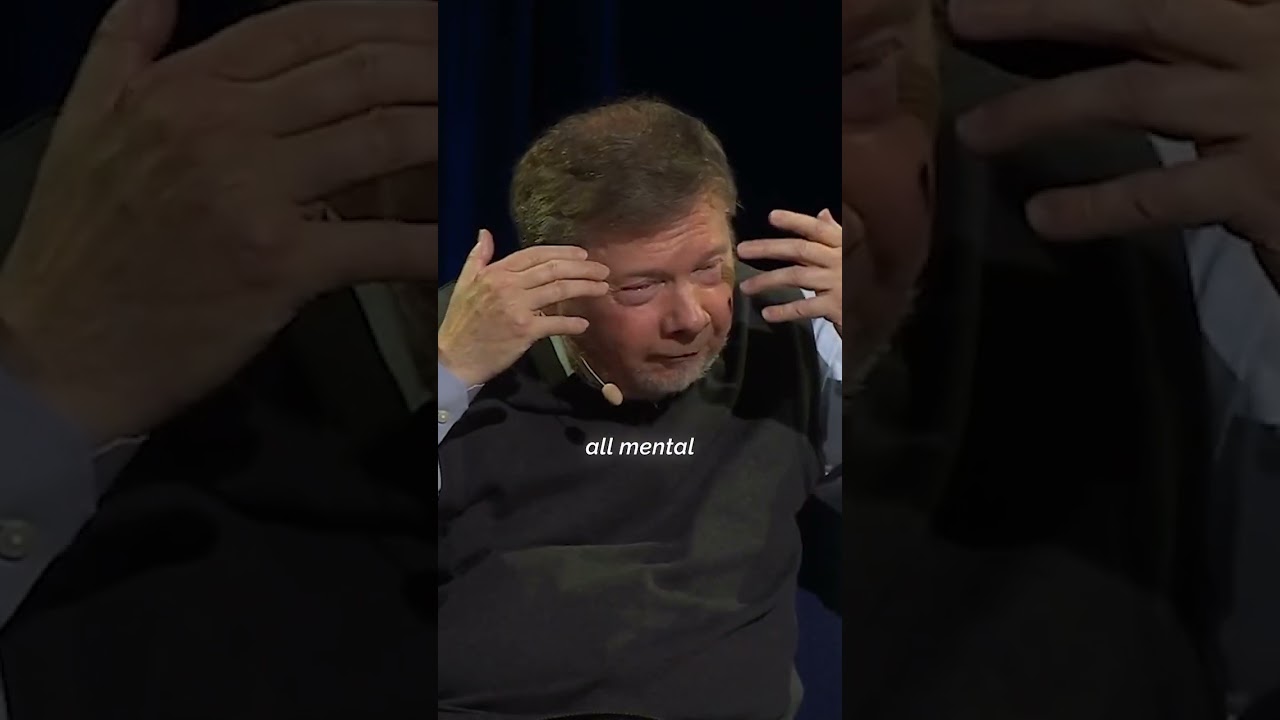
Most people unconsciously carry a constant mental and emotional burden they interpret as "my life"—a compulsive stream of thought, worry, and self-referential story that becomes inseparable from their sense of identity. Awakening, in this context, means recognizing that you are not your thoughts and learning to step out of identification with the mind's activity. This shift is not philosophical; it is neurological and experiential. When you dis-identify from thought, the psychological weight you've carried for years can dissolve, revealing a dimension of consciousness that exists beneath and independent of mental activity.
What Does It Mean to "Wake Up From Your Mind"?
Most people live their entire lives trapped in a particular relationship with their own thinking. They wake up, and immediately the mind activates—a stream of commentary, planning, worry, regret, and self-judgment begins. This internal monologue becomes so constant, so seamless with their experience of being alive, that they never question whether they are their thoughts or something observing those thoughts.
Tolle describes this condition as a burden people carry under the label "my life." The mind generates narratives about who you are, what your life means, what you should be doing, and why things aren't working out as planned. These narratives feel like the truth. They feel like reality. But they are interpretations—mental constructions layered on top of what is actually happening.
To "wake up from your mind" means to recognize this mechanism for what it is: not reality, but a mental process. It means developing the capacity to observe thought without being completely fused with it. This is not about thinking positively or changing your thoughts to better ones. It is about the fundamental shift in consciousness where you stop being the thought and become the awareness in which thoughts appear.
How Does Identification With Thought Create Suffering?
When you are completely identified with your mind, every thought carries emotional weight. If the mind generates a worry—about money, health, relationships, your worth—that worry becomes your experience. You don't have the thought; the thought has you. You are caught in it, and the nervous system responds as if the thought-generated scenario is really happening right now.
The mind is naturally problem-focused. It works by identifying threats and planning solutions. This was useful for survival in environments where physical danger was immediate and real. But in modern life, most of the mind's concerns are not about present-moment danger—they are about imagined futures or interpreted pasts. The mind rehearses scenarios that haven't happened, relives moments that have already passed, and generates elaborate stories about what things mean about you or your worth.
When you are identified with the mind, you experience this entire process as "your life." The burden becomes crushing because the mind never fully resolves anything. It generates one problem, and as soon as that is managed, it moves to the next. There is always something wrong, something to fix, someone to blame, or something to achieve to finally feel okay. This creates a baseline of dissatisfaction and urgency that becomes so normal you stop recognizing it as optional.
What Happens When You Step Out of Mental Identification?
The act of dis-identifying from thought is simple but profound. It begins with noticing that you can observe your thoughts. Right now, you can become aware of the fact that thoughts are arising. That very capacity to notice thoughts means there is something in you that is not the thoughts themselves—a witness, an awareness that is watching the thought process happen.
When you recognize this distinction—that there is a you that can observe thoughts rather than a you that is the thoughts—something shifts. The mind doesn't stop producing thoughts. But those thoughts no longer define your experience. They become more like weather passing through the sky rather than the sky itself. Clouds come and go; the sky remains.
This shift brings relief because you are no longer defending against every thought, trying to fix it, or building a self-narrative around it. There is more space. Thoughts may arise, but they don't automatically trigger the entire nervous system into a state of contraction or urgency. You begin to notice gaps in the thinking—moments of quietness where no thought is being generated. In those gaps, you experience a kind of ease that you may never have noticed before.
Importantly, stepping out of identification with thought does not mean becoming passive or detached from life. It means you can use the mind as a tool when it is useful—for planning, learning, problem-solving—without being enslaved by its constant activity. You can think without the thought consuming your sense of self.
Is This Awakening or Just a Mental Trick?
This question often arises because the shift seems almost too simple. If awakening is real, shouldn't it feel more dramatic or require more effort? But part of the confusion stems from what "awakening" actually means. It is not an experience you have; it is an experience you stop having. Specifically, it is the ceasing of the experience of being identified with thought and the story-self the mind creates.
The sense of contraction, the feeling of being a separate self struggling against life, the weight of carrying your personal story as something you must manage and defend—these are experiences that arise when consciousness is identified with the mind. When that identification is seen through, those experiences simply are not present anymore. Not because you did something special, but because you stopped doing the thing that was creating them in the first place.
What awakening reveals is not a new belief or a new thought system. It reveals what you already are when identification with thought is not present. That consciousness is awake, aware, and not dependent on the mind for its existence or functioning.
How Can You Begin This Shift in Daily Life?
The practice is accessible, though it requires consistent attention. It begins with noticing. At any moment in your day, you can pause and ask: "What am I thinking right now?" Simply by turning your attention toward your thinking process, you create a small distance. You are no longer completely fused with the thought. You are becoming the observer of it.
You can also notice the sensation of your body right now. Bring your awareness into direct sensory experience—what you feel, hear, see in this present moment—rather than remaining absorbed in the mind's commentary about these things. This grounds consciousness in what is actually present rather than in the mind's interpretation of it.
Another approach is to notice the spaces between thoughts. In ordinary consciousness, the mind generates such a rapid stream of thoughts that the gaps between them are almost invisible. But if you pay attention, you will notice that thoughts are not continuous. There are moments—perhaps only fractions of a second at first—where no thought is present. In those moments, consciousness is still there, but the mind is not active. That is what pure awareness feels like independent of the mind.
These practices are not about achieving a special state. They are about recognizing what is already present when you stop being completely identified with the thinking process. With regular noticing, the dis-identification becomes more stable. You spend less time lost in thought and more time in the underlying awareness that is always present.
Where to Go From Here
The next step is to bring this understanding into your actual life rather than treating it as something only to explore in meditation. Notice throughout your day when the mind has captured your attention and you are identified with its narrative. Notice the relief that comes when you step back. Observe how different your experience is when you are in the present moment versus when you are lost in mental interpretation.
You might also explore longer periods of quietness—meditation, time in nature, or simply sitting without purpose. These create conditions where the constant activation of the thinking mind naturally quiets, allowing you to directly experience the consciousness that is not dependent on thought. Over time, this becomes less effortful. The recognition that you are not your thoughts becomes lived reality rather than an idea you are trying to understand.