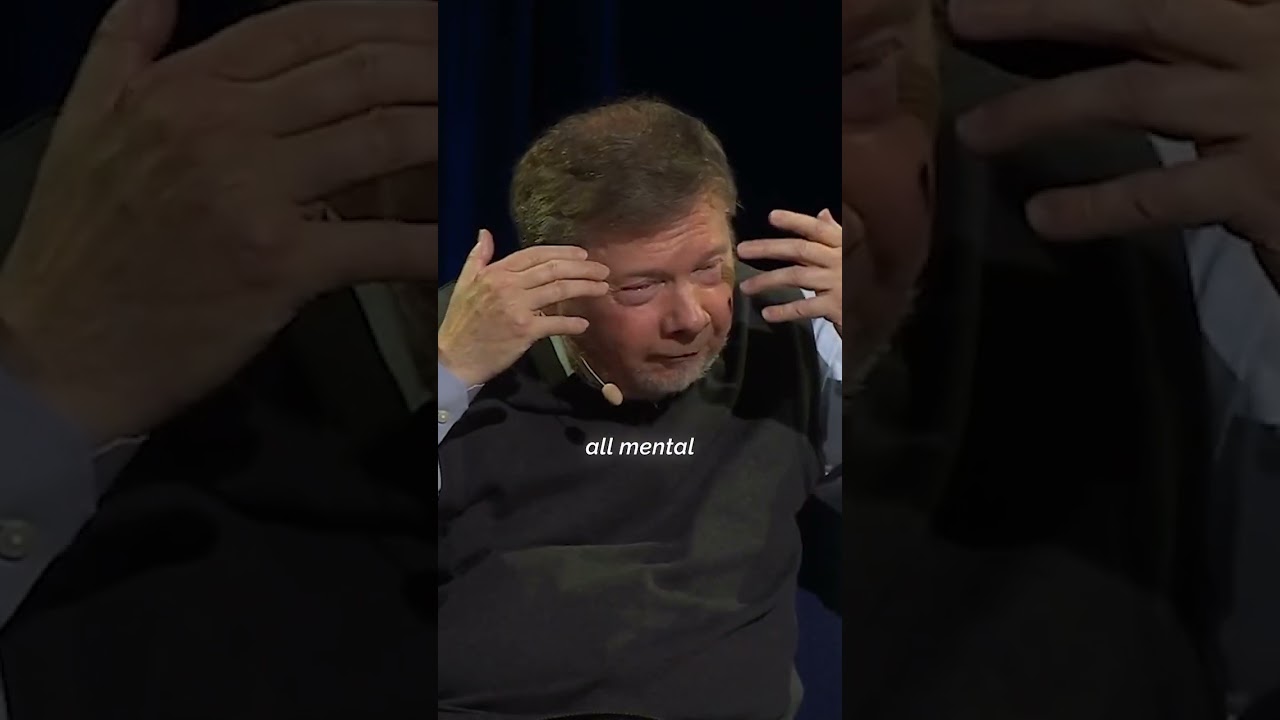
Consciousness does not merely incarnate once at birth but continuously assumes temporary forms—thoughts, feelings, emotions—in each moment. Yet the aware presence observing these forms is not itself the form. This distinction between the container of consciousness and its contents is foundational to spiritual understanding: recognizing what you are not is the gateway to recognizing what you are.
What Does It Mean That Consciousness "Takes Form" Every Moment?
Most people understand incarnation as a singular event—birth, when a soul enters a body. But consciousness operates differently. At any given moment, consciousness is taking shape through whatever arises in your inner world: a thought, an emotion, a sensation, a perception. This is incarnation happening continuously, in real time, without pause.
When you think a thought, consciousness has temporarily condensed itself into that particular thought-form. When you feel an emotion, consciousness has taken on the shape of that feeling. The raw, undifferentiated awareness—the living presence that is your true nature—is continuously flowing into the forms of mental and emotional content. These forms are not permanent; they arise and dissolve, arise and dissolve, like waves on an ocean.
This moment-to-moment incarnation is not a mystical or symbolic concept but a direct description of what is happening right now in your conscious experience. Observe your mind for even a few seconds and you will see this: one thought appears, takes on a certain weight and character, then dissolves. Another arises in its place. Each carries with it a subtle emotional tone. This entire flow is consciousness taking form.
Why You Are Not the Shapes That Arise?
The critical insight is that you—the fundamental aware presence that witnesses all of this—are not those forms. You are not the thought that arises. You are not the emotion that flows through your body. You are not even the sensation of having a self that feels stuck or trapped by these experiences.
This distinction is easily lost because thoughts and feelings feel so immediate, so compelling, so *you*. They seem to define who you are. "I am anxious." "I am angry." "I am not good enough." These statements collapse the observer and the observed into one identity. But notice: there is something aware of the anxiety, something witnessing the anger, something observing the thought about inadequacy. That witness is not the thought or the feeling itself.
Consider what happens when a cloud passes in front of the sun. The cloud takes form, has a certain shape and color and opacity, and then dissolves. But the sky itself does not become the cloud. The sky remains unchanged, present, allowing the cloud to appear and disappear. In the same way, consciousness remains present and unchanged as forms arise and dissolve within it. You are the presence, not the form.
This is not mere intellectual understanding. It can be verified directly through observation. When you notice that you are having a thought—truly notice, without judgment—there is a subtle space between the awareness and the thought itself. That space is the freedom of your true nature. That spaciousness, that presence, that is what you are.
How Does the Body Relate to This Incarnation of Form?
The physical body is also a form that consciousness takes. But most people live exclusively identified with the body and the mind, unaware of the conscious presence that both inhabit and transcend these forms. The body is not separate from consciousness—it is consciousness taking dense, material form.
Yet the awareness that witnesses bodily sensations, that knows the body is present, is not itself subject to the same laws as the body. The body ages, tires, feels pain. But the witnessing awareness that knows these sensations does not age in the same way. There is a timeless quality to pure awareness, even though it expresses itself through a body moving through time.
This does not mean the body is unreal or unimportant. The body is where consciousness meets form most tangibly. But identifying exclusively with the body-mind creates suffering because you are then identified with something impermanent, something that changes, something that will eventually die. When you recognize yourself as the awareness in which all forms arise and dissolve—including the body—a fundamental peace becomes possible.
What Happens When You Stop Identifying With Forms?
The moment you recognize the distinction between the aware presence and the forms arising within it, a shift occurs. This is not a dramatic, one-time transformation, though it can be. More commonly, it is a gradual recognition that deepens over time, becoming more stable and integrated into your lived experience.
When you are no longer completely identified with thoughts, they lose some of their compulsive power. A thought can arise—"I'm not good enough"—and you can be aware of it without immediately believing it, without immediately organizing your behavior around it. There is a choice present that was not available before, because you are not locked into the thought as your identity.
Similarly, when a difficult emotion arises, you can feel it fully without being completely submerged in it. The feeling has space to exist within the larger container of your awareness. This is not suppression or denial; it is actually more complete feeling because it is not contaminated by the identity-story you have built around the feeling. The emotion is felt as an energy movement, a temporary form in consciousness, rather than as "me being upset" or "me being worthless."
This shift also transforms your relationship with other people. When you are identified with the thoughts and emotions that make up your sense of self, you are defensive, reactive, easily threatened by how others perceive you. When you recognize yourself as the awareness in which thoughts and emotions arise, you are less invested in defending a particular identity. You are more present with what is, which naturally leads to greater authenticity and compassion.
How Can You Verify This for Yourself?
This understanding cannot remain purely intellectual. It must be tested in direct experience. One simple practice is what might be called "the space between thoughts." Sit quietly and pay attention to your thinking. Rather than following the content of your thoughts, notice the awareness in which the thoughts appear and disappear. Notice that there is a space, however brief, between one thought and the next.
In that space, there is no thought, no emotion, no sense of self—yet there is awareness. There is presence. This is what you are. This is not complicated or distant. It is the most intimate and immediate reality available to you, yet it is often overlooked because you are so absorbed in the forms arising within it.
Another avenue is to notice, in any moment, what is aware. Right now, as you read these words, something is aware of the words, aware of the physical sensation of sitting or standing, aware of whatever emotions or thoughts might be present. What is that awareness? Can you find a boundary to it? Can you find where it begins or ends? Most people discover that this awareness is borderless, that it is not located in the head or anywhere else in space, that it has a quality of spaciousness.
When you notice this directly, even fleetingly, the intellectual understanding becomes embodied knowledge. You have not believed something new; you have seen something true about your actual nature.
Where to Go From Here
The recognition that you are not the forms consciousness takes—not your thoughts, not your emotions, not even your body-mind identity—is the beginning of genuine freedom. This is not a rejection of the body or the mind; both have their place and function. But your identification shifts from the temporary, changing forms to the timeless presence in which they all arise.
Continue to notice this distinction in your daily life. When a thought arises, pause and ask yourself: Am I this thought, or am I aware of this thought? When an emotion appears, feel it fully while simultaneously recognizing the awareness that witnesses it. This practice is not about achieving some special state; it is about waking up to what is already true about your nature.
The more this distinction becomes clear, the more your life naturally aligns with ease and authenticity. You are freed from the exhausting project of defending or perfecting the forms, because you recognize you are not the form. And paradoxically, when you are not attached to the form, the form functions more gracefully, more intelligently, more aligned with what is true.