EveryEvent Honolulu

Sfoglia tutti i Events

Find every event in Honolulu

events

Concerts & Live Music
Festivals
Sports & Recreation
Food & Drink
Arts & Culture
Community
Family & Kids
Nightlife
Comedy
Theater
Destinazioni popolari
BaliSedonaLos AngelesCosta RicaNew YorkSan FranciscoAustinMiamiJoshua TreeTulum
Vedi tutte le categorieVedi tutte le destinazioni

Esplora tutte le funzionalità

Strumenti potenti per far crescere i tuoi eventi

Funzionalità della piattaforma

Prezzi dinamici intelligenti
Categorie di biglietti
Posti assegnati
Recupero carrelli abbandonati
Recupero visitatori
Donazioni e prezzi variabili
Sistema affiliati
Scanner biglietti
Codici sconto
Domande personalizzate
Condivisione biglietti
Upsell e componenti aggiuntivi
Analisi e report
Sequenze email
Lista d'attesa / Notifica / Promemoria
Esplora
Discovery HubArtists & PerformersVenuesKnowledge Base
Vedi tutte le funzionalitàChi siamo
PrezziBlog
Sfoglia tutti gli eventi

events

Concerts & Live MusicFestivalsSports & RecreationFood & DrinkArts & CultureCommunityFamily & KidsNightlife

Destinazioni popolari

BaliSedonaLos AngelesCosta RicaNew YorkSan Francisco

Esplora

Discovery HubArtists & PerformersVenuesKnowledge Base

Funzionalità della piattaforma

Prezzi dinamici intelligentiCategorie di bigliettiPosti assegnatiRecupero carrelli abbandonatiRecupero visitatoriDonazioni e prezzi variabiliSistema affiliatiScanner bigliettiCodici scontoDomande personalizzateCondivisione bigliettiUpsell e componenti aggiuntiviAnalisi e reportSequenze emailLista d'attesa / Notifica / Promemoria
Vedi tutte le funzionalitàChi siamo
PrezziBlog
AccediRegistratiOrganizzatori di eventi
  • Browse All Events
  • Concerts & Live Music
  • Festivals
  • Sports & Recreation
  • Food & Drink
  • Arts & Culture
  • Community
  • Family & Kids
  • Nightlife
  • Tutte le categorie →
  • All Destinations →
  • For Promoters
  • For Artists
  • For Venues
  • For Festivals
  • For Event Spaces
  • For Nonprofits
  • For Bloggers
  • For Speakers
  • Brand Ambassador
  • Case Studies
  • Rete di 350K+ acquirenti
  • Recupero carrelli abbandonati
  • Prezzi dinamici intelligenti
  • Categorie di biglietti
  • Eventi ricorrenti
  • Posti assegnati
  • Sistema affiliati
  • Lista d'attesa / Notifica
  • Scanner biglietti
  • Widget incorporabile
  • Event Syndication
  • Message Center
  • Integrations
  • Reports
  • Tutte le funzionalità →
  • Chi siamo
  • The Ecosystem
  • Blog
  • Glossario
  • Inspiration
  • Centro assistenza
  • Contatti
  • Documentazione API
  • Risorse del brand
  • Carriere
  • Stampa
  • Termini di servizio
  • Informativa sulla privacy

Events

  • Browse All Events
  • Concerts & Live Music
  • Festivals
  • Sports & Recreation
  • Food & Drink
  • Arts & Culture
  • Community
  • Family & Kids
  • Nightlife
  • Tutte le categorie →

Getaways

  • All Destinations →

For Organizers

  • For Promoters
  • For Artists
  • For Venues
  • For Festivals
  • For Event Spaces
  • For Nonprofits
  • For Bloggers
  • For Speakers
  • Brand Ambassador
  • Case Studies

Funzionalità

  • Rete di 350K+ acquirenti
  • Recupero carrelli abbandonati
  • Prezzi dinamici intelligenti
  • Categorie di biglietti
  • Eventi ricorrenti
  • Posti assegnati
  • Sistema affiliati
  • Lista d'attesa / Notifica
  • Scanner biglietti
  • Widget incorporabile
  • Event Syndication
  • Message Center
  • Integrations
  • Reports
  • Tutte le funzionalità →

Azienda

  • Chi siamo
  • The Ecosystem
  • Blog
  • Glossario
  • Inspiration
  • Centro assistenza
  • Contatti
  • Documentazione API
  • Risorse del brand
  • Carriere
  • Stampa
  • Termini di servizio
  • Informativa sulla privacy
EveryEvent
© 2026 EveryEvent Honolulu. Tutti i diritti riservati.
Inspiration

Life Collapse and Awakening:When Meaning Shatters

Eckhart Tolle
Eckhart Tolle
Apr 8, 2026
7 min read

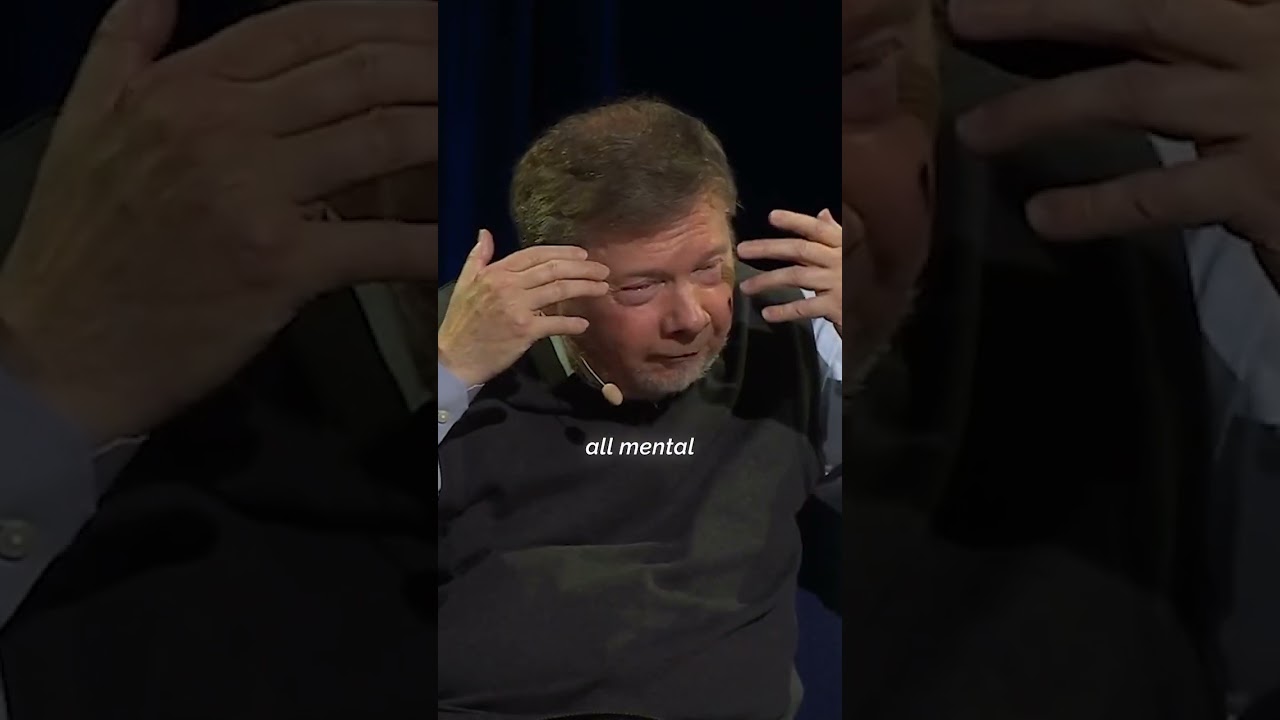
TLDR: When the story you built your life around—career, relationships, identity, beliefs—fundamentally breaks apart, most people experience this as catastrophic failure. But according to Eckhart Tolle, this collapse creates space for something beneath the narrative to awaken: a more direct, unmediated presence that isn't dependent on the stories the ego constructs. Rather than viewing life collapse as purely destructive, Tolle invites us to recognize it as a threshold where the conditioned self loses its grip and a deeper consciousness becomes accessible.

Read · 6 sections

What Happens When Life's Central Story Breaks?

Most people organize their sense of self and meaning around a narrative—often multiple interlocking narratives. These might be professional identity ("I am the person who built this company"), relational identity ("I am the spouse, the parent, the provider"), ideological identity ("I am the person who stands for these values"), or historical identity ("I am the person who survived this, overcame that"). These narratives feel absolutely real because they are embedded in memory, reinforced daily through action and recognition, and emotionally charged.

When such a narrative collapses—through job loss, relationship dissolution, public failure, health crisis, or the simple passage of time rendering old identities obsolete—the experience is typically one of profound disorientation. The person feels they have lost not just a role or circumstance, but their very self. This is the literal truth from the ego's perspective, because the ego is the sum of these stories. It has no independent existence separate from the narrative it tells about who "you" are.

Tolle's insight is that this apparent catastrophe contains a hidden opportunity. When the story collapses, the underlying assumption that "I am the story" is forced into question. For a moment—or longer if the collapse is thorough enough—there is a gap. The machinery that habitually generates the narrative stutters. And in that gap, something else becomes available: presence itself, untethered from the need to maintain a coherent self-image.

What Is This Consciousness Beneath the Collapse?

Tolle suggests that beneath the layer of personal narrative lies what he calls "presence"—a dimension of consciousness that is not constructed, not dependent on memory or identity, and not threatened by the loss of any particular story. This presence is simply aware; it doesn't need to know who it is because it isn't built from the answers to that question.

This is not mystical language for dissociation or numbness. Rather, it is a shift in the locus of identity from the thinking mind (which generates and maintains narratives) to a more fundamental aliveness and awareness. In ordinary consciousness, the thinking mind is so dominant that most people experience it as synonymous with consciousness itself. But Tolle points toward the possibility that awareness exists prior to thought, and that when thought is no longer functioning to defend a narrative, awareness itself becomes directly available.

The metaphor of something beginning to "breathe" is significant. When you are caught in a story—particularly one that has become habitual or demanding—there is a tightness, a holding. The story requires constant maintenance, justification, comparison with others' stories, protection against contradictory evidence. This maintenance is exhausting. When the story breaks, the defensive effort collapses too. For the first time in a long time, the system relaxes. It can breathe. Not because circumstances have improved, but because the pretense has fallen away.

How Does Loss of Meaning Lead to Awakening?

The conventional wisdom says that loss of meaning leads to depression, despair, or a frantic search for replacement meaning. And often it does, at least initially. But Tolle suggests a different trajectory is possible if the collapse is met with a certain kind of consciousness.

The person who attempts to quickly replace the lost narrative with a new one—finding a new identity, new justification for existence, new meaning to cling to—is essentially repeating the same structure that created the vulnerability in the first place. They are saying: "The story broke, so I need a better, more stable story." But all stories, by definition, are subject to time and change. This is not a flaw in the story; it's the nature of form.

Awakening, in Tolle's teaching, involves recognizing that the need for narrative is secondary to a more basic reality: the fact of present-moment awareness itself. You don't need a story about who you are to be aware right now. You don't need to know your past, your future, your status, or your purpose to experience the aliveness of this moment. That aliveness is prior to all stories about it.

When life collapses, there is an opportunity to discover this directly. Not as a theory, but as lived experience. The collapse strips away enough of the habitual patterns that the space beneath them becomes unmissable. If you don't immediately fill that space with a new narrative, you might discover what's actually here: the simple presence of awareness, the taste of direct experience without the filter of interpretation.

Is This Awakening Permanent, or Does the Ego Rebuild?

Tolle's teaching suggests that while a genuine glimpse of presence can be transformative in its implications, most people do gradually rebuild narratives around the awakening itself. They turn the collapse into a story of spiritual growth, recovery, or redemption. The ego is remarkably resourceful; it can incorporate even the experience of non-self into a new identity framework.

However, the point is not to stay perpetually collapsed or to achieve a permanent state of narrativeless being. Rather, it is to discover through direct experience that you are not ultimately dependent on narratives for your existence or worth. This understanding, once genuine, changes the relationship to future narratives. They become lighter, less gripped, less defended. You can use them functionally without being fused with them.

This is why Tolle emphasizes the present moment repeatedly in his teaching. The present moment is the only place where you are not caught in narrative. The present moment is always accessible, even in the midst of pain or chaos. And in the present moment, something deeper than personal story is available.

How Can This Teaching Be Applied During Actual Collapse?

When you are in the midst of a genuine life collapse, the invitation to "find presence" can sound impossibly abstract. You are grieving, frightened, disoriented. The narratives that gave your life structure are not just psychological conveniences; they are often related to real circumstances—lost income, lost relationships, lost plans.

Tolle would likely not ask you to deny or bypass these real circumstances. Rather, he might suggest noticing the difference between the actual situation (what is happening now, what needs to be done now) and the story about the situation (what it means, why it happened, what it says about you, where it will lead). The actual situation is navigable in the present moment. But the story—the interpretation, the judgment, the extrapolation into future catastrophe—lives in thought and tends to be more painful than the bare fact of the situation itself.

In practical terms, this might look like: when your mind generates a narrative of failure or disaster, pausing and asking, "What is actually happening right now, in this moment, without interpretation?" Not as a way to escape the real work of rebuilding or grieving, but as a way to access a steadiness that isn't dependent on the outcome of that work.

Where to Go From Here

If this teaching resonates, the next step is not to wait for your life to collapse in order to access the presence Tolle describes. He emphasizes that presence is available whenever you stop living exclusively through the filter of thought. Simple practices—conscious breathing, walking in nature, listening deeply—are ways to deliberately shift the locus of awareness from the thinking mind to the present moment. These are not meant to be escape from life but rather ways to ground your functioning in a more stable, less reactive place.

The ultimate implication of Tolle's teaching is that awakening is not something that happens after life gets better or after you solve your problems. It is something that can happen in the midst of difficulty, or even because of difficulty, if the difficulty cracks open the assumption that you are merely your story. When that assumption loosens, even for a moment, something underneath it begins to breathe.

Eckhart Tolle
AuthorEckhart Tolle

German-born spiritual teacher whose 1997 book The Power of Now became one of the most widely read spiritual works of the 21st century. After a profound transformation at 29 — movin…

View profileWebsite
Explore Topics
Identity-collapsePresence-consciousnessEgo-mindMeaning-lossSpiritual-awakening

Got Questions?

Frequently Asked Questions

Tolle suggests that beneath the constant effort of maintaining personal narratives and identity lies a deeper awareness or presence. When the stories that structured your life break down, the defensive effort and psychological tightness that held those stories together also collapse. This allows a more fundamental aliveness—what Tolle calls presence—to become directly available, like a system that can finally relax and breathe.
When the narratives you built your identity around collapse, it creates a gap where the habitual thinking mind no longer functions to defend a self-image. In that gap, you may discover that awareness and presence exist prior to any story about who you are. Awakening, in Tolle's teaching, involves recognizing that your fundamental nature is not dependent on narratives but on direct, present-moment awareness.
According to Tolle's teaching, while a genuine glimpse of presence can be transformative, most people do gradually reconstruct narratives around the experience. However, the point is to discover through direct experience that you are not ultimately dependent on narratives for your existence. This understanding changes your relationship to future stories—making you less fused with or defensive about them.
Tolle emphasizes that presence is available whenever you pause the habitual functioning of the thinking mind. Simple practices like conscious breathing, mindful walking, or deep listening deliberately shift awareness from thought to the present moment. These are not meant as escape but as ways to ground your functioning in a steadiness that isn't dependent on narratives or outcomes.
The actual situation is what is happening right now and what concretely needs to be done. The story is your mind's interpretation—what it means, why it happened, what it says about you, and where it will lead. The bare situation is navigable, but the story about it, which lives in thought and projects into imagined futures, tends to generate more suffering than the facts themselves.
Yes. Tolle does not ask you to deny real circumstances or bypass grief and fear. Rather, he suggests noticing the distinction between the actual situation needing attention and the thought-based narrative about it. Accessing presence and steadiness doesn't prevent you from doing the real work of rebuilding or grieving; it provides a more grounded, less reactive place from which to do that work.
The ego is the sum of personal narratives and identity stories. Even profound experiences of non-self can be incorporated into a new identity framework—as a story of spiritual growth or awakening. However, genuine understanding that you are not ultimately dependent on narratives changes how lightly and functionally you hold them, rather than being fused with or defending them.

Continue Reading

More from Eckhart

View All
God Beyond the Sky: Rethinking Divine Nature
Featured

God Beyond the Sky: Rethinking Divine Nature

God is not an external judge deciding human suffering. Suffering itself becomes the mechanism through which consciousness awakens to itself.…

1 min read
God, Suffering, and the One Life Across Traditions
Featured

God, Suffering, and the One Life Across Traditions

Eckhart Tolle explores how Islam, Buddhism, and Greek philosophy all point to the same ultimate reality—and why the problem of suffering dis…

1 min read
Why Humanity Cannot Sit in Silence: Disconnection from Being
Featured

Why Humanity Cannot Sit in Silence: Disconnection from Being

The root of human conflict lies in disconnection from the being dimension—the inability to find peace when alone. When disconnected from bei…

1 min read
Who You Really Are Beyond Surface Identity
Featured

Who You Really Are Beyond Surface Identity

You are not your body, name, or conditioned mind. Eckhart Tolle reveals the distinction between surface identity and deeper being.…

1 min read

Keep exploring

Continue your journey

More wisdom and gatherings from across the BrightStar directory.

More Articles

Browse the full library of teachings, interviews, and guides.

Back to all articles →

Teachers & Artists

Explore the lineages, musicians, and guides of the conscious world.

Explore artists →

Find an Event

Kirtan, retreats, sound baths, breathwork, festivals — happening soon.

Browse events →
Read more from BrightStarCreate Free Account
Host your own gatherings?Try the Demo