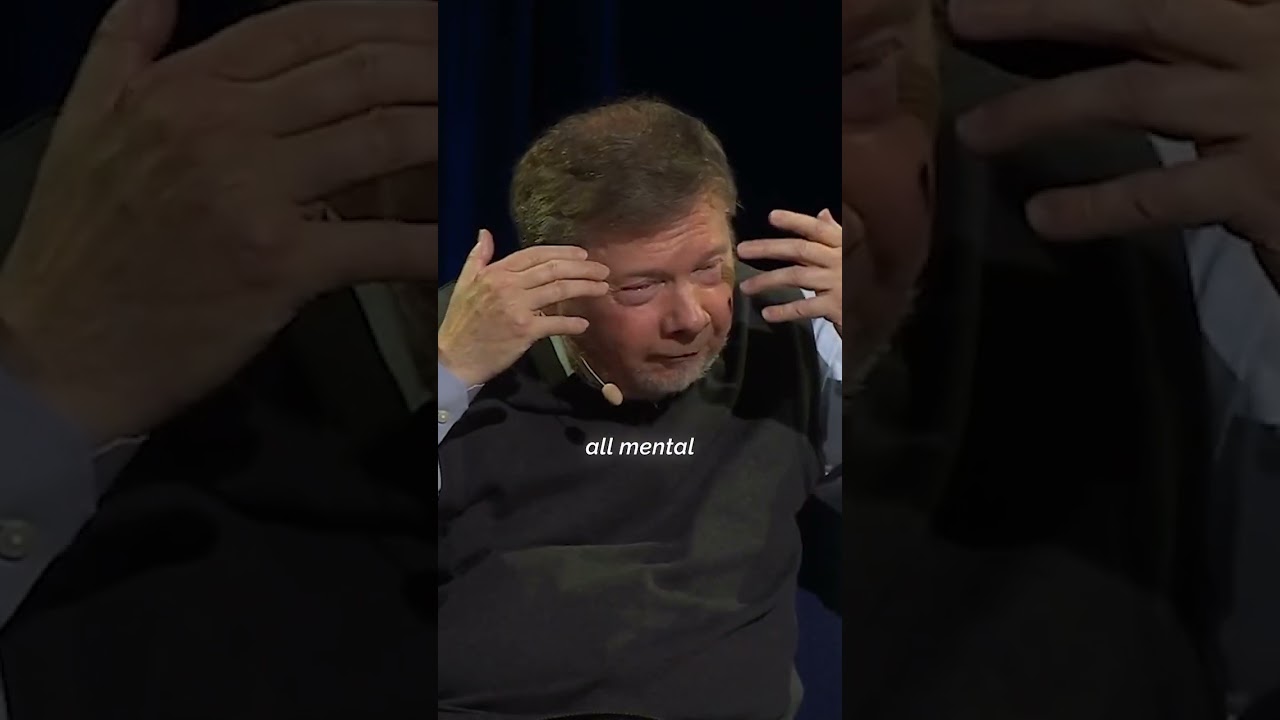
Spiritual awakening is not about attaining extraordinary visions, mystical powers, or transcendent experiences. Rather, it is the fundamental shift in consciousness where awareness separates itself from identification with thought—a deceptively simple process that forms the foundation of genuine spiritual maturation. This involves recognizing that you are the witness of thoughts rather than the thoughts themselves, which dissolves the illusion of a separate, thought-based self.
What Spiritual Awakening Actually Is
Spiritual awakening is commonly misunderstood as something rare, dramatic, or reserved for the exceptionally gifted. Many practitioners spend decades chasing peak experiences, expecting a thunderbolt moment where the veil lifts and reality reveals itself in cosmic glory. This is a fundamental misconception that delays genuine awakening.
According to the teaching in this video, awakening is far more modest and accessible: it is simply the awakening of awareness out of identification with thought. This is not a future attainment or something to be earned through extraordinary practice. It is available right now because awareness itself—the witnessing presence behind all experience—is always already here. The shift is not in gaining something new, but in recognizing what has always been true.
Why You Mistake Yourself for Your Thoughts
Most humans operate under a fundamental misunderstanding: we identify with our thoughts as if they define who we are. The mind generates an endless stream of narratives, judgments, memories, and projections, and we accept this stream as "me." This identification creates what might be called the "thought-self"—a fictional entity constructed from mental content.
This identification happens so seamlessly that it feels like reality itself. When an anxious thought arises, you experience "I am anxious." When a memory generates shame, you feel "I am ashamed." The thought and the sense of self fuse together, making it nearly impossible to see that awareness—the part of you that *perceives* the thought—is separate from the thought itself.
The consequences of this identification are profound. Because thoughts are inherently unstable, repetitive, and often contradictory, a self built on them is equally fragile and conflicted. You find yourself at war with your own mind, trying to think your way to peace while remaining identified with the very mechanism causing the disturbance.
The Simple Shift: Awareness Separates From Thought
Spiritual awakening happens when awareness begins to recognize itself as distinct from the content it observes. This is not mystical or distant—you can notice it right now. As you read these words, there is an awareness present that is reading. If a thought arises, that same awareness can notice the thought without becoming it.
The shift is remarkably straightforward: instead of being lost in thought ("I am this worry, I am this anger"), you begin to witness thought ("A worry is arising; I am noticing anger"). This small shift in perspective dissolves the fusion between awareness and mental content.
This disidentification does not happen through effort or willpower. It happens through simple recognition. The moment you genuinely see that you are not your thoughts—that you are the space in which thoughts appear—the grip of identification begins to loosen. You may not feel dramatically different, but something fundamental has shifted.
Why Extraordinary Experiences Miss the Point
Seekers often pursue dramatic experiences—visions, kundalini awakenings, blissful states—believing these are markers of genuine awakening. But such experiences, while sometimes pleasant, do not necessarily constitute awakening. In fact, they can become new objects of identification, replacing the thought-self with an experience-self.
A vision can arise and pass; bliss can come and go; but awareness—the witnessing presence—never changes. When seeking is oriented toward extraordinary states, the fundamental shift in consciousness (disidentification with thought) may never occur. You may have had a powerful experience while remaining identified with the thought "I am an enlightened person" or "I had a spiritual breakthrough."
True awakening is paradoxically less dramatic and more fundamental. It does not fill the mind with content; instead, it creates space around content. The extraordinary thing about it is that nothing extraordinary happens—there is simply a quiet recognition that awareness is not bound by thought.
The Ordinary Miracle of Present Awareness
One reason awakening is so difficult for people to recognize is that it feels too simple, too ordinary. Awareness is always present; the disidentification from thought is not a rare achievement requiring years of meditation. It can happen in a moment.
Yet this simplicity is also why it is so powerful. When awareness stops being consumed by thought, what remains is direct experience—what is actually here, now. The sounds, sensations, visual field, and the subtle sense of presence itself become more vivid not because they have changed, but because consciousness is no longer filtered exclusively through the lens of mental narrative.
This opens a fundamental freedom: the ability to respond to life rather than be driven by conditioned thought patterns. A situation arises, and instead of being immediately run by the habitual mental interpretation, there is a gap—a moment of awareness—in which a conscious response becomes possible.
How This Relates to the Rest of Your Life
If spiritual awakening is simply disidentification from thought, then what does that actually change about daily existence? The answer is: everything and nothing simultaneously.
Nothing changes in the external world. Your circumstances, relationships, and responsibilities remain. The body-mind continues to function. But the interior relationship to all of it transforms. Stress diminishes not because life becomes easier, but because you are no longer identified with the thoughts generating stress. Reactivity settles not because events become less triggering, but because awareness is no longer fused with the reactive thought patterns.
Relationships deepen because you are present rather than lost in mental commentary. Work becomes clearer because response comes from present awareness rather than from compulsive thought patterns. The fundamental quality of consciousness changes, which changes everything.
Where to Go From Here
If this teaching resonates, the invitation is not to pursue extraordinary experiences or accumulate spiritual knowledge, but to begin noticing in your own direct experience right now: Can you observe that thoughts are arising? Can you notice that awareness is present as the observer? Is it possible, even briefly, to experience the distinction between the thought "I am anxious" and the awareness noticing that thought?
Awakening is not something to achieve in the future. It is available in this moment as the simple recognition that you are not your thoughts—you are the awareness in which they appear. The spiritual path, from this perspective, is simply the gradual stabilization of this recognition until it becomes your natural, continuous way of being.