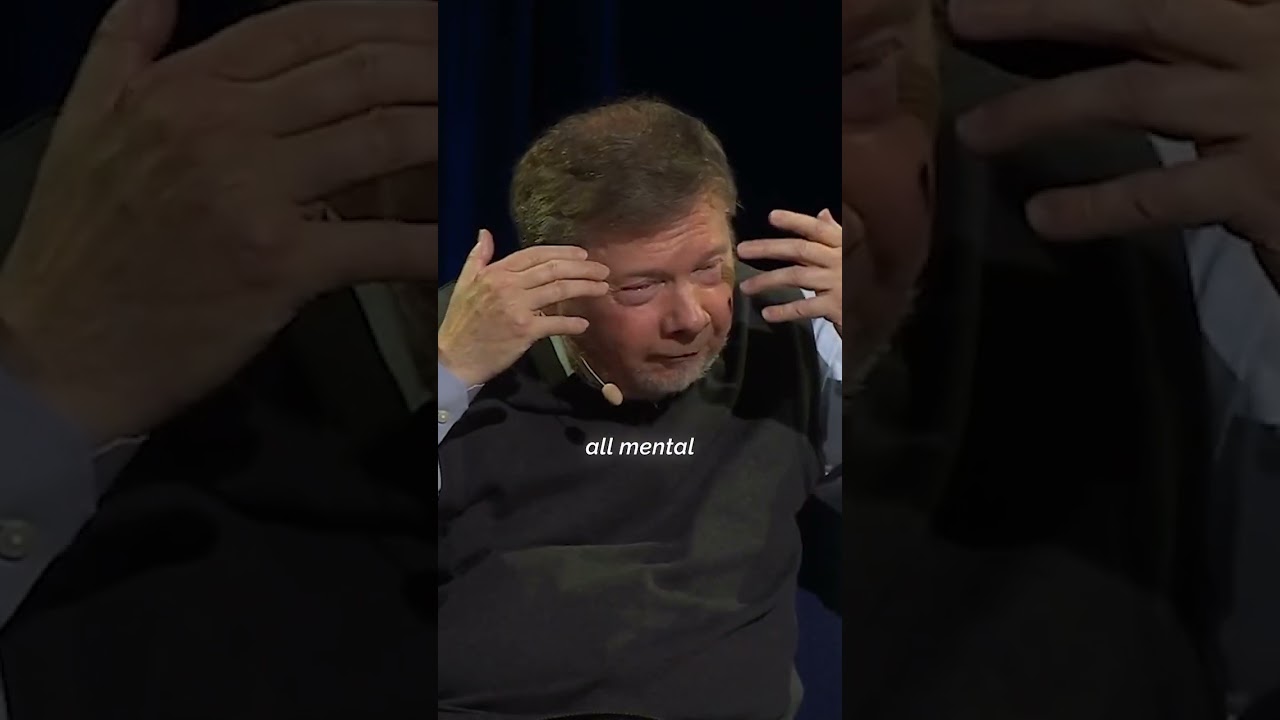
Most people live with constant mental noise—the stream of compulsive thoughts, internal commentary, and mind-generated stories—that fuels stress, anxiety, and unhappiness. The problem is not thinking itself, but identification with thought and the belief that the mind's noise defines reality or identity. By reconnecting with the present moment—the only place where actual life occurs—you step out of the mental prison and find lasting clarity, peace, and relief. Presence is not a technique or an achievement; it is a return to your natural state of being, accessible to you now.
Why Do We Create Constant Mental Noise?
The human mind, by design, generates a continuous stream of thoughts, interpretations, and narratives. Most people are not aware that they have a choice in whether they believe and identify with this mental chatter. Instead, we are hypnotized by our own thoughts, mistaking the mind's noise for truth or necessity. The mind operates partly through habit—it creates problems to solve, generating worry, regret, and future-focused anxiety as a default mode. When you are not present, the mind fills the gap with noise.
This noise is compulsive. It does not require an external trigger to keep running; it feeds on itself. You replay conversations, construct imaginary scenarios, judge yourself and others, and narrate your experience as it happens. All of this creates a secondary layer of suffering on top of whatever is actually occurring. The mind treats past and future as more real than the present moment, which is why so much mental energy is devoted to what already happened or might happen.
What Is the Cost of Living Inside Your Head?
When you are trapped in mental noise, you are disconnected from the present moment—the only place where life actually exists. Your body is here now, but your attention is lost in thought. This creates a fragmented existence: your body goes through the motions while your mind is elsewhere, generating stress, unhappiness, and a sense of being separate from life itself.
The constant noise prevents clarity. When the mind is busy chattering, you cannot perceive what is actually in front of you. You miss subtle information, intuitive knowing, and direct perception. Instead, you see life through the lens of your thoughts—your opinions, fears, and mental constructs. This filtering mechanism makes you reactive rather than responsive. You react based on what the mind believes rather than responding to what is actually present.
Mental noise also prevents peace. Peace is your natural state when you are not identified with thought. But when the mind is constantly active and you believe its content, you are in a state of internal conflict. The mind creates enemies (real or imagined), problems (urgent or trivial), and a sense that something is wrong. This generates a chronic low-level anxiety that many people mistake for normal human experience.
How Does Presence Interrupt Mental Noise?
Presence means consciousness returning to itself—awareness becoming aware of itself in this moment. When you are truly present, you are no longer caught in the stream of thought. You may still have thoughts, but you are not compulsively identified with them. You become the awareness in which thoughts appear, rather than the thoughts themselves.
Presence is available now. It is not something you need to acquire or achieve through effort. Rather, it is a return to your natural state of consciousness that has been covered over by habitual thinking. The moment you become aware that you are caught in mental noise, you have already stepped back from it. That awareness itself is presence.
In presence, mental noise loses its power over you. Thoughts may still arise, but they no longer feel compelling or real. You can observe them, even use them when useful, without being pulled into identification. This creates a radical shift: instead of being the thinker of thoughts, you become the witness of thoughts. This shift is immediate and available to anyone willing to pay attention.
What Changes When You Return to the Present Moment?
When you reconnect with the present moment, several things happen simultaneously. First, there is a natural decrease in mental noise. The mind has less material to work with because you are no longer feeding it with attention and belief. The story-making machine slows down because you are no longer its audience.
Second, there is a clarity that emerges from direct perception. When you look at something without the filter of thought—a person's face, a natural landscape, your own breath—you perceive it more fully. This clarity is not intellectual; it comes from unmediated contact with what is. This clarity also applies to situations and problems in your life. Often the solution becomes obvious when you step out of the mental noise that was obscuring it.
Third, there is relief. The moment you stop fighting the present moment and what is, the internal struggle ceases. Most of what creates suffering is not the present moment itself but resistance to it through thought and judgment. When you accept what is—not passively, but with awareness—suffering diminishes. This does not mean you become passive or stop taking action; it means you act from clarity rather than reactivity.
Fourth, there is a reconnection with life as it is actually happening. When you are present, you experience directly rather than through the medium of thought. You taste food more fully, feel emotions more acutely, sense connection with others more genuinely. Life becomes more vivid and immediate. This is the restoration of wonder and aliveness that many people have lost because they are living in their heads.
How Can You Recognize When You Are Caught in Mental Noise?
The first step is awareness. Notice when your mind is running its loops. You may realize you have been lost in thought for an hour without being conscious of it. You may catch yourself replaying a conversation obsessively, or projecting into an imaginary future scenario. The quality of your emotional state is also a signal: stress, anxiety, restlessness, and dissatisfaction are often signs that you are identified with mental noise.
Another sign is the sense of separation from your body and your environment. If you feel disconnected, as though life is happening to you rather than you living it, that is a sign you are in your head. If you are not able to be still without immediately becoming restless or needing distraction, that is another signal. The mind does not like stillness because stillness reveals the noise.
Notice also how you treat the present moment. Do you habitually dismiss what is right now as not good enough—not interesting, not important, not the real thing? The mind is always looking for something better, something more, something else. This constant dismissal of what is keeps you trapped in the mental realm of possibility rather than the actual realm of existence.
What Is the Practice of Returning to Presence?
Presence is not a technique that requires years of training, though deepening practice does happen over time. The basic movement is simple: interrupt identification with thought and bring your attention back to the present moment. You can do this through several gateways.
The breath: Your breath is always here now. By bringing your attention to the sensation of breathing—the coolness of inhalation, the warmth of exhalation, the pause between breaths—you anchor yourself in the present. The breath is a reliable anchor because it exists only now.
The body: Feel your body from the inside. Notice the aliveness in your hands, feet, chest, and belly. This internal body sensation is always present and pulls your attention away from thought. Many moments of presence begin with a sudden awareness of the physical body, as though you are inhabiting it for the first time.
Sensory awareness: Bring full attention to what you see, hear, touch, taste, or smell. Not as thoughts about these things, but as direct perception. When you really listen to sounds, really look at colors, really feel textures, the thinking mind quiets naturally. It cannot chatter and fully perceive at the same time.
The gap between thoughts: There are natural gaps in the stream of thought—moments when one thought ends and the next has not yet begun. These gaps are always present, though most people do not notice them because they are brief. By becoming sensitive to these gaps, you develop the ability to rest in awareness itself, free from thought content.
How Do You Sustain Presence as a Way of Life?
Presence is not something you achieve and then have forever. It is more like learning to wake up repeatedly throughout the day. Each time you fall back into mental noise, you can return to presence. Over time, the habit of presence strengthens and the habit of identification with thought weakens.
The key is not to judge yourself when you realize you have been lost in thought. The judgement itself is more mental noise. Simply notice, and return. Each return to presence is a success. Do not make presence into another goal or achievement. Make it into a gentle, repeated practice of noticing where your attention is, and bringing it back to this moment.
As presence becomes more familiar, you begin to realize something profound: you are not the voice in your head. The voice is a function, a tool, but it is not who you are. Your essential nature is conscious awareness—the space in which all experience, including thought, occurs. This insight is liberating because it means that even when thoughts are present, you are no longer imprisoned by them.
Where to Go from Here
The teaching here is not meant to be believed but tested and experienced. The next time you notice you are caught in mental noise—caught in worry, in regret, in anxious planning—pause and ask yourself: Is this thought true right now? Is this conversation I am replaying actually happening? Then bring your attention deliberately to your breath, your body, or your five senses. Notice what happens when you do. This direct experience will teach you far more than any explanation.
Consider making presence a daily practice rather than a sporadic event. Many people find that setting aside a few minutes each morning or evening to simply sit and feel their presence—not trying to achieve anything, just being aware of being alive—creates a strong anchor. This becomes easier to access throughout the day.
Finally, notice how your life changes as you spend more time in presence and less time in mental noise. Relationships deepen because you are actually with people rather than in your head about them. Work becomes more effective because you bring full attention and clarity. Stress decreases because you are no longer fighting the present moment. And life itself becomes richer simply because you are here to experience it.