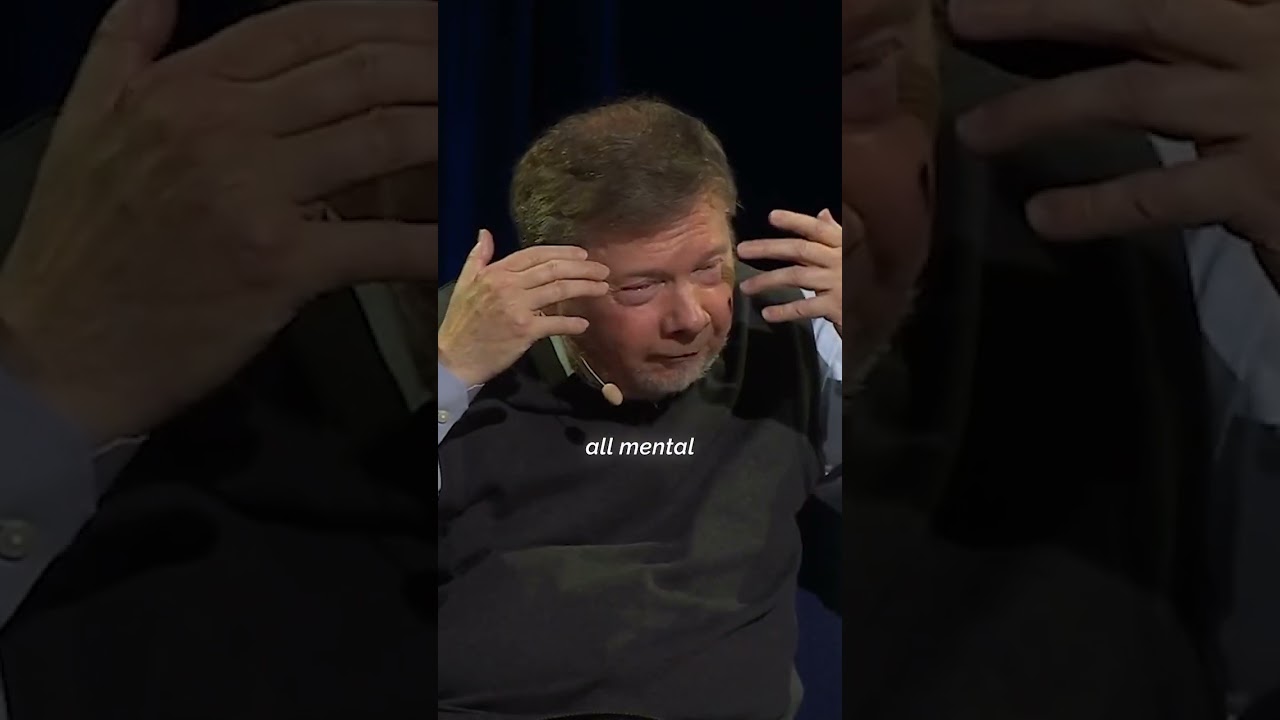
Eckhart Tolle explores the paradox that constantly seeking solutions to your problems and waiting for external circumstances to improve keeps you trapped in what he calls the "problem-maker" mind. True fulfillment and meaning don't arise from fixing what's wrong or achieving a future state of perfection—they emerge when you step out of this reactive mental loop and connect with the deeper presence available to you in the present moment. The shift from "waiting for life to begin" to actually living now is not about solving more problems; it's about fundamentally changing your relationship to the present moment itself.
Why the Problem-Solver Mind Keeps You Stuck
The human mind has evolved to identify problems and search for solutions. This function served survival well for thousands of years. However, when this mechanism runs continuously without pause, it creates a mental pattern that Tolle describes as the "problem-maker" mind. This is not a different mind—it's the same survival-oriented thinking that now operates even when there is no actual threat. The problem-maker mind generates a constant inner narrative: something is wrong, something needs to be fixed, and your life will only be good once you solve it.
The fundamental issue is that this mind doesn't solve problems sustainably. It solves one problem, then immediately creates or highlights another. You lose weight, then worry about maintaining it. You finish a project at work, then anxious thoughts about the next one emerge. You get into a relationship, then the mind finds flaws or future concerns. The problem-maker mind is not goal-oriented in a genuine sense—it is addicted to the state of having problems. Without a problem to focus on, it feels uncomfortable, even empty.
This creates what Tolle identifies as the "waiting mode" of existence. You are not really living now; you are living in a perpetual state of "once this is fixed, then I can be happy." This mode extends into all areas of life: career, relationships, health, finances. The future becomes more real than the present moment. Your attention is habitually pulled toward what isn't working rather than anchored in what is.
The Cost of Chasing Solutions Without Presence
When you operate primarily from the problem-maker mind, several costs accumulate. First, you miss the life that is actually happening now. Presence—the awareness of what is occurring in this moment—gets bypassed in favor of mental narratives about what needs to change. Relationships suffer because you're not fully with the people in front of you; part of your awareness is always somewhere else, solving or planning. Work becomes draining because you're not engaged in what you're doing; you're focused on the outcome or the next challenge.
Second, sustained fulfillment becomes impossible. The problem-solver gets a temporary hit of satisfaction when a problem is resolved, but this fades quickly because the mind immediately fastens onto the next issue. You never arrive at a state where you can simply be at peace. The goalpost constantly moves. This is why many people who achieve external success—wealth, status, relationships—still report feeling unfulfilled or anxious. The achievement itself doesn't change the underlying pattern of the problem-maker mind.
Third, this mode actually perpetuates suffering. The mental resistance to "what is" generates stress and contraction in the body and nervous system. Tolle points out that suffering is not simply the presence of pain or difficulty; it is the mental layer of resistance, judgment, and the story you tell about what's happening. The problem-maker mind is essentially a suffering-generator. It keeps you in a state of low-level emergency, even when there is no actual threat.
What Is the "Deeper Presence" Tolle Describes?
Presence, in Tolle's teaching, is not a state you achieve through effort or self-improvement. It is already here, accessible right now. Presence is your awareness of the present moment—not the thinking mind's version of what should be happening, but the direct, alive awareness of what is. It is the sensing of your body, the sounds around you, the textures, the light, the quality of stillness beneath the movement of thought.
This presence is "deeper" than the problem-maker mind because it is not constructed by thought. It is prior to thought, yet it continues even when thinking is active. Tolle describes it as a dimension of yourself that is always here, beneath the surface turbulence of mental activity. This deeper presence is not separate from you; it is your truest nature. Most people spend their entire lives identified with the thinking mind and completely unaware of this deeper dimension.
Connecting with this presence is not mystical or difficult. It happens the moment you stop and truly pay attention to your current experience. When you notice the sensation of your feet on the ground, the texture of an object in your hand, the sound of birds outside, you are in presence. When you stop resisting what is and simply acknowledge the reality of this moment, you have shifted into presence. This shift happens naturally and immediately when attention is withdrawn from the problem-maker narrative.
The Meaning That Emerges Without Waiting
Tolle emphasizes that meaning does not come from solving all your problems or achieving a future state. Meaning arises when you step out of the problem-maker loop and connect with the deeper dimension of your being. This is paradoxical to the ego, which believes that meaning is found in accomplishment, acquisition, or becoming someone different than you are.
When you are present, even an ordinary activity becomes infused with meaning. Walking, eating, listening to someone speak—these are not trivial. They are full and alive when done with presence. Relationships transform radically because you are actually with the other person, not lost in your own mental narratives about them or your future together. Work becomes purposeful not because you're solving big problems, but because you are fully engaged in what you're doing right now.
This doesn't mean problems disappear. External challenges continue to arise. The difference is your relationship to them. From a state of presence, you can respond to genuine issues from a place of clarity and aliveness, rather than from the contracted, reactive state of the problem-maker mind. Solutions emerge more naturally because you're not forcing or grasping. You're not waiting for life to become different so you can finally live; you are living, and from that living, appropriate action flows.
How to Step Out of Waiting Mode
The shift Tolle points to is not gradual self-improvement; it is a change in where your attention is. Right now, notice something in your immediate environment. Feel the temperature of the air. Listen to the ambient sounds. Notice your breath. This simple act of directing your awareness to what is directly present, rather than to mental narratives about what should be or what's missing, is the beginning of stepping out of waiting mode.
This can be practiced throughout the day, in brief moments or extended periods. The key is that presence is always available. You don't have to wait to develop it or earn it. You don't have to fix yourself first or resolve your problems before you can access it. It is here now, beneath and within all the mental activity. Each time you notice you've been caught in the problem-maker mind and you gently bring your awareness back to what is, you are disrupting the habit.
Over time, as presence becomes more familiar and stable, the grip of the problem-maker mind naturally loosens. You still address practical issues that need addressing, but without the emotional charge, the sense of urgency, and the constant backdrop of dissatisfaction that usually accompanies problem-solving. Life becomes simpler and more direct.
Where to go from here
The invitation Tolle offers is to begin noticing, right now, how much of your time is spent in "waiting mode"—anticipating solutions, planning, resisting what is. Notice the texture of this state. Then, experiment with deliberately shifting your attention to your immediate sensory experience: your breath, the ground beneath you, the sounds and sights around you. This isn't about achieving a perfect meditative state; it's about familiarizing yourself with the alternative to the problem-maker mind. As you do this, meaning and fulfillment may begin to reveal themselves, not as distant goals, but as the natural quality of a life lived with presence rather than postponement.