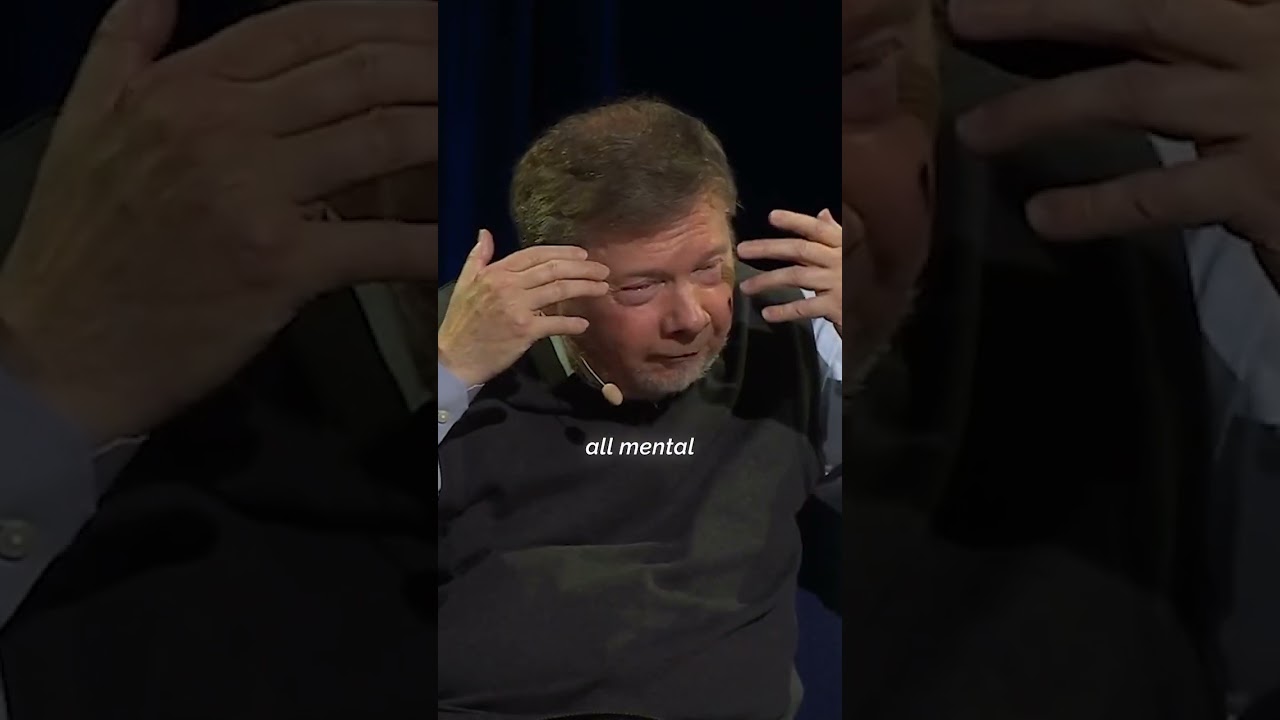
In this teaching, Eckhart Tolle examines how the conscious awareness of death is not something to fear or avoid, but rather a gateway to dissolving the ego and accessing a deeper dimension of being that transcends form, identity, and time. Rather than making life darker, this perspective brings greater presence, peace, and clarity about what authentically matters.
Why Do We Avoid Contemplating Mortality?
Most people treat death as something to suppress rather than examine. The ego—the constructed sense of identity bound to form, achievement, and continuity—naturally recoils from the awareness of impermanence. This resistance is understandable: the separate self, the "I" that we take ourselves to be, cannot survive physical death. To contemplate death is, in some sense, to contemplate the dissolution of that which we believe ourselves to be.
Yet this avoidance comes at a cost. By refusing to acknowledge mortality, we remain trapped in unconscious patterns of anxiety, urgency, and meaning-making that stem from the unexamined fear of annihilation. The ego will grasp for ever more possessions, achievements, relationships, and identities—anything to convince itself that it is permanent and meaningful. This grasping generates suffering because it denies the fundamental nature of reality: all form is impermanent.
What Happens When You Face Impermanence Directly?
When someone genuinely contemplates death not as an abstract concept but as their own reality—their own impermanence, their own finite time—something shifts. The illusions that the ego uses to defend itself begin to crumble. Petty concerns lose their weight. The constant need to prove oneself, to accumulate status, to construct and defend an identity, begins to seem hollow.
This dissolution of ego-driven concerns is not depressing; it is liberating. When the ego's grip loosens, what remains becomes visible. The present moment—which the ego is usually too preoccupied to experience—becomes accessible. Colors seem more vivid. Ordinary activities (a meal, a conversation, a walk) reveal a depth of aliveness that was always there but obscured by mental noise.
Moreover, facing death directly reveals something crucial: there is a dimension of being within you that is not touched by impermanence. Your consciousness itself—the aware presence that witnesses thought, sensation, and change—has a quality of timelessness to it. It is not defined by what it observes (the body, the mind, the ego). This is not a belief system but a direct recognition available to anyone willing to look.
How Does Mortality Awareness Clarify What Truly Matters?
When the mind is freed from the tyranny of ego-driven concerns, a natural reorientation occurs. What emerges is clarity about genuine values: authentic connection with others, the quality of your presence, the depth of your compassion, the reduction of unnecessary suffering. These are not abstract virtues but lived experiences that become self-evident when you're not performing an identity or chasing external validation.
The awareness of death also dissolves the illusion of time scarcity in an unexpected way. While ego-consciousness experiences time as a dwindling resource that generates urgency and desperation, the presence that emerges through acceptance of impermanence relates to time differently. Presence is not defined by quantity of remaining years but by the quality of aliveness available now. This is why many people who have near-death experiences report that their lives become richer, not diminished, even if their time expectancy is unchanged.
What Does "Dissolving the Ego" Actually Mean?
The ego does not need to be destroyed or violently rejected. Rather, it needs to be seen clearly for what it is: a useful mental structure for navigating daily life, but not your true nature. When the illusions that sustain it are examined and found wanting, it naturally loses its compulsive power. You can still think, plan, and engage with the world—but from a place of clarity rather than unconscious fear.
Accepting death is part of this process because it exposes the ego's fundamental lie: that it can make itself permanent through the right thoughts, actions, or accumulations. When you genuinely acknowledge that no amount of striving will prevent your death, the ego's defensive strategies lose credibility. This is not nihilism; it is realism. And realism, paradoxically, is more conducive to peace and authentic living than the ego's desperate fantasies of permanence.
Does This Make Life More Peaceful or More Frightening?
The common assumption is that dwelling on death must be morbid and anxiety-inducing. In practice, the opposite occurs. Unconscious fear of death—which most people carry but do not acknowledge—generates background anxiety that colors everything. By bringing death into conscious awareness and looking it in the eye, that unconscious terror can transform. You are no longer running from something you won't admit; you are meeting it directly, and in that meeting, much of its power dissolves.
What remains is not despair but a strange peace. There is a freedom that comes from accepting the inevitable. You cannot change the fact of your mortality, so the energy that went into resisting and denying it becomes available for something else: presence, connection, meaning-making that is authentic rather than defensive.
How Is This Different From Pessimism or Fatalism?
Accepting death is not the same as embracing a nihilistic worldview where nothing matters. Rather, it is the basis for authentic meaning-making. When you are no longer enslaved to the ego's desperate quest for permanence and validation, you become capable of genuine care for others, genuine engagement with the world, and genuine response to what life asks of you. These actions flow from presence rather than from fear or compulsion.
Fatalism suggests that since death comes anyway, why bother? But the teaching here is the opposite: because death comes, because time is finite and real, this present moment has weight and value that cannot be postponed. Life becomes not a dress rehearsal but the actual event.
What Is the "Deeper Dimension" Beyond Form?
By facing the reality of impermanence—that all form changes and dissolves—it becomes possible to access something in yourself that is not form. This is not mystical jargon but observable fact. Your consciousness, your awareness, is not the same thing as the body or the mind. It is that which is aware of the body and mind. It is not in time in the way that objects in time are. Thought moves through time; awareness itself does not move.
This dimension is not separate from life or something to reach after death. It is accessible now, in this present moment, through any activity done with genuine presence: listening to music, looking at a tree, engaging with another person. The finite dissolves into the infinite not because you transcend the body but because you recognize that the conscious presence that animates your body is not limited by form.
Where to Go From Here
The practical implication of this teaching is simple: begin to allow yourself to think about death not as a morbid exercise but as a gateway to clarity. You might sit quietly and contemplate your own impermanence—not dwelling on it obsessively, but meeting it consciously. Notice what ego-concerns begin to lose their grip. Notice what remains when the ego's narrative is quieted. Notice the aliveness of the present moment when you are not anxious about the future.
This is not a once-and-for-all realization but an ongoing orientation. Each time you catch yourself in unconscious urgency or fear, you can return to the baseline truth: I am impermanent, my time is finite, and this moment is what I have. From that foundation, a different quality of presence and peace becomes possible—not as a suppression of reality but as an embrace of it.