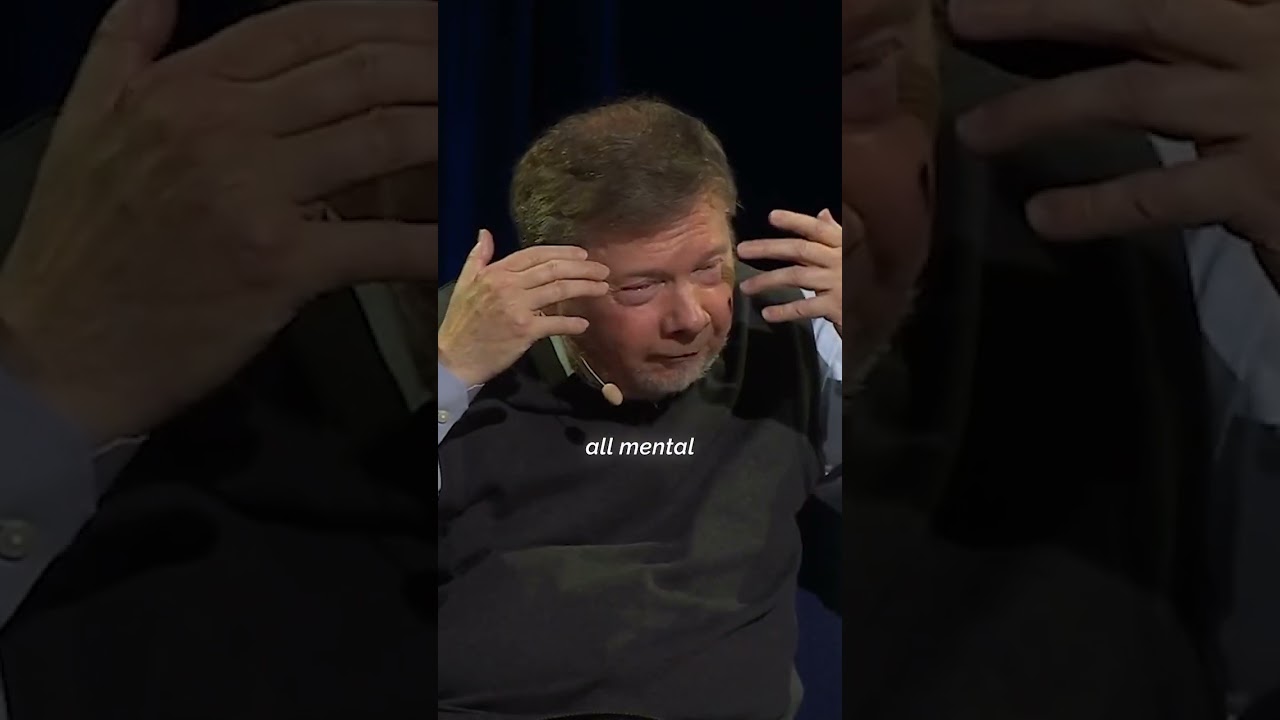
Most people invest their entire existence in maintaining a constructed identity—a collection of thoughts, roles, memories, and social positions—while remaining completely unaware of the conscious awareness that exists beneath it. This core overlooking isn't accidental; it's the result of relentless doing and becoming. The price of this ongoing performance is disconnection from your actual being, which remains untouched by circumstances, untouched by time, and available right now beneath the noise of psychological identity.
What Does It Mean to Have Overlooked Your True Self?
The fundamental human predicament, according to Eckhart Tolle's teaching, is that most people have become so absorbed in the project of being someone that they've lost track of the "someone" who is doing the being. This isn't a moral failure or a problem you need to solve through more effort. Instead, it's an oversight—a kind of forgetting that happens naturally when consciousness gets captured by thought and identification.
From childhood onward, you're encouraged to build a self. You acquire a name, a family role, talents and weaknesses, achievements and failures. You learn what you're "good at" and what you're "bad at." You develop preferences, opinions, and a narrative about who you are. This construction is useful in practical terms—it allows you to function in society, to communicate, to pursue goals. But over time, the constructed identity becomes so vivid, so consuming, that it obscures what was there before the construction ever began: raw, unconstructed awareness.
The overlooking happens because the mind is designed to focus outward and forward. It looks at what you're doing, what you've done, what you need to do next. It tells stories about your past and projects plans into your future. But beneath all of this activity, there's a dimension of your being that isn't doing anything—it's simply present, observing, aware. This dimension has been there your entire life, but because it doesn't perform, doesn't achieve, and doesn't make noise, it gets overlooked in favor of the louder, busier identity.
How Does the Constructed Self Eclipse Your True Nature?
The process is gradual but total. Every thought you identify with reinforces the sense of a separate self that exists in time, subject to change and threat. You think "I am anxious," "I am successful," "I am a failure," "I am a parent," "I am broken," and each thought gets woven into the fabric of who you believe yourself to be. The mind then spends enormous energy protecting, improving, and defending this constructed identity.
This is where the word "busy" in Tolle's teaching becomes crucial. You're not just busy with external tasks; you're perpetually busy being someone. There's an internal doing that never stops—rehearsing conversations, replaying past events, worrying about the future, maintaining a story about yourself that feels solid and real. This internal activity is so constant that it monopolizes consciousness. The true self, by contrast, is not busy. It doesn't need to do anything to be what it is.
The constructed identity also requires constant reinforcement from the external world. You need others to recognize you in a certain way. You need outcomes that confirm your story about yourself. You need to feel like you're progressing, improving, becoming someone better. This creates a fragile dependency: your sense of self is always contingent on circumstances, on what others think, on what you achieve or fail to achieve. Your true nature, by contrast, isn't dependent on anything. It simply is.
Why Does This Overlooking Matter?
The consequences of this overlooking are significant and pervasive. When your entire sense of self is built on thought and identity, you suffer whenever those thoughts are negative or whenever circumstances threaten your identity. Anxiety, depression, and chronic stress aren't caused by life circumstances alone—they're deepened and prolonged by the resistance of the constructed self to what is happening. The identity feels threatened, and it fights back through worry, blame, rumination, and self-judgment.
Additionally, when you're identified with the busy mind, you miss the aliveness of the present moment. The true self is always present—it's here now, not somewhere else. But if you're absorbed in thinking about who you are, you're essentially absent from your own life. You're walking through your days on autopilot, living out a script rather than actually experiencing what's in front of you.
Relationships also suffer from this overlooking. When you relate to others from the level of constructed identity, you're essentially two selves negotiating with each other—two stories trying to coexist. There's very little real meeting. But beneath the identity, there's a dimension of being that isn't separate from others. When you access that dimension, relating becomes less about protecting your image and more about genuine presence and connection.
What Happens When You Stop Overlooking?
Waking up to your true self doesn't require you to destroy the identity or to become someone else. The practical functions of the constructed self—language, memory, the ability to navigate the world—remain intact. But something shifts in your relationship to it. Instead of being completely identified with the voice in your head and the story it tells, you develop a kind of internal distance. You observe the identity, but you're not it.
This recognition brings a profound sense of relief. If you are not your thoughts, then you don't have to believe every thought that arises. If you are not your identity, then you're not threatened when circumstances change or when others disagree with your image of yourself. The anxious grasping to maintain and protect the self naturally loosens. A deeper confidence emerges—not the fragile confidence of someone who has achieved something, but the natural confidence of someone who recognizes themselves as already whole.
From this place, living continues. You still have goals, still navigate relationships and responsibilities. But there's a lightness about it. You're not desperately trying to become someone; you're simply expressing what's already here. The quality of attention changes. You're more present, more responsive to what's actually happening rather than lost in stories about what should be happening.
How Can You Begin to Notice What You've Overlooked?
Tolle's teaching points to presence and awareness as the gateway to recognizing your true nature. Notice right now—there's something aware of these words you're reading. There's something aware of your body, your surroundings, your breath. That awareness itself is your true self. It's not something you have to acquire or achieve; it's what you are. The overlooking is only that this obvious, ever-present dimension has been overshadowed by attention to thought and identity.
Practices that anchor you in the present—like mindfulness, conscious breathing, or simply pausing to notice what's here without judgment—create gaps in the constant doing of the mind. In these gaps, the true self becomes apparent. You don't have to do anything special. Just notice the aliveness underneath the thinking, the awareness that's always been aware of your life happening.
The overlooking ends not through effort but through the simple act of noticing what was always here. It's not a distant goal or a future achievement. It's available in this very moment, waiting not to be found but to be recognized.
Where to go from here
This teaching invites a radical reorientation of how you understand yourself. Rather than continuing to invest all your energy in being someone, consider exploring what remains when that project temporarily relaxes. Notice the moments when you're fully engaged and the sense of separation falls away—in nature, in music, in genuine conversation, in activities that fully absorb you. What's present in those moments? That's closer to who you truly are than any identity could ever be. The path forward isn't about acquiring new beliefs but about questioning the one belief that's been overlooked: that you are only the self you've constructed.