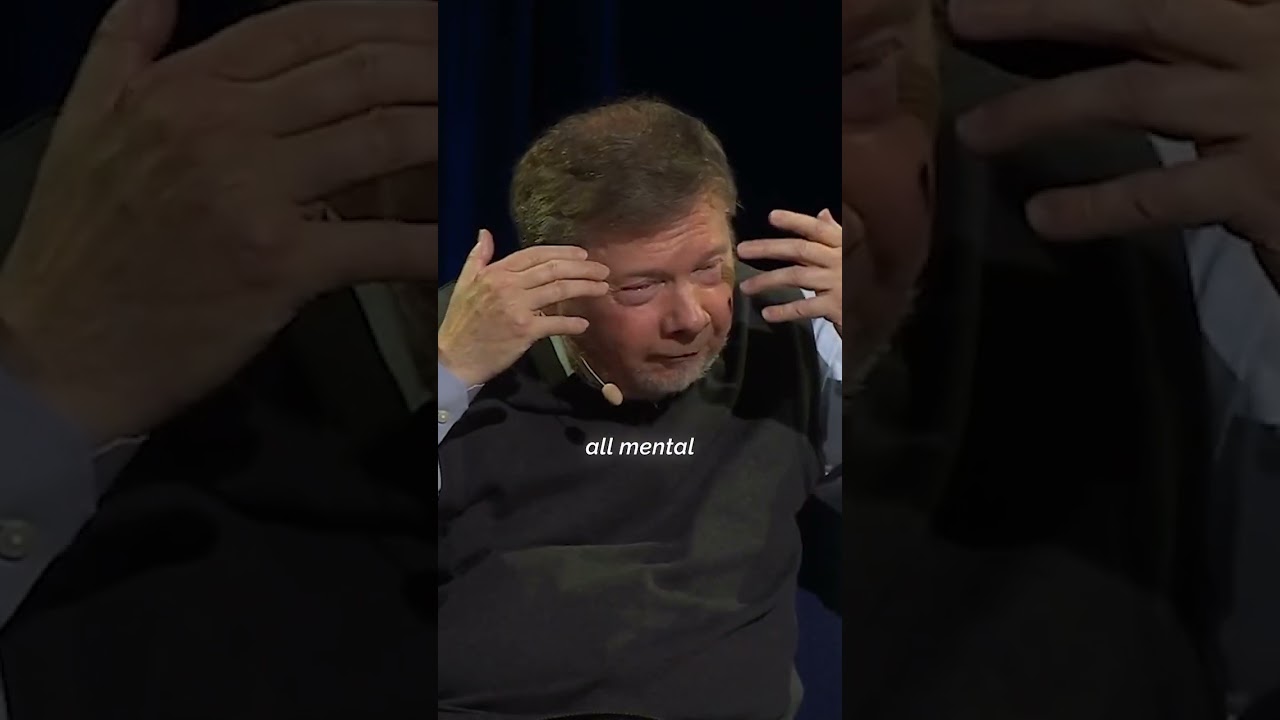
News media systematically prioritizes conflict, breakdown, and crisis over positive developments and human awakening because dysfunction attracts attention and engagement. Eckhart Tolle examines why the media's selective focus on what is breaking down rather than what is awakening shapes collective consciousness, and what this reveals about both media incentives and human psychology.
Why Does News Media Focus on Crisis and Breakdown?
The news operates under a fundamental principle: dysfunction is newsworthy. A bridge that stands for fifty years unnoticed will collapse once, and that collapse becomes the lead story. This isn't malice—it's structural. Media organizations exist in attention economies where engagement drives revenue. Conflict, suffering, and breakdown naturally capture attention in ways that incremental progress and healing do not.
Tolle's observation points to a cognitive reality: the human nervous system is tuned to threat detection. Bad news triggers survival responses that keep us watching. Good news doesn't carry the same neurological weight. A story about millions of people living without major incident will never compete with a story about one disaster. The media doesn't invent this dynamic—they amplify what already captures human attention.
What Does the Media Ignore or Underreport?
While headlines focus on wars, economic collapse, disease, and institutional failure, vast domains of human activity remain invisible in mainstream news. Scientific breakthroughs that took years to develop receive no coverage. Individuals quietly transforming their relationships, communities organizing local solutions, people recovering from addiction, spiritual practices spreading—these developments are continuous but unmarked.
Tolle suggests that what is being called "awakening" in the collective sense is happening constantly, but it doesn't produce the dopamine hit of a breaking crisis. A person moving from unconsciousness to greater awareness, a society gradually shifting toward more compassionate policies—these are real but slow. They don't fit the news cycle.
This creates an informational bias. Someone consuming only mainstream news will develop a radically skewed map of reality. They will believe the world is worse than statistical evidence suggests. They will know about the 0.001% of humanity experiencing acute crisis and remain unaware of the billions maintaining stability, building, creating, and recovering.
How Does Media Focus Shape Consciousness?
For Tolle, consciousness is not separate from what we feed it. If the collective consciousness is repeatedly exposed to narratives of breakdown, disintegration, and impending catastrophe, the aggregate effect is a mind shaped by those narratives. This isn't a conspiracy—it's an emergent property of commercial incentives meeting human psychology.
People internalize what they consume. Chronic exposure to negative news patterns creates a mental environment of perpetual threat. Anxiety and dread become normalized. The psyche learns to expect disaster. Over time, this changes not just what people believe but how they perceive possibilities. Someone immersed in catastrophe-focused media may struggle to imagine that meaningful change could happen, that awakening is possible, or that they could contribute to something constructive.
Conversely, if one's information diet included balanced coverage—not naive positivity, but accurate reporting of both breakdowns and awakenings—consciousness would develop differently. Hope would be available as a reasonable response to evidence. Agency would feel possible.
What is Being Awakened That News Doesn't Cover?
Tolle's use of "awakening" refers to shifts in human consciousness: increased self-awareness, greater compassion, deeper recognition of interconnection, movement away from purely ego-driven behavior toward service. These transformations happen in individuals, families, communities, and organizations continually. They're invisible to traditional news metrics because they unfold at the pace of human development, not event time.
A person leaving a career of ego-building to work in service is awakening. A community resolving decades-old conflict through dialogue is awakening. Scientific understanding expanding to recognize the dignity of other beings is awakening. Spiritual practices reaching more people, contemplative methods entering medicine and psychology, people examining their conditioning and choosing differently—all of this is real and growing. None of it makes the evening news.
This matters because news serves as the collective story we tell ourselves about what's real and what's possible. If the story is only breakdown, awakening becomes invisible, and people orienting toward growth may feel isolated or delusional. If awakening were proportionally represented, more people might recognize it as real and join it consciously.
How Can We Develop a More Accurate Picture of Reality?
Tolle's implicit suggestion is to recognize the media's structural bias and actively supplement it. This doesn't mean avoiding news entirely—understanding genuine crises is necessary. It means consciously seeking out information sources that report on human progress, spiritual development, scientific breakthroughs, and ordinary people doing extraordinary things.
Books, documentaries, podcasts, and slower-form journalism often provide context that news cycles cannot. Speaking directly with people in your community reveals a reality far more complex than headlines suggest. Personal experience becomes an essential data source. What are people actually doing? Where is energy flowing? What is growing?
This is not about positive thinking or denial. It's about proportional awareness. If 99% of your information diet is about the 1% of humanity in acute crisis, you have a distorted map. Correcting that distortion requires deliberate choice.
What Does This Reveal About Human Psychology?
That news media focuses on breakdown rather than awakening reveals something about how human attention works. We are wired for threat detection—evolutionary logic that once kept us alive. A rustling in the bush might be a predator. Better to notice every sound. Modern media exploits this ancient wiring.
It also reveals that consciousness is not fixed. What we consume shapes what we perceive as real. A mind fed exclusively on breakdown narratives will organize experience differently than a mind with balanced input. The good news is that this is mutable. Changing what we consume changes what becomes possible to perceive and imagine.
There's also a deeper implication: the fact that awakening happens but isn't reported suggests that many transformative processes occur beneath the threshold of public visibility. Personal growth isn't televised. Spiritual development doesn't trend. This can be freeing—it means the work of consciousness doesn't depend on media validation. It also means it won't show up in the statistics of what "everyone knows" to be happening.
Where to Go from Here
If you're concerned about media bias toward negative coverage, start by auditing your own information diet. What percentage of your news comes from outlets focused primarily on crisis? What would it look like to add sources reporting on human progress, scientific advancement, and consciousness development? You might explore outlets focused on constructive journalism, which reports on problems alongside solutions and progress.
Consider also reducing overall consumption of real-time news. Many people find that checking news less frequently—perhaps weekly rather than hourly—reduces anxiety while maintaining awareness of genuine issues requiring attention. The constant news cycle is a recent invention, not a necessity for being informed.
Finally, pay attention to what's awakening in your own life and around you. Notice the quiet transformations. Speak with people doing meaningful work. Recognize that you yourself are part of what is awakening, and your own consciousness shift is as real as any news headline, even if it never gets reported.